


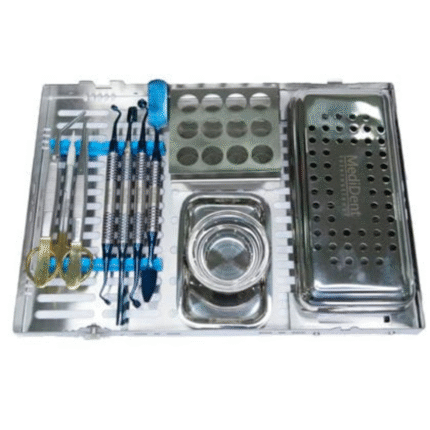
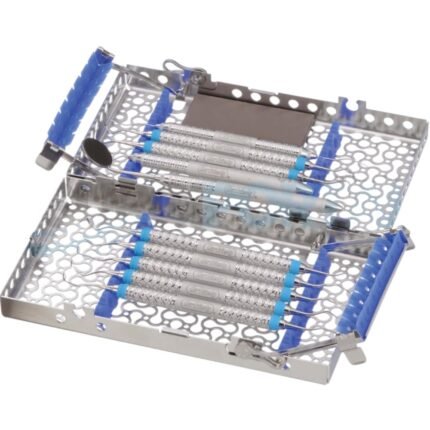
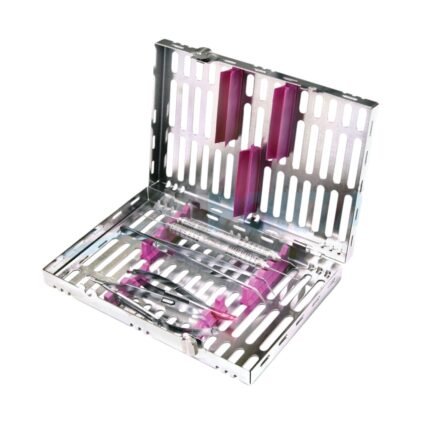
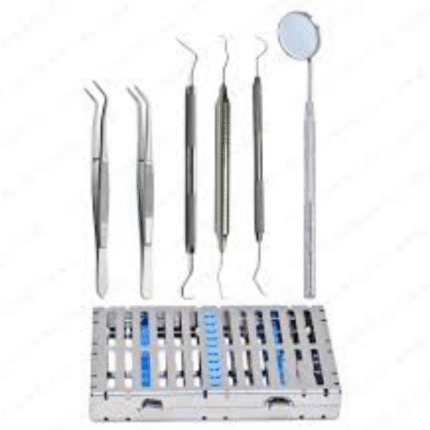
The Dental Implantology Instrument Kit is a specialized dental instrument set designed to support the clinical workflow associated with dental implant procedures. Implantology requires controlled preparation of the implant site, accurate assessment of depth and orientation, and appropriate handling of surgical and implant components. A dedicated instrument kit brings commonly required tools together for convenient access during these procedures.
Depending on the specific configuration, a dental implantology kit may contain instruments for surgical access, tissue management, osteotomy preparation, depth measurement, implant positioning, and component handling. Common examples can include implant drills, depth gauges, parallel pins, osteotomes, implant drivers, tissue retractors, surgical instruments, and other system-specific accessories. The exact contents should always be verified against the supplied kit configuration.
A primary purpose of an implantology instrument set is to support systematic preparation of the implant osteotomy. Implant drills and related instruments can be used according to the planned implant dimensions and the drilling sequence specified by the applicable implant system. Measurement and alignment instruments can assist the clinician in evaluating preparation depth and orientation during the procedure.
The kit may also help streamline instrument organization in dental clinics and oral surgery environments. Keeping related implantology instruments together can make preparation easier and help ensure that required components are available when needed. Organized instrument selection is particularly useful during procedures that involve several sequential preparation and placement steps.
The instruments may be used in implant dentistry, oral surgery, prosthodontic implant procedures, and other clinical applications involving dental implant placement. Exact use depends on the individual instruments included, the implant system, the patient’s anatomy, and the treatment plan established by the qualified dental professional.
Reusable instruments in an implantology kit are commonly manufactured from surgical-grade or medical-grade stainless steel because of its strength, corrosion resistance, and compatibility with validated cleaning and sterilization processes. Some specialized components may use titanium or other medical-grade materials depending on their intended function and compatibility requirements.
Precision components require appropriate handling. Cutting instruments such as implant drills should be inspected regularly for wear, deformation, corrosion, or damage to cutting surfaces. Measurement instruments and implant drivers should also be checked for integrity and compatibility before use. Components that no longer meet the manufacturer’s performance or replacement criteria should be removed from clinical service.
Correct compatibility is particularly important in implantology. Implant systems may differ in implant dimensions, connection geometry, drilling protocols, driver interfaces, and recommended surgical sequences. The instruments should therefore be used only according to the manufacturer’s instructions and within the intended implant system or compatible configuration.
Following each procedure, reusable instruments should be cleaned promptly and thoroughly according to validated manufacturer instructions. Bone debris, blood, tissue, and other contaminants should be removed before sterilization. Particular attention should be given to drill flutes, narrow channels, instrument joints, and other areas where surgical debris can remain.
After cleaning, instruments should be inspected and processed using the validated sterilization method appropriate for the instrument materials and configuration. Proper storage and organization can help protect precision working ends and ensure that the kit remains ready for subsequent clinical use.
The Dental Implantology Instrument Kit provides dental professionals with an organized solution for managing specialized instruments used during implant procedures. By combining instruments for site preparation, measurement, surgical access, and implant handling, the kit can support an efficient and controlled implantology workflow.
Key Features
- Specialized dental implantology instrument set
- Designed for dental implant surgical procedures
- Supports implant site preparation and osteotomy development
- May include drills, gauges, drivers, and implantology accessories
- Instruments for controlled depth and orientation assessment
- Suitable for implant placement workflows
- Helps organize frequently used implantology instruments
- Suitable for dental clinics and oral surgery environments
- Typically manufactured from durable medical-grade materials
- Reusable components can be cleaned and sterilized when applicable
- Precision instruments require routine inspection for wear
- Compatible components should be verified with the applicable implant system
Product Specifications
| Specification | Details |
|---|---|
| Product Name | Dental Implantology Instrument Kit |
| Instrument Type | Dental Implantology Surgical Set |
| Primary Application | Dental Implant Procedures |
| Main Functions | Osteotomy, Measurement, Site Preparation, Implant Handling |
| Instrument Configuration | Varies by Kit |
| Materials | Typically Medical-Grade / Surgical-Grade Materials |
| Compatibility | Verify With Specific Implant System |
| Use | Professional Dental and Oral Surgery |
| Reusable | Yes, for applicable reusable instruments |
| Sterilization | Follow Manufacturer’s Validated Instructions |
| Applications | Implant Dentistry and Oral Surgery |
| Intended Users | Trained Dental Professionals |
FAQs
What is a Dental Implantology Instrument Kit used for?
A Dental Implantology Instrument Kit provides specialized instruments used for implant site preparation, osteotomy development, measurement, alignment, and implant placement procedures.
What instruments are typically included in an implantology kit?
Depending on the configuration, an implantology kit may include implant drills, depth gauges, parallel pins, osteotomes, implant drivers, retractors, and other surgical or system-specific instruments.
Is this kit compatible with every dental implant system?
Compatibility varies. Dental implant systems may use different dimensions, connection designs, drilling protocols, and driver interfaces. The supplied instruments should be verified for compatibility before clinical use.
What is an implantology drill used for?
An implantology drill is used to prepare the osteotomy site according to the planned implant dimensions and the drilling sequence specified by the applicable implant system.
Can the Dental Implantology Instrument Kit be reused?
Reusable instruments can generally be cleaned, inspected, sterilized, and reused according to validated manufacturer instructions. Single-use components, if included, must be handled according to their labeling.
What materials are used for implantology instruments?
Reusable instruments are commonly manufactured from surgical-grade stainless steel, while certain specialized components may be made from titanium or other appropriate medical-grade materials.
How should an implantology instrument kit be sterilized?
Reusable instruments should be thoroughly cleaned and inspected before sterilization. The validated processing and sterilization instructions supplied by the manufacturer should be followed.
How should dental implantology instruments be maintained?
Clean instruments promptly after use, inspect cutting edges and precision components for wear or damage, and store them properly after validated sterilization.
Why is instrument compatibility important in implantology?
Implant systems can have different implant dimensions, connections, drilling sequences, and driver interfaces. Using compatible instruments helps ensure that the surgical components correspond to the intended implant system and manufacturer’s protocol.


Reviews
There are no reviews yet.