
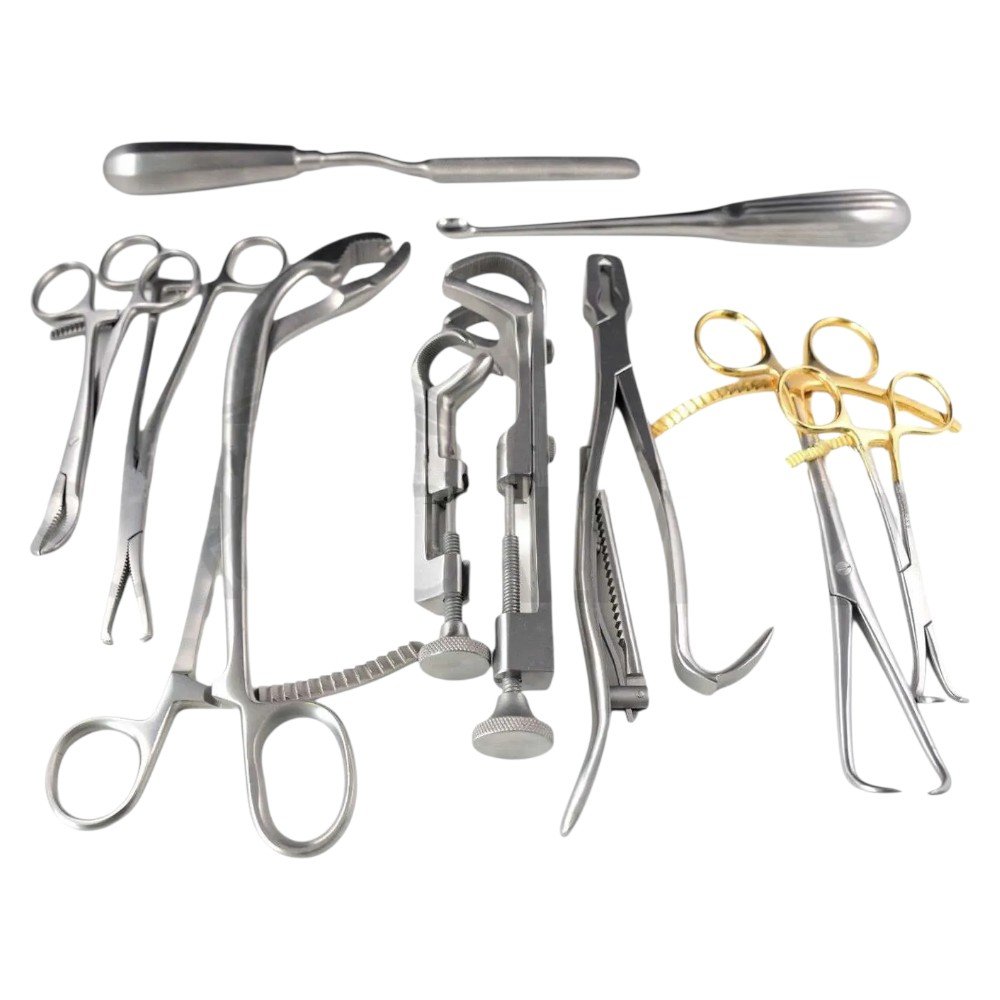
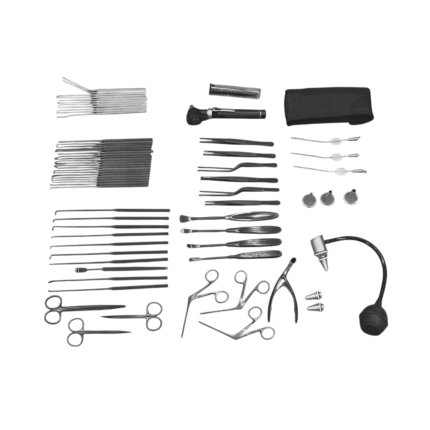

The Neurosurgery Instrument Set Brain & Spinal Surgical Instruments is designed to provide surgical teams with a coordinated selection of instruments for professional neurosurgical procedures involving the brain and spine. A dedicated neurosurgical set can help organize commonly required tools for operative exposure, tissue manipulation, dissection, and other essential surgical tasks.
Neurosurgical procedures often require instruments with specific working-end profiles, shaft lengths, handle designs, and mechanical characteristics. These features allow the surgeon to work in relatively confined anatomical spaces while maintaining controlled manipulation. Depending on the exact configuration, the instruments in this set may support grasping, dissection, retraction, probing, tissue handling, or other operative functions.
For cranial and brain surgery, appropriately configured neurosurgical instruments may be used during procedures such as craniotomy, intracranial tumor surgery, trauma surgery, vascular procedures, and other operations requiring controlled access to the brain and surrounding structures. Instrument selection depends on the operative approach, anatomy, and the specific task being performed.
For spinal surgery, compatible instruments may support cervical, thoracic, or lumbar procedures involving exposure, tissue manipulation, decompression, and other surgical steps. Long or specialized instrument profiles can provide access to deeper anatomical structures while helping the surgeon maintain control over the working end.
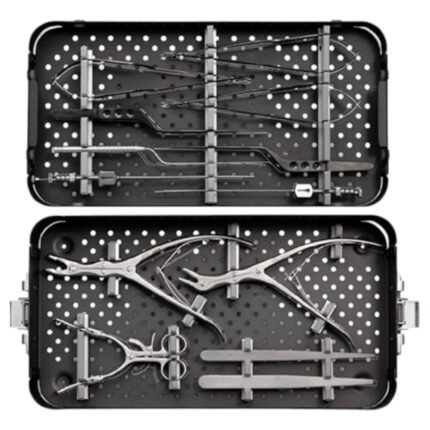
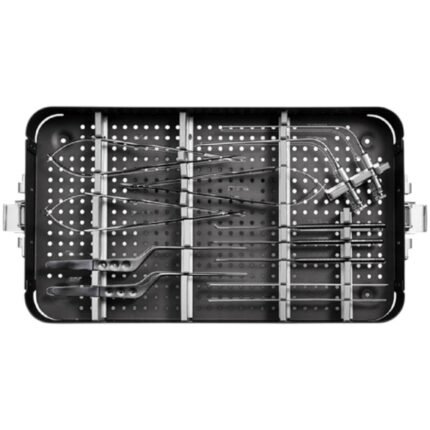
The set format provides an organized approach to surgical preparation. Keeping brain and spinal instruments together can help operating-room personnel identify the required tools before a procedure, prepare the instrument table efficiently, and perform post-procedure counting and inspection in a systematic manner.
The exact contents of a general neurosurgery instrument set can vary significantly. Depending on the configuration, it may include forceps, scissors, retractors, dissectors, elevators, probes, curettes, needle holders, or other specialized instruments. Because instrument quantity, dimensions, and working-end designs are configuration dependent, the exact set inventory should be verified before purchase or clinical use.
Precision and controlled handling are particularly important in neurosurgery because instruments may be used near delicate neurological, vascular, and spinal structures. Each instrument should be used only for its intended purpose. Applying excessive force, using an instrument outside its intended function, or selecting an unsuitable working profile may damage the instrument or compromise surgical handling.
Material specifications should also be confirmed from the applicable product documentation. Reusable surgical instruments are commonly manufactured from medical-grade stainless steel or other suitable surgical materials, but the exact alloy, finish, hardness, and manufacturing standard should not be assumed when they are not specified.
Before every procedure, instruments should be inspected for structural integrity, alignment, surface condition, corrosion, and mechanical performance. Working ends should be free from deformation or visible damage, while hinged instruments should open and close smoothly. Any instrument showing excessive wear, corrosion, or malfunction should be removed from service until appropriately evaluated.
For reusable instruments, proper cleaning, disinfection, sterilization, and inspection are essential. Hinges, serrations, joints, lumens where applicable, and other difficult-to-clean areas require particular attention during reprocessing. Validated manufacturer instructions should be followed for the exact instrument materials and configuration.
The Neurosurgery Instrument Set for Brain & Spinal Surgical Instruments is suitable for hospitals, neurosurgical departments, spine centers, specialty surgical facilities, and professional operating rooms requiring an organized selection of instruments for cranial and spinal surgery. Its versatile configuration can provide a practical foundation for routine neurosurgical instrument preparation.
Key Features
- Neurosurgical instrument set for brain and spinal procedures
- Designed for professional neurosurgical operating rooms
- Supports cranial and spinal surgical applications
- Useful for tissue handling and controlled dissection
- Supports surgical exposure and operative access
- May include forceps, scissors, retractors, dissectors, probes, and other instruments
- Suitable for selected intracranial procedures
- Suitable for selected cervical, thoracic, and lumbar spine procedures
- Organized set simplifies operating-room preparation
- Working ends and mechanical components require careful inspection
- Exact instrument contents depend on the set configuration
- Reprocessing should follow validated manufacturer instructions
Product Specifications
| Specification | Details |
|---|---|
| Product Name | Neurosurgery Instrument Set |
| Product Category | Brain & Spinal Surgical Instruments |
| Primary Specialty | Neurosurgery |
| Applications | Cranial and Spinal Surgery |
| Primary Function | Surgical Exposure, Dissection and Tissue Handling |
| Cranial Applications | Intracranial / Brain Procedures |
| Spinal Applications | Cervical, Thoracic, Lumbar Procedures |
| Instrument Types | Configuration Dependent |
| Working Ends | Various Surgical Profiles |
| Instrument Length | Model Dependent |
| Material | Surgical Instrument Material, Configuration Dependent |
| Set Quantity | Configuration Dependent |
| Reusable | Depending on Individual Components |
| Sterilization | Follow Validated Reprocessing Instructions |
| Storage | Surgical Tray or Suitable Instrument Container |
| Contents | Verify Exact Set Inventory Before Use |
FAQs
What is a neurosurgery instrument set used for?
A neurosurgery instrument set provides specialized surgical tools for procedures involving the brain, spine, and related neurological structures. Instruments may support exposure, tissue handling, dissection, retraction, and other operative tasks.
Can this set be used for brain surgery?
Yes. Appropriately configured neurosurgical instruments can support selected intracranial and brain procedures, depending on the specific instrument designs included in the set.
Can the set be used for spinal surgery?
Yes. Compatible instruments may support selected cervical, thoracic, and lumbar spinal procedures, depending on the instruments and their intended applications.
What instruments may be included in a neurosurgery set?
Depending on the configuration, a set may include forceps, scissors, retractors, dissectors, curettes, elevators, probes, needle holders, or other specialized neurosurgical tools.
Is this a complete neurosurgery instrument set?
The term “instrument set” does not necessarily mean that it contains every instrument required for every neurosurgical procedure. Additional specialized instruments may be needed depending on the surgery.
Can these instruments be used for cranial procedures?
Appropriately designed instruments may be used for selected cranial procedures such as craniotomy, intracranial tumor surgery, trauma procedures, and other neurosurgical operations.
Can these instruments be used for spinal decompression?
Compatible instruments may support selected spinal decompression procedures for exposure, tissue manipulation, and related surgical tasks. Exact use depends on the individual instrument.
Are the instruments reusable?
They may be reusable when specifically supplied and labeled for repeated clinical use. Reusable instruments must be properly cleaned, inspected, sterilized, and maintained.
How should neurosurgical instruments be sterilized?
Cleaning and sterilization should follow validated instructions applicable to the exact instruments and materials. Hinges, joints, serrations, and other difficult-to-clean areas require careful processing.
What should be inspected before using the instrument set?
Each instrument should be checked for alignment, structural integrity, intact working ends, smooth operation, corrosion, deformation, cracks, and other signs of excessive wear before clinical use.


Reviews
There are no reviews yet.