
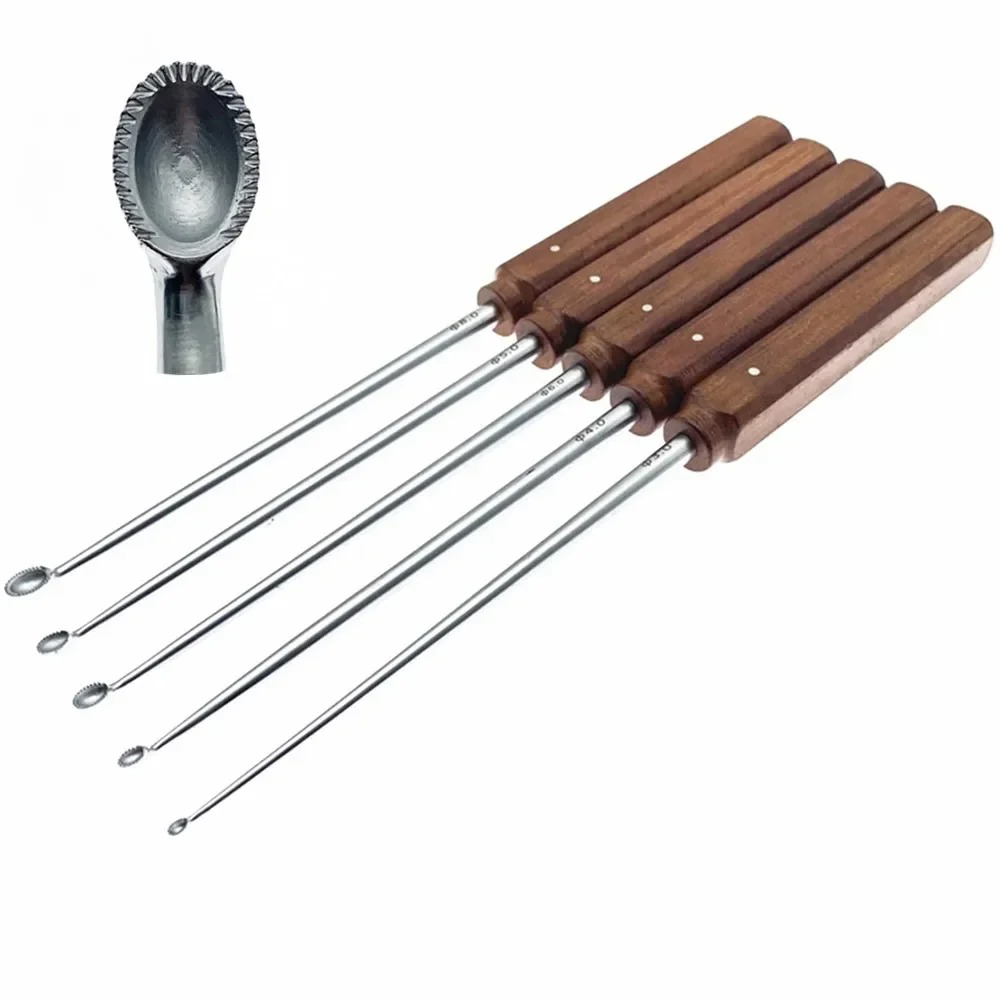

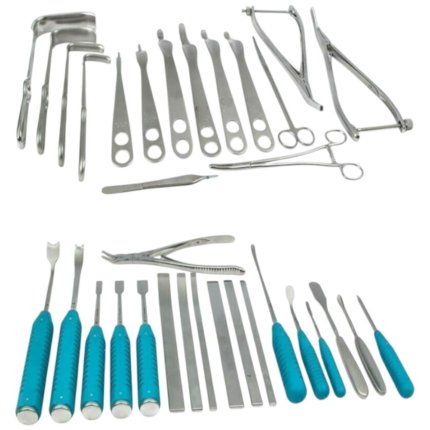
The Orthopedic Bone Curette with Teeth – Stainless Steel Bone Spoon Surgical Instrument is a specialized orthopedic instrument designed for controlled curettage, removal, and manipulation of bone and tissue during surgical procedures. Commonly referred to as a toothed bone curette or bone spoon, this instrument combines a spoon-shaped working end with teeth that can provide enhanced engagement with tissue and bone material.
Bone curettes are commonly used when the surgeon needs to remove localized bone fragments, soft tissue, granulation tissue, or other material from a surgical site. The toothed configuration can provide additional purchase compared with a smooth curette, making it useful in procedures where controlled tissue engagement is required. The exact application depends on the shape and size of the curette and the surgical technique being performed.
The spoon-shaped working end is designed to facilitate controlled scraping and removal. Its geometry allows the instrument to be positioned within a surgical cavity or around an accessible bony surface while the surgeon applies measured pressure. The teeth can assist with gripping or disrupting tissue during curettage, helping improve control during appropriate orthopedic procedures.
Constructed from stainless steel, the instrument is designed for durability and repeated handling in professional surgical environments. Stainless steel construction is commonly selected for reusable surgical instruments because it provides a combination of mechanical strength, corrosion resistance, and suitability for routine cleaning and sterilization when the instrument is manufactured for reusable use.
The curette can be used in a variety of orthopedic and related surgical applications where localized removal of bone or tissue is required. Depending on its dimensions and working-end design, potential applications may include orthopedic debridement, bone lesion curettage, removal of loose material, preparation of localized bone surfaces, and other procedures requiring controlled scraping.
Its compact working end allows the surgeon to perform precise manipulation within accessible areas of the operative field. The handle provides a controlled grip for rotational or scraping movements, while the working-end teeth are intended to provide effective engagement. Instrument selection should always be based on the anatomical location, procedure, tissue characteristics, and surgeon preference.
For reusable instruments, proper reprocessing is essential. After use, the bone curette should be cleaned according to the manufacturer’s instructions, with particular attention to the toothed working end where tissue or biological material can become retained. The instrument should be thoroughly rinsed, dried, inspected for damage, and sterilized using a validated method appropriate for the instrument and healthcare facility.
The Orthopedic Bone Curette with Teeth – Stainless Steel Bone Spoon is a practical addition to orthopedic surgical instrument trays requiring a toothed curettage instrument. Its stainless steel construction, spoon-style working end, and toothed profile make it suitable for controlled bone and tissue manipulation in compatible surgical applications.
Key Features
- Toothed orthopedic bone curette design
- Spoon-shaped working end for controlled curettage
- Designed for bone and tissue removal applications
- Teeth provide additional tissue engagement
- Stainless steel surgical instrument construction
- Suitable for orthopedic surgical procedures
- Useful for localized debridement and curettage
- Compact working end supports controlled manipulation
- Durable construction for professional surgical environments
- Suitable for reusable instrument workflows where applicable
- Easy to incorporate into orthopedic instrument trays
- Requires validated cleaning and sterilization procedures
Product Specifications
| Specification | Details |
|---|---|
| Product Name | Orthopedic Bone Curette with Teeth |
| Instrument Type | Bone Curette / Bone Spoon |
| Working End | Toothed Spoon |
| Material | Stainless Steel |
| Primary Application | Bone & Tissue Curettage |
| Surgical Specialty | Orthopedic Surgery |
| Function | Scraping, Curettage & Tissue Removal |
| Design | Toothed Working End |
| Reusable | Where supplied as a reusable instrument |
| Sterilization | Follow manufacturer and facility protocols |
| Handle | Ergonomic surgical handle |
| Intended Use | Professional Surgical Applications |
FAQs
What is a toothed orthopedic bone curette?
A toothed orthopedic bone curette is a surgical instrument with a spoon-shaped working end featuring teeth for controlled engagement, scraping, and removal of bone or tissue during appropriate surgical procedures.
What is a bone spoon curette used for?
A bone spoon curette can be used for localized bone and tissue curettage, debridement, removal of loose material, and preparation of accessible bone surfaces depending on the surgical procedure.
What is the advantage of teeth on a bone curette?
The teeth can provide additional engagement with tissue and material during curettage. This may improve control when working with tissue that is difficult to remove using a smooth working surface.
Is this bone curette made from stainless steel?
Yes. The product is specified as a stainless steel bone curette, providing a durable construction suitable for professional surgical instrument handling and, where applicable, repeated reprocessing.
Can this curette be sterilized?
If supplied as a reusable instrument, it should be cleaned and sterilized according to the manufacturer’s validated instructions and the healthcare facility’s approved instrument-reprocessing protocol.
Can a toothed curette be used for all orthopedic procedures?
No. Instrument selection depends on the specific procedure, anatomical location, tissue characteristics, and surgical technique. The appropriate curette size and working-end design should be selected by the qualified surgical professional.
How should the teeth of the curette be cleaned?
The toothed working end should be carefully cleaned to remove retained biological material. Cleaning, rinsing, drying, inspection, and sterilization should follow the manufacturer’s instructions and validated healthcare-facility procedures.



Reviews
There are no reviews yet.