
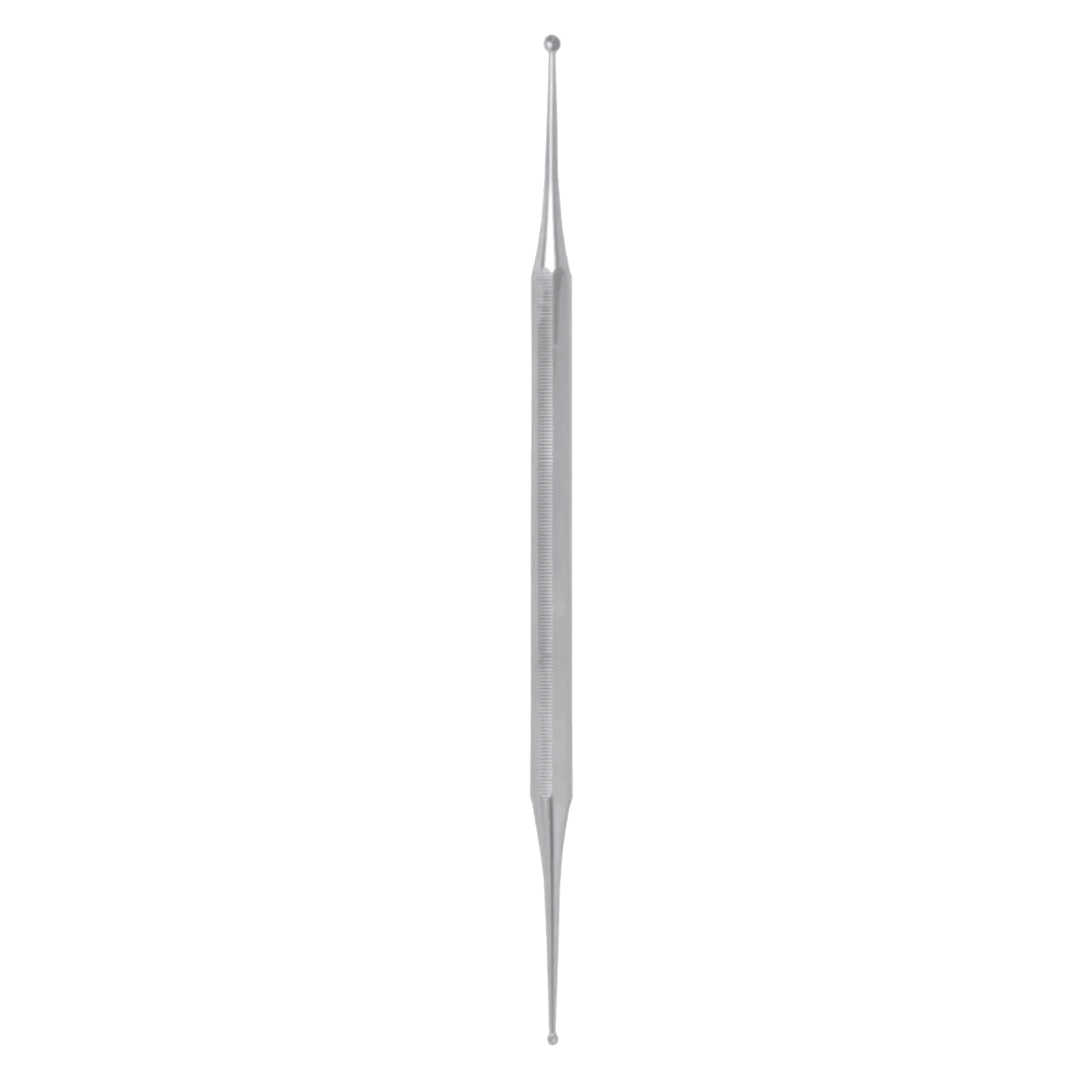


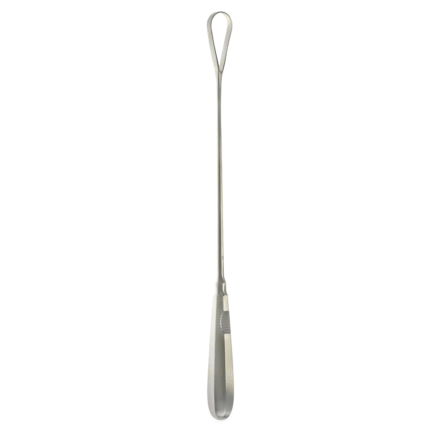
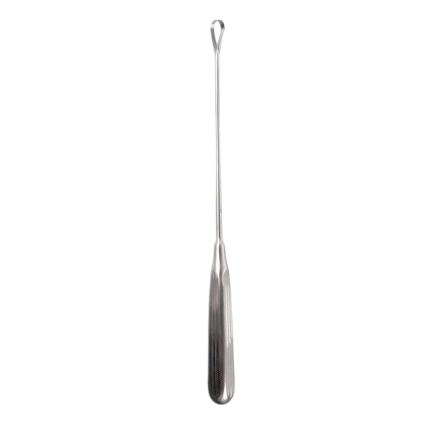
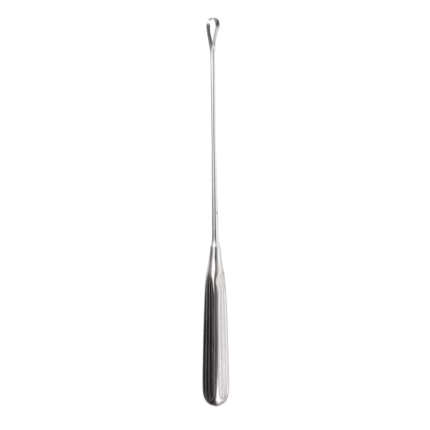
The Neurosurgery Surgical 5½” Curette Excavator – 1.5 × 2.5 mm Double-Ended (DE) is a high-precision surgical instrument developed to meet the demanding requirements of modern neurosurgery and microsurgical procedures. Engineered for controlled tissue removal, bone curettage, and delicate debridement, this instrument combines exceptional craftsmanship with ergonomic functionality to deliver outstanding surgical performance.
Featuring an overall length of 5½ inches, this curette excavator offers excellent maneuverability in confined operative fields where precision is critical. Its double-ended (DE) configuration incorporates two finely crafted working ends measuring 1.5 mm and 2.5 mm, enabling surgeons to switch between different curettage sizes without changing instruments. This dual-ended design improves surgical efficiency while reducing procedure time and instrument exchanges.
Manufactured from premium surgical-grade stainless steel, the instrument provides superior resistance to corrosion, staining, and wear. The robust construction ensures excellent durability and maintains the integrity of the working tips even after repeated sterilization and clinical use. Designed to meet the standards of professional operating rooms, the curette excavator offers dependable performance throughout its service life.
The finely polished satin finish minimizes glare from operating room lighting, enhancing visibility during microscope-assisted and minimally invasive procedures. Its ergonomically balanced handle delivers excellent tactile feedback, allowing surgeons to perform delicate movements with confidence and precision. The lightweight design also helps reduce hand fatigue during prolonged neurosurgical procedures.
This Neurosurgery Surgical Curette Excavator is commonly utilized in cranial surgery, spinal surgery, skull base procedures, tumor excision, laminectomy, discectomy, and microsurgical interventions requiring meticulous tissue removal. The precisely shaped curette tips facilitate controlled scraping and debridement while helping preserve surrounding healthy neural structures. The smaller 1.5 mm tip is ideal for highly delicate work, while the 2.5 mm tip provides greater efficiency when working on slightly larger surgical areas.
The instrument is fully reusable and compatible with standard hospital sterilization protocols, including steam autoclaving. Its premium stainless steel construction maintains dimensional accuracy, corrosion resistance, and functional reliability after repeated sterilization cycles, making it a cost-effective solution for hospitals, neurosurgical centers, and specialty surgical practices.
Whether incorporated into a comprehensive neurosurgical instrument set or used as a standalone precision instrument, the Neurosurgery Surgical 5½” Curette Excavator – 1.5 × 2.5 mm Double-Ended (DE) offers the quality, versatility, and reliability expected by today’s neurosurgeons. It is an essential tool for procedures requiring accurate tissue curettage, controlled bone removal, and exceptional microsurgical precision.
Key Features
- Double-ended design with 1.5 mm and 2.5 mm curette tips
- Overall length of 5½ inches for excellent maneuverability
- Precision instrument for delicate neurosurgical procedures
- Manufactured from premium surgical-grade stainless steel
- Satin finish minimizes operating room glare
- Ergonomic handle provides secure grip and superior control
- Ideal for tissue curettage and bone debridement
- Excellent balance for enhanced microsurgical precision
- Corrosion-resistant, durable construction
- Fully reusable and autoclavable
- Suitable for cranial, spinal, and microsurgical applications
- Designed for professional hospital and surgical center use
Product Specifications
| Specification | Details |
|---|---|
| Product Type | Neurosurgery Surgical Curette Excavator |
| Application | Tissue Curettage, Bone Debridement, Microsurgery |
| Material | Premium Surgical Grade Stainless Steel |
| Finish | Satin / Matte Finish |
| Sterilization | Autoclavable |
| Reusability | Reusable |
| Specialty | Neurosurgery, Spine Surgery |
| Instrument Type | Double-Ended Curette Excavator |
| Overall Length | 5½ Inches |
| Tip Size | 1.5 mm × 2.5 mm |
| Usage | Professional Surgical Use |
Product Contents
- 1 × Neurosurgery Surgical 5½” Curette Excavator – 1.5 × 2.5 mm Double-Ended (DE)
Applications
This neurosurgical curette excavator is commonly used in:
- Cranial neurosurgery
- Spine surgery
- Skull base surgery
- Laminectomy
- Discectomy
- Tumor resection
- Microsurgical tissue curettage
- Bone debridement
- Removal of fibrous tissue
- Delicate neurological procedures
- Microscope-assisted surgery
- Precision surgical dissection
FAQs
1. What is the Neurosurgery Surgical 5½” Curette Excavator used for?
It is used for precise tissue curettage, bone debridement, and controlled removal of tissue during neurosurgical and spinal procedures.
2. What does the double-ended (DE) design offer?
The double-ended configuration provides 1.5 mm and 2.5 mm working tips, allowing surgeons to perform different levels of tissue removal without changing instruments.
3. Is this curette excavator reusable?
Yes. It is manufactured from premium surgical-grade stainless steel and is intended for repeated professional use after proper sterilization.
4. Can this instrument be sterilized in an autoclave?
Yes. The instrument is fully autoclavable and compatible with standard hospital steam sterilization procedures.
5. Which surgical specialties commonly use this instrument?
It is widely used in neurosurgery, spine surgery, microsurgery, and orthopedic spinal procedures requiring precise curettage and tissue removal.
6. What material is the curette excavator made from?
It is manufactured from high-quality medical-grade stainless steel, ensuring excellent corrosion resistance, durability, and long-term performance.
7. Why is a double-ended curette beneficial?
A double-ended curette increases surgical efficiency by providing two different tip sizes in one instrument, reducing instrument changes and improving workflow during delicate neurosurgical procedures.


Reviews
There are no reviews yet.