
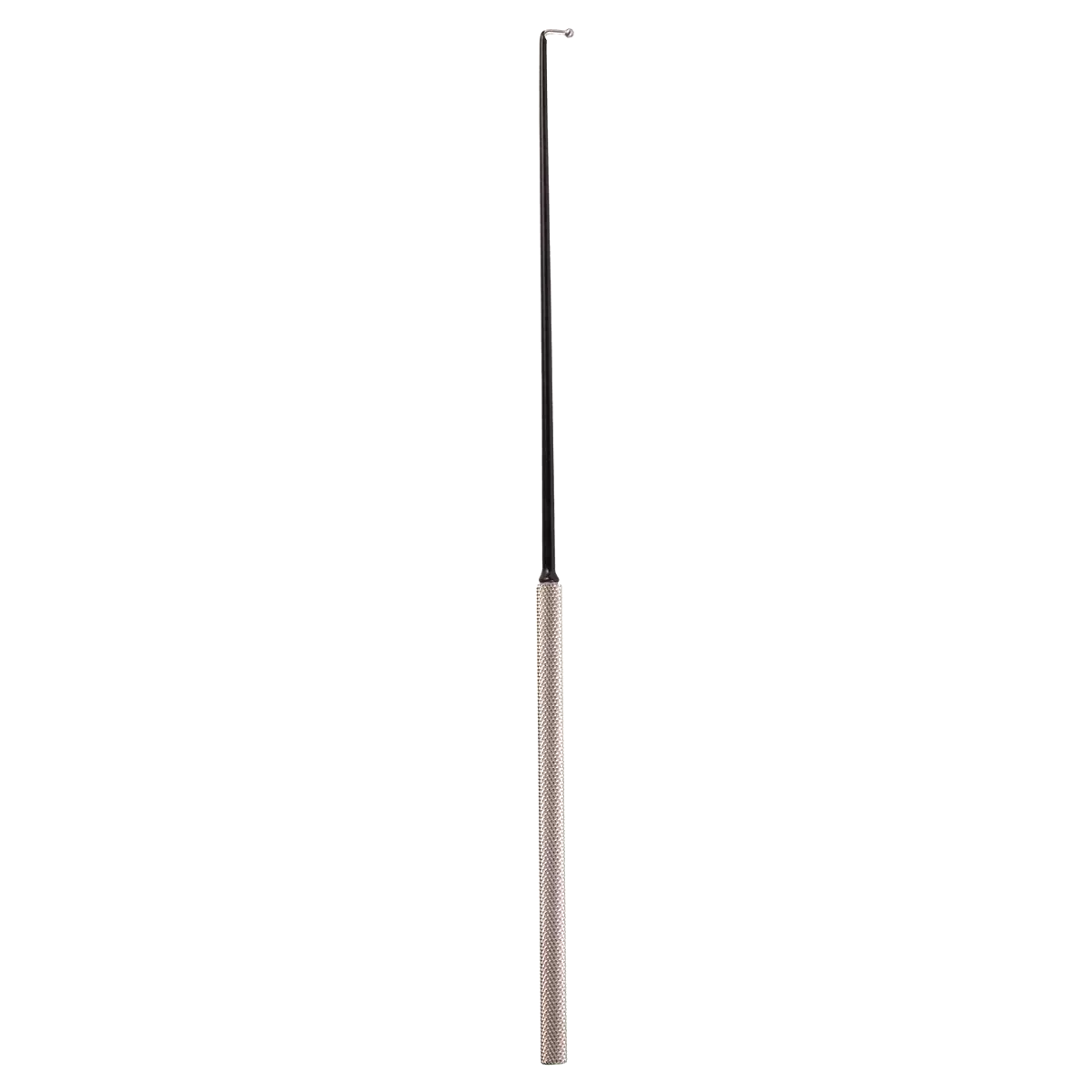
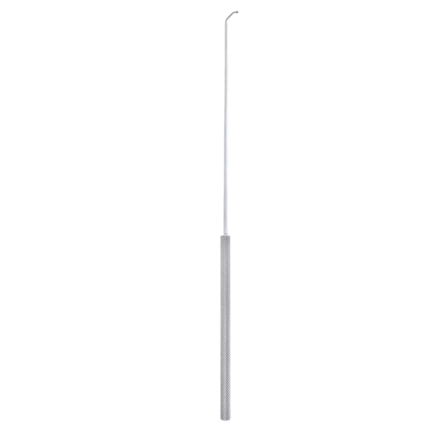
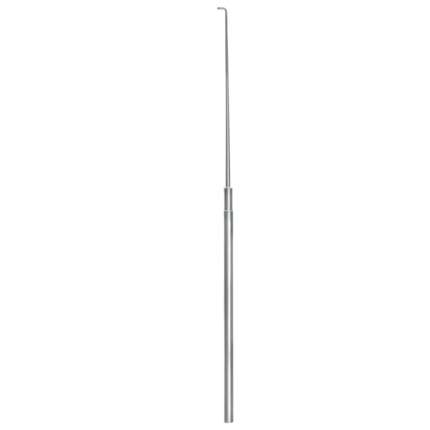
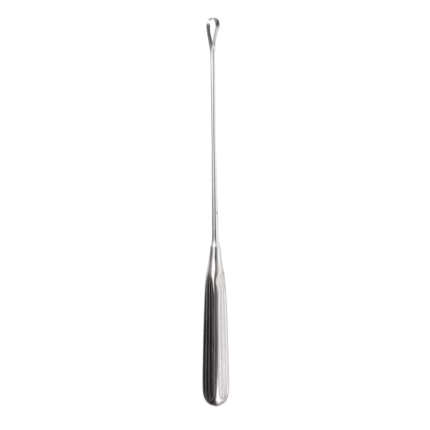
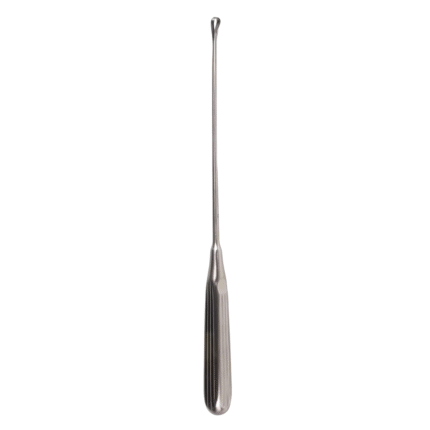
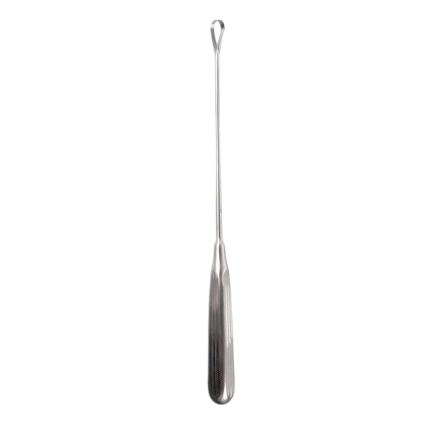
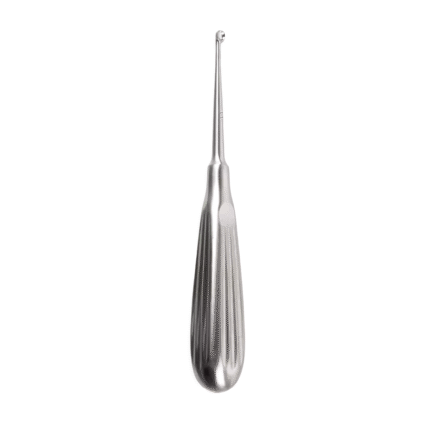
The Neurosurgery Surgical Caspar Exploration Coag Hook – 8.6 mm Hook, 9¾″ is a premium microsurgical instrument developed for precise tissue exploration, nerve identification, and controlled retraction during advanced neurosurgical and spinal procedures. Designed in the renowned Caspar pattern, this instrument features an 8.6 mm hook that enables surgeons to safely manipulate delicate neurovascular structures while maintaining excellent surgical precision.
Manufactured from premium German surgical-grade stainless steel, the Caspar Exploration Coag Hook provides exceptional strength, corrosion resistance, and long-lasting clinical durability. The satin matte finish minimizes glare under surgical microscopes and operating room lighting, improving visibility while facilitating easy cleaning and repeated sterilization.
With an overall length of 9¾ inches (24.8 cm), this instrument offers outstanding reach for deep operative fields without compromising balance or maneuverability. The 8.6 mm hook is designed to gently retract soft tissues, identify and mobilize nerves, and assist in precise microsurgical dissection. Its larger hook profile allows secure tissue engagement while promoting atraumatic handling of sensitive anatomical structures.
The ergonomically balanced handle ensures a comfortable, non-slip grip and excellent tactile feedback, allowing surgeons to perform delicate maneuvers with confidence while reducing fatigue during lengthy procedures. Precision engineering makes this instrument an indispensable component of modern neurosurgical and spinal instrument sets.
Fully reusable and autoclavable, the Neurosurgery Surgical Caspar Exploration Coag Hook is trusted by hospitals and surgical centers for consistent, reliable microsurgical performance.
Key Features
- Premium German surgical-grade stainless steel construction
- Overall length: 9¾″ (24.8 cm)
- 8.6 mm hook for precise tissue exploration and retraction
- Classic Caspar pattern design
- Designed for nerve manipulation and microsurgical dissection
- Ideal for cranial and spinal neurosurgical procedures
- Extended shaft for improved deep surgical access
- Ergonomic handle for enhanced comfort and precision
- Excellent balance and tactile feedback
- Satin matte finish minimizes operating light reflection
- Corrosion-resistant, reusable, and fully autoclavable
- Suitable for neurosurgery, spine surgery, and neurovascular procedures
Product Specifications
| Specification | Details |
|---|---|
| Product Name | Neurosurgery Surgical Caspar Exploration Coag Hook |
| Overall Length | 9¾″ (24.8 cm) |
| Hook Size | 8.6 mm |
| Pattern | Caspar |
| Material | German Surgical Grade Stainless Steel |
| Finish | Satin / Matte |
| Sterility | Non-Sterile (Autoclavable) |
| Reusable | Yes |
| Specialty | Neurosurgery, Spine Surgery |
| Latex Free | Yes |
Applications
- Cranial neurosurgery
- Spine surgery
- Microsurgical tissue exploration
- Nerve identification and mobilization
- Soft tissue retraction
- Neurovascular procedures
- Skull base surgery
- Delicate microsurgical dissection
Frequently Asked Questions (FAQs)
Q1: What is the Caspar Exploration Coag Hook used for?
It is used for tissue exploration, nerve manipulation, soft tissue retraction, and microsurgical dissection during neurosurgical and spinal procedures.
Q2: What is the benefit of the 8.6 mm hook?
The 8.6 mm hook provides a larger contact area for controlled tissue engagement and gentle manipulation of delicate neurovascular structures while maintaining precision.
Q3: Why is the 9¾″ length advantageous?
The extended length provides excellent access to deep operative fields while maintaining optimal control and visibility during microsurgical procedures.
Q4: Is this instrument reusable?
Yes. It is manufactured from premium German surgical-grade stainless steel and is designed for repeated use after proper cleaning and sterilization.
Q5: Can the Caspar Exploration Coag Hook be autoclave sterilized?
Yes. The instrument is fully autoclavable and engineered to withstand repeated sterilization cycles while maintaining its precision, durability, and clinical performance.



Reviews
There are no reviews yet.