
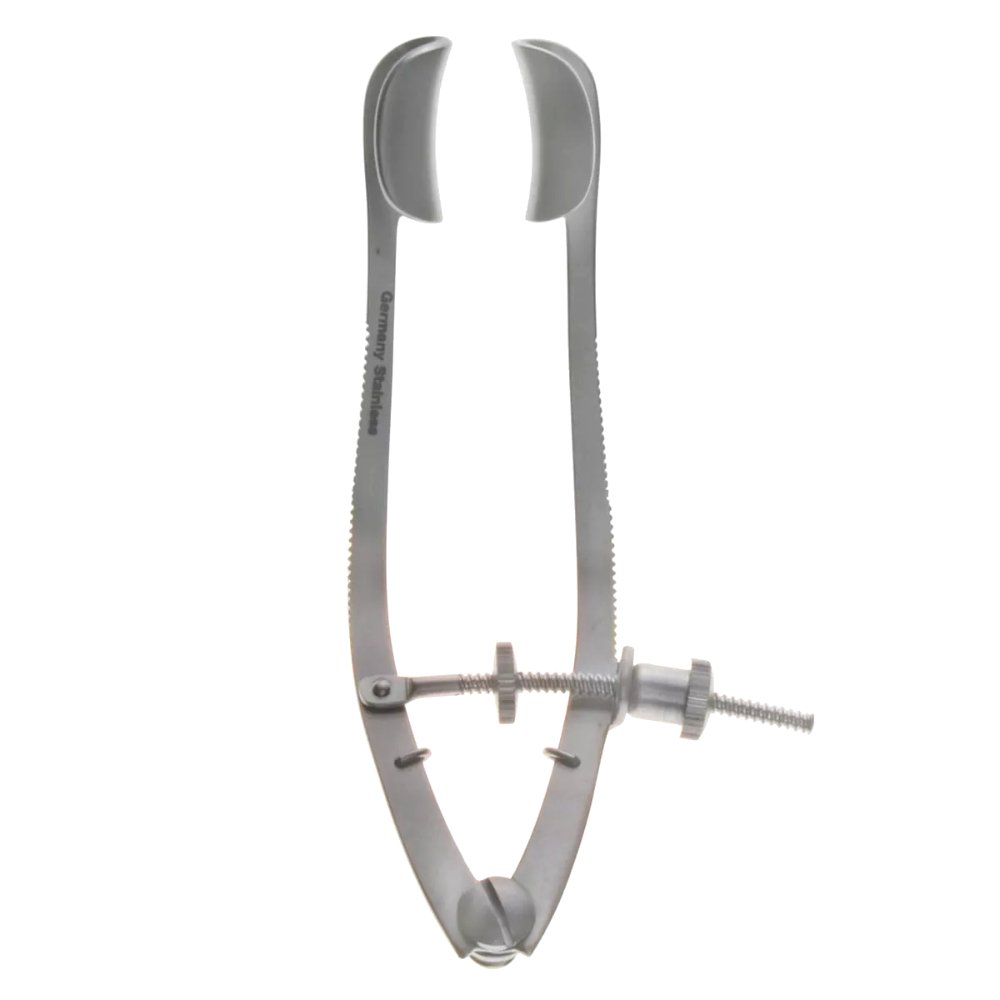


The Lancaster Eye Speculum Solid Blades is a specialized ophthalmic surgical instrument designed to provide controlled and consistent eyelid retraction during delicate eye procedures. By maintaining the eyelids in an appropriate retracted position, the instrument helps create a stable operative field and provides the surgeon with improved access to the ocular structures.
The solid-blade design provides a continuous working surface for controlled eyelid engagement and retraction. This configuration is particularly useful when a stable blade profile is preferred for maintaining exposure throughout an ophthalmic procedure. The speculum should be positioned carefully according to the patient’s anatomy and the surgeon’s preferred surgical technique to achieve the required exposure without unnecessary pressure.
This Lancaster Eye Speculum can be incorporated into professional ophthalmic instrument sets used for various eye surgery applications. Potential uses include anterior segment procedures, cataract-related surgery, ocular surface procedures, and other ophthalmic operations where controlled eyelid separation is required. The exact application depends on the surgical technique, patient anatomy, and clinical requirements.
A dependable eye speculum should provide stable positioning while minimizing interference with the surgeon’s working area. The solid blades of the Lancaster design provide a practical retraction surface while maintaining a relatively straightforward instrument profile. This can assist the surgical team in maintaining consistent exposure during procedures where unobstructed access to the eye is essential.
The instrument is typically constructed from surgical-grade stainless steel, a material commonly selected for reusable ophthalmic instruments because of its mechanical strength, durability, and resistance to corrosion when properly maintained. Stainless steel also supports routine cleaning, disinfection, and sterilization processes when these procedures are performed according to validated manufacturer instructions.
The durable construction makes the Lancaster solid-blade eye speculum suitable for hospitals, ophthalmology clinics, ambulatory surgical centers, and specialty eye surgery facilities. Reusable surgical instruments require appropriate handling throughout their service life, including careful placement, cleaning, inspection, sterilization, and storage.
After each procedure, the instrument should be cleaned promptly according to the manufacturer’s validated instructions. Blood, tissue, and other biological contaminants should be thoroughly removed before sterilization. Particular attention should be given to the solid blades and any joints or working surfaces to ensure that no debris remains after cleaning.
Before sterilization and reuse, the eye speculum should be inspected for corrosion, deformation, surface damage, or other abnormalities. Any instrument that has become damaged or no longer functions as intended should be evaluated and removed from clinical service when appropriate.
For reusable configurations, sterilization should be performed using a validated method appropriate for the instrument. Healthcare professionals should follow the manufacturer’s processing instructions and their facility’s established infection-control protocols. Proper storage after sterilization can further protect the instrument from damage and contamination.
The Lancaster Eye Speculum – Solid Blades combines a stable solid-blade configuration with durable ophthalmic instrument construction to support controlled eyelid retraction during eye surgery. Its professional design makes it a practical addition to ophthalmic surgical trays and reusable eye instrument sets where dependable surgical exposure is required.
Key Features
- Lancaster-style ophthalmic eye speculum
- Solid-blade configuration for controlled eyelid retraction
- Designed to maintain stable exposure of the ocular surgical field
- Suitable for ophthalmic and eye surgery procedures
- Continuous solid blade surface for controlled tissue engagement
- Surgical-grade stainless steel construction
- Durable design for professional clinical environments
- Corrosion-resistant with appropriate cleaning and maintenance
- Designed for controlled positioning and handling
- Suitable for ophthalmic surgical instrument sets
- Reusable when supplied as a reusable surgical instrument
- Compatible with validated cleaning and sterilization procedures
Product Specifications
| Specification | Details |
|---|---|
| Product Name | Lancaster Eye Speculum – Solid Blades |
| Instrument Type | Ophthalmic Eye Speculum |
| Design | Lancaster Style |
| Blade Configuration | Solid Blades |
| Primary Function | Eyelid Retraction |
| Specialty | Ophthalmology |
| Application | Eye Surgery and Ophthalmic Procedures |
| Construction | Surgical-Grade Stainless Steel |
| Use | Professional Surgical Use |
| Reusability | Depends on product configuration |
| Cleaning | Follow manufacturer-approved instructions |
| Sterilization | According to validated manufacturer protocol |
FAQs
1. What is the Lancaster Eye Speculum used for?
The Lancaster Eye Speculum – Solid Blades is used to provide controlled eyelid retraction and maintain access to the ocular surgical field during ophthalmic procedures.
2. What is the benefit of solid blades on an eye speculum?
Solid blades provide a continuous contact surface for controlled eyelid retraction and can help maintain stable exposure during ophthalmic surgery.
3. What procedures can use the Lancaster Eye Speculum?
It may be used in various ophthalmic procedures requiring eyelid retraction, including selected anterior segment, cataract-related, and ocular surface procedures.
4. What material is the Lancaster Eye Speculum made from?
The instrument is typically manufactured from surgical-grade stainless steel, offering strength, durability, and corrosion resistance when appropriately cleaned and maintained.
5. Is the Lancaster Eye Speculum reusable?
If supplied as a reusable surgical instrument, it can be cleaned, inspected, sterilized, and reused according to the manufacturer’s validated processing instructions.
6. How should a solid-blade eye speculum be sterilized?
The instrument should first be thoroughly cleaned and inspected. Sterilization should then be performed using the validated method specified by the manufacturer and the healthcare facility’s infection-control protocol.
7. Why is an eye speculum important during ophthalmic surgery?
An eye speculum helps keep the eyelids retracted, reducing obstruction and providing the surgeon with a more accessible and consistently visible operative field.

Reviews
There are no reviews yet.