
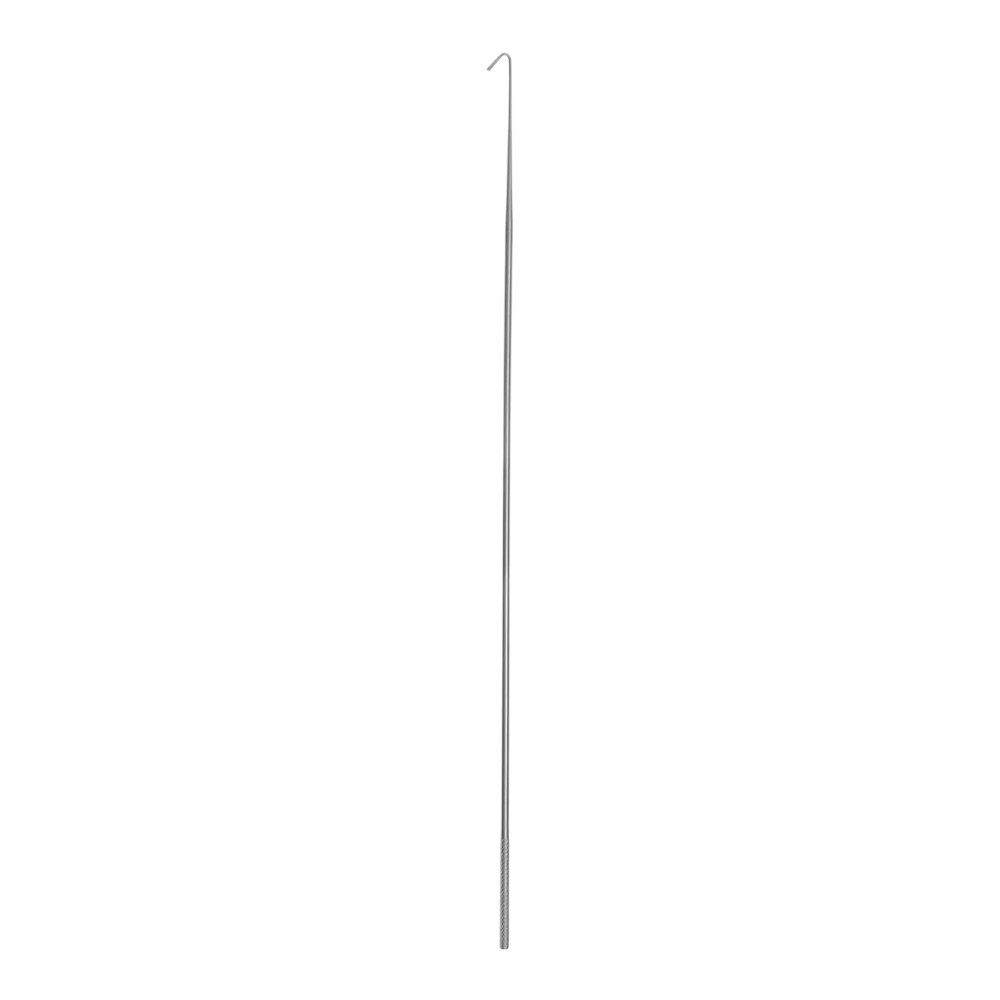
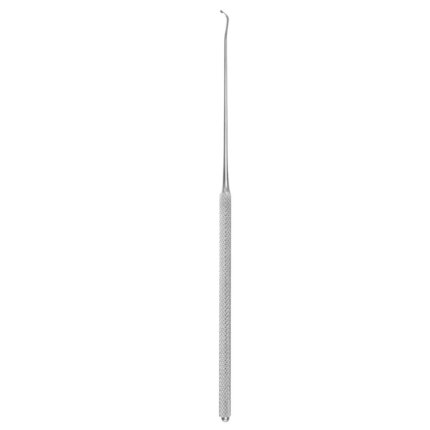
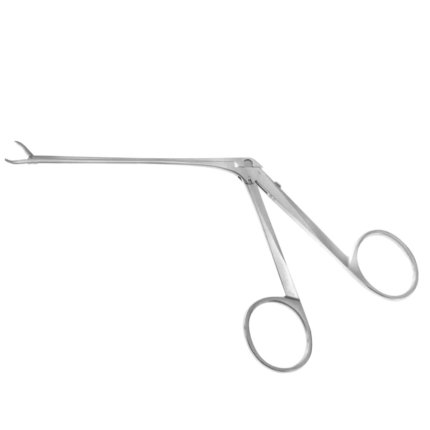
The ENT 9″ Hook Probe End Blunt is a specialized otolaryngology hand instrument designed for controlled probing, tissue positioning, and delicate manipulation during ENT examinations and surgical procedures. Its extended 9-inch length provides useful reach into operative fields while the blunt hook-style working end is designed for controlled contact with tissue and anatomical structures.
Hook probes are commonly incorporated into ENT instrument sets because their angled or curved working profile can provide access to areas that may be difficult to reach with a straight probe. The hook configuration allows the surgeon to gently identify, lift, separate, position, or manipulate appropriate tissue structures under direct visualization. The exact clinical application depends on the instrument’s specific geometry and the procedure being performed.
The blunt end is an important characteristic of this model. Unlike a sharply pointed probe, a blunt working tip is intended for controlled contact and manipulation where penetrating or cutting action is not desired. This can be useful when the surgeon needs to explore an anatomical area, gently position tissue, or identify structures while minimizing the potential for unintended puncture caused by a sharp tip.
The 9-inch overall length provides an extended working reach that can be advantageous during procedures involving deeper or less accessible anatomical areas. It allows the operator to maintain a comfortable hand position while the distal working end reaches the intended surgical site. The appropriate length and working angle should always be selected according to the specific procedure, access method, and surgeon preference.
The ENT 9″ Hook Probe End Blunt can be incorporated into a variety of otolaryngology instrument sets. It may complement nasal probes, ear probes, laryngeal instruments, elevators, suction instruments, retractors, forceps, and other specialized ENT surgical tools. It can be useful in both diagnostic and surgical workflows where controlled mechanical probing or tissue positioning is required.
The instrument provides direct tactile feedback because it is manually operated. This allows the clinician to feel resistance and changes in tissue contact while guiding the blunt working end. Such tactile information can assist with controlled examination and manipulation when performed by a qualified ENT professional.
The supplied product title identifies the instrument as a 9-inch hook probe with a blunt end, but does not specify the exact hook angle, tip diameter, shaft thickness, handle configuration, material grade, or surface finish. These technical details should be verified against the manufacturer’s current specifications before being used as definitive product information.
As a reusable ENT surgical instrument, proper cleaning and sterilization are essential following use. The probe should be thoroughly cleaned to remove blood, tissue, and other contaminants. Particular attention should be paid to the hook end and any junctions or textured areas where debris may accumulate. The instrument should be inspected for bending, deformation, corrosion, surface damage, or loss of the intended blunt profile.
Cleaning, packaging, sterilization, and storage should be performed according to the manufacturer’s validated instructions for use and the healthcare facility’s infection-control protocols. Instruments showing significant deformation or damage should be evaluated before being returned to clinical service.
For ENT professionals seeking an extended-reach manual instrument for controlled probing and tissue manipulation, the ENT 9″ Hook Probe End Blunt provides a practical solution. Its 9-inch length, hook-style configuration, and blunt working end make it a useful addition to professional otolaryngology and ENT surgical instrument collections.
Key Features
- Specialized ENT hook probe design
- 9-inch overall length for extended working reach
- Blunt working end for controlled tissue contact
- Hook configuration supports precise positioning and probing
- Designed for delicate ENT tissue manipulation
- Provides direct tactile feedback during manual use
- Suitable for controlled probing and anatomical examination
- Useful in otolaryngology surgical instrument sets
- Complements other ENT probes, forceps, and retractors
- Suitable for reusable clinical workflows
- Supports standard cleaning and sterilization procedures
Product Specifications
| Specification | Details |
|---|---|
| Product Name | ENT 9″ Hook Probe End Blunt |
| Instrument Type | ENT Hook Probe |
| Specialty | ENT / Otolaryngology |
| Overall Length | 9 inches |
| Working End | Hook |
| Tip Type | Blunt |
| Primary Function | Probing, Positioning, and Tissue Manipulation |
| Operation | Manual |
| Application | ENT Examination and Surgical Procedures |
| Hook Angle | Confirm manufacturer specification |
| Tip Diameter | Confirm manufacturer specification |
| Material | Confirm manufacturer specification |
| Handle Configuration | Confirm manufacturer specification |
| Reusable | Subject to manufacturer instructions |
| Sterilization | Follow manufacturer’s validated IFU |
| Intended Users | ENT Surgeons and Qualified Healthcare Professionals |
FAQs
What is an ENT 9″ Hook Probe used for?
The ENT 9″ Hook Probe is designed for controlled probing, tissue positioning, anatomical examination, and delicate manipulation during appropriate otolaryngology procedures.
What is the purpose of the blunt end?
The blunt end is designed for controlled tissue contact and manipulation where a sharp penetrating tip is not required.
Why is the probe 9 inches long?
The 9-inch length provides extended working reach, which can be useful when accessing deeper or less easily reached areas during ENT procedures.
What is a hook probe used for in ENT?
A hook probe can assist with controlled probing, positioning, lifting, or manipulation of suitable anatomical structures, depending on its specific design and clinical application.
Is the ENT 9″ Hook Probe reusable?
Yes, when supplied as a reusable instrument, it can be cleaned, inspected, sterilized, and maintained according to the manufacturer’s validated instructions.
How should an ENT hook probe be sterilized?
The probe should be thoroughly cleaned and inspected after use and sterilized according to the manufacturer’s validated instructions for use and the healthcare facility’s infection-control protocols.
What should be inspected before using the probe?
The clinician should check the blunt hook tip, shaft, handle, and surface for deformation, corrosion, cracks, or other damage that could affect safe performance.
Who should use the ENT 9″ Hook Probe?
It is intended for qualified ENT surgeons, otolaryngologists, and trained healthcare professionals performing appropriate examination or surgical procedures.


Reviews
There are no reviews yet.