
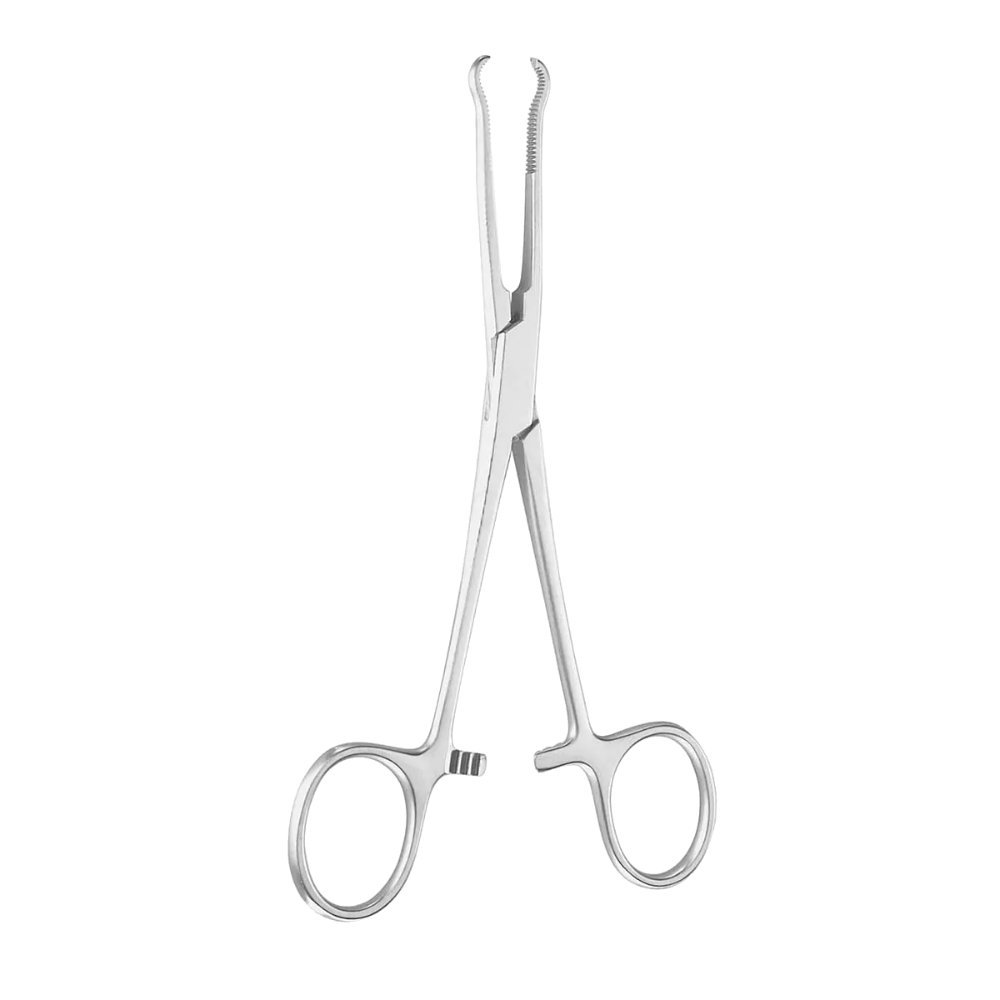
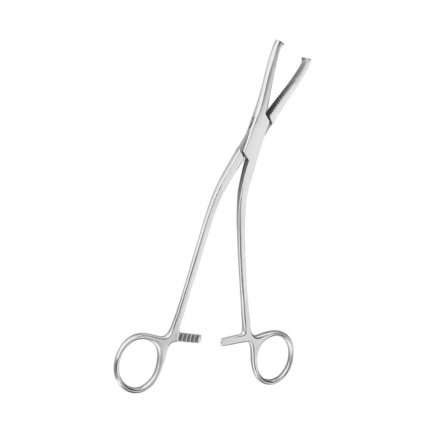

The Neurosurgery Locke Phalangeal Forceps is a specialized surgical instrument engineered to provide precise bone reduction, secure stabilization, and accurate anatomical alignment during complex neurosurgical and orthopedic procedures. Originally designed for phalangeal bone fixation, its precision gripping mechanism and compact design make it equally valuable in cranial reconstruction, spinal surgery, maxillofacial procedures, and other operations involving small bone structures where meticulous control is essential.
Designed for temporary stabilization during fracture reduction and implant placement, the instrument securely grasps small bone fragments while maintaining proper anatomical positioning. This stable fixation enables surgeons to perform drilling, screw insertion, wire fixation, or plate placement with greater confidence and precision. By minimizing unwanted bone movement during fixation, the forceps contribute to improved surgical accuracy and predictable clinical outcomes.
The Locke Phalangeal pattern is recognized for its compact profile and precise gripping capability. Its carefully engineered jaws provide a firm hold on cortical bone while applying controlled compression to reduce the risk of slippage. This dependable gripping action allows surgeons to maintain stable reduction throughout the procedure, particularly when working with delicate cranial or facial bones that require precise handling.
Manufactured from premium surgical-grade stainless steel, the Neurosurgery Locke Phalangeal Forceps delivers exceptional resistance to corrosion, staining, and repeated sterilization. The durable construction maintains precise jaw alignment and reliable gripping performance through years of routine clinical use. A satin-polished finish minimizes glare under operating room lighting while providing a smooth, easy-to-clean surface that supports efficient sterilization according to modern hospital infection control standards.
The precision-engineered jaws are designed to securely hold small bone fragments while preserving surrounding tissue integrity. Their accurate gripping capability supports temporary stabilization during cranial fixation, skull reconstruction, vertebral procedures, craniofacial reconstruction, and orthopedic trauma surgery. The instrument’s compact design also makes it well suited for microsurgical techniques and procedures performed in confined operative fields.
Ergonomic finger ring handles provide a comfortable and secure grip while delivering excellent tactile feedback for controlled instrument manipulation. The integrated ratchet locking mechanism maintains consistent clamping pressure without requiring continuous manual force, allowing surgeons to focus on definitive fixation while bone fragments remain securely stabilized. This feature improves procedural efficiency and reduces operator fatigue during lengthy surgeries.
The Neurosurgery Locke Phalangeal Forceps is widely used during cranial fracture repair, craniotomy closure, skull reconstruction, spinal fusion, vertebral stabilization, orthopedic fracture fixation, craniofacial reconstruction, maxillofacial surgery, hand surgery, and trauma procedures. Its versatile design makes it an essential instrument for procedures requiring precise handling of small bone fragments and secure temporary fixation.
Designed to meet the rigorous standards of modern surgical practice, these forceps combine precision engineering, ergonomic handling, and exceptional durability. Their reusable construction and compatibility with standard steam autoclave sterilization make them a dependable addition to professional neurosurgical and orthopedic instrument sets. Hospitals, trauma centers, and specialty surgical facilities rely on these forceps for consistent performance, accurate bone reduction, and long-term clinical reliability.
Key Features
- Premium surgical-grade stainless steel construction
- Locke Phalangeal pattern for precise bone reduction
- Designed for secure stabilization of small bone fragments
- Precision-engineered jaws provide firm and controlled gripping
- Ideal for temporary fixation before permanent implant placement
- Ratchet locking mechanism for hands-free stabilization
- Ergonomic finger ring handles for enhanced comfort and control
- Compact design for delicate and minimally invasive procedures
- Satin-polished finish minimizes operating room glare
- Corrosion-resistant construction for extended service life
- Fully autoclavable and reusable
- Suitable for neurosurgery, spinal surgery, craniofacial reconstruction, orthopedic surgery, hand surgery, and trauma procedures
Product Specifications
| Specification | Details |
|---|---|
| Product Name | Neurosurgery Locke Phalangeal Forceps |
| Specialty | Neurosurgery |
| Instrument Type | Phalangeal Bone Holding Forceps |
| Pattern | Locke Phalangeal |
| Material | Surgical Grade Stainless Steel |
| Handle Type | Finger Ring Handle |
| Locking Mechanism | Ratchet Lock |
| Jaw Type | Precision Bone Gripping Jaws |
| Finish | Satin/Polished |
| Sterility | Non-Sterile |
| Reusable | Yes |
| Sterilization | Steam Autoclavable |
| Latex Free | Yes |
| Applications | Bone reduction, fracture fixation, cranial surgery, spinal surgery, skull reconstruction, orthopedic trauma surgery, craniofacial reconstruction, maxillofacial surgery, hand surgery |
FAQs
1. What is the Neurosurgery Locke Phalangeal Forceps used for?
This instrument is used to securely grasp, reduce, and temporarily stabilize small bone fragments during neurosurgical, spinal, orthopedic, craniofacial, trauma, and reconstructive procedures before permanent fixation.
2. What are the advantages of the Locke Phalangeal design?
The Locke Phalangeal pattern provides precise gripping, controlled compression, and secure stabilization of small bone fragments, making it ideal for delicate surgical procedures requiring high accuracy.
3. What material is used to manufacture these forceps?
The forceps are manufactured from premium surgical-grade stainless steel, providing excellent corrosion resistance, durability, and dependable long-term clinical performance.
4. Can these forceps be sterilized and reused?
Yes. The instrument is fully reusable and compatible with standard steam autoclave sterilization, making it suitable for repeated professional use in hospitals and surgical centers.
5. Which surgical specialties commonly use Locke Phalangeal Forceps?
These forceps are commonly used in neurosurgery, spinal surgery, orthopedic surgery, hand surgery, trauma surgery, craniofacial reconstruction, and maxillofacial surgery, where precise bone reduction and temporary stabilization are required.

Reviews
There are no reviews yet.