
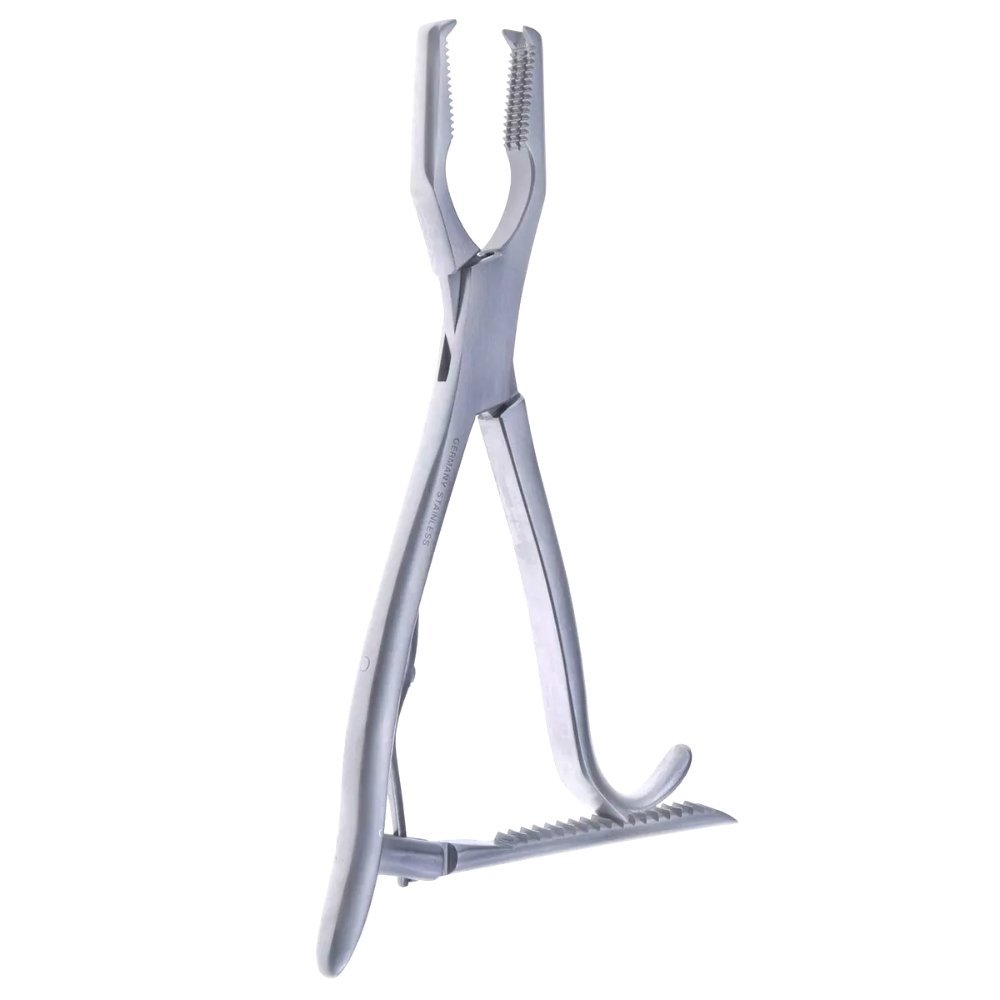
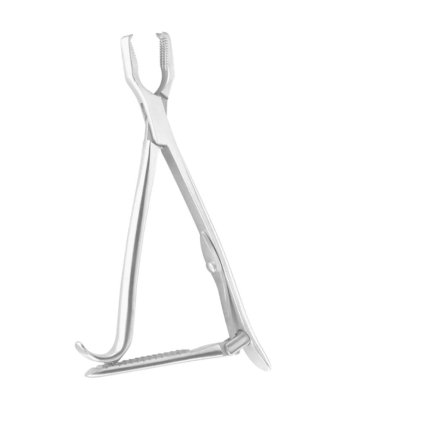
The Neurosurgery Surgical 7″ Kern Bone Holding Forceps, Ratchet Lock is a high-quality orthopedic surgical instrument engineered to provide surgeons with dependable bone gripping and stabilization during fracture reduction, fixation, and reconstructive procedures. Designed for precision and efficiency, this instrument combines a compact 7-inch profile with a secure ratchet locking system, allowing surgeons to maintain consistent holding pressure while performing critical surgical tasks.
Kern Bone Holding Forceps are widely recognized for their ability to securely grasp bone during orthopedic procedures where accurate positioning and stabilization are required. The instrument’s specially designed jaws provide a firm yet controlled grip on bone surfaces, helping surgeons maintain proper alignment during fracture reduction before applying fixation devices such as plates, screws, wires, pins, or external fixation systems. The reliable gripping action supports improved surgical accuracy and minimizes unwanted movement during procedures.
The 7-inch length provides excellent maneuverability, making this instrument particularly suitable for procedures requiring precise handling in smaller or limited operative spaces. Its compact construction allows surgeons to work comfortably around delicate anatomical structures while maintaining optimal visibility and control. This makes it a valuable instrument for orthopedic trauma, hand surgery, foot and ankle procedures, pediatric orthopedic applications, reconstructive surgery, and selected neurosurgical procedures involving bone stabilization.
The integrated ratchet locking mechanism enhances surgical efficiency by maintaining the selected jaw position without requiring continuous manual pressure. Once engaged, the lock securely holds the bone fragment, allowing surgeons to perform additional surgical steps while preserving stable alignment. The adjustable locking positions provide flexibility for different bone sizes and procedural requirements, improving overall instrument versatility.
Manufactured from premium medical-grade stainless steel, the Neurosurgery Surgical 7″ Kern Bone Holding Forceps, Ratchet Lock delivers exceptional strength, durability, and resistance to corrosion. The high-quality material ensures reliable performance through repeated surgical use and sterilization cycles. Precision manufacturing provides smooth articulation, accurate jaw alignment, and dependable locking function for consistent results in demanding operating room environments.
The instrument features ergonomically designed finger rings that provide a comfortable and secure grip, improving surgeon control and reducing fatigue during extended procedures. Its balanced weight distribution allows smooth manipulation and precise positioning, supporting greater accuracy when handling bone fragments. The satin finish reduces glare from surgical lighting and allows easy cleaning, inspection, and maintenance.
The Neurosurgery Surgical 7″ Kern Bone Holding Forceps, Ratchet Lock is commonly used in orthopedic surgery, trauma surgery, neurosurgery, spinal procedures, and reconstructive operations. It is frequently included in fracture fixation instrument sets, orthopedic trauma trays, bone surgery kits, and hospital operating room collections. Its compact size and reliable locking performance make it an essential tool for procedures requiring controlled bone stabilization.
Designed for professional healthcare environments, this reusable surgical instrument is compatible with standard cleaning, disinfection, and autoclave sterilization methods. Its durable stainless steel construction ensures long-term functionality while maintaining precise mechanical performance. For surgeons requiring a compact, reliable, and efficient bone holding solution, the Neurosurgery Surgical 7″ Kern Bone Holding Forceps, Ratchet Lock provides excellent control, durability, and surgical confidence.
Key Features
- 7-inch compact design for precise surgical manipulation
- Secure ratchet lock maintains consistent gripping pressure
- Kern jaw pattern provides reliable bone stabilization
- Designed for fracture reduction and fixation procedures
- Premium surgical-grade stainless steel construction
- Precision-machined jaws improve grip security
- Smooth ratchet mechanism for controlled locking
- Ergonomic finger rings enhance comfort and handling
- Satin finish reduces operating room glare
- Corrosion and wear resistant
- Fully reusable and autoclavable
- Suitable for orthopedic, trauma, and neurosurgical procedures
Product Specifications
| Specification | Details |
|---|---|
| Product Name | Neurosurgery Surgical 7″ Kern Bone Holding Forceps, Ratchet Lock |
| Instrument Type | Bone Holding Forceps |
| Overall Length | 7 Inches |
| Jaw Pattern | Kern Pattern |
| Locking Mechanism | Ratchet Lock |
| Material | Premium Surgical Grade Stainless Steel |
| Finish | Satin / Matte Finish |
| Reusable | Yes |
| Sterilization | Autoclavable |
| Corrosion Resistance | Yes |
| Specialty | Orthopedic Surgery, Neurosurgery, Trauma Surgery |
| Application | Bone Holding, Fracture Reduction, Bone Stabilization |
FAQs
1. What is the 7″ Kern Bone Holding Forceps Ratchet Lock used for?
It is used for securely holding and stabilizing bone fragments during fracture reduction, orthopedic fixation, trauma surgery, and reconstructive procedures.
2. What is the benefit of the ratchet lock feature?
The ratchet lock maintains consistent gripping pressure without continuous hand force, allowing surgeons to work efficiently while keeping bone securely positioned.
3. Why choose a 7-inch Kern Bone Holding Forceps?
The 7-inch size provides excellent control and maneuverability, especially in smaller surgical fields where precision is important.
4. What material is used to manufacture this instrument?
It is made from premium surgical-grade stainless steel, offering excellent durability, corrosion resistance, and repeated sterilization capability.
5. Can the Kern Bone Holding Forceps be reused?
Yes. The instrument is fully reusable and designed for repeated autoclave sterilization in hospital and surgical environments.
6. Which procedures commonly require this instrument?
It is commonly used in orthopedic trauma surgery, fracture fixation, reconstructive procedures, spinal surgery, and other operations requiring secure bone stabilization

Reviews
There are no reviews yet.