
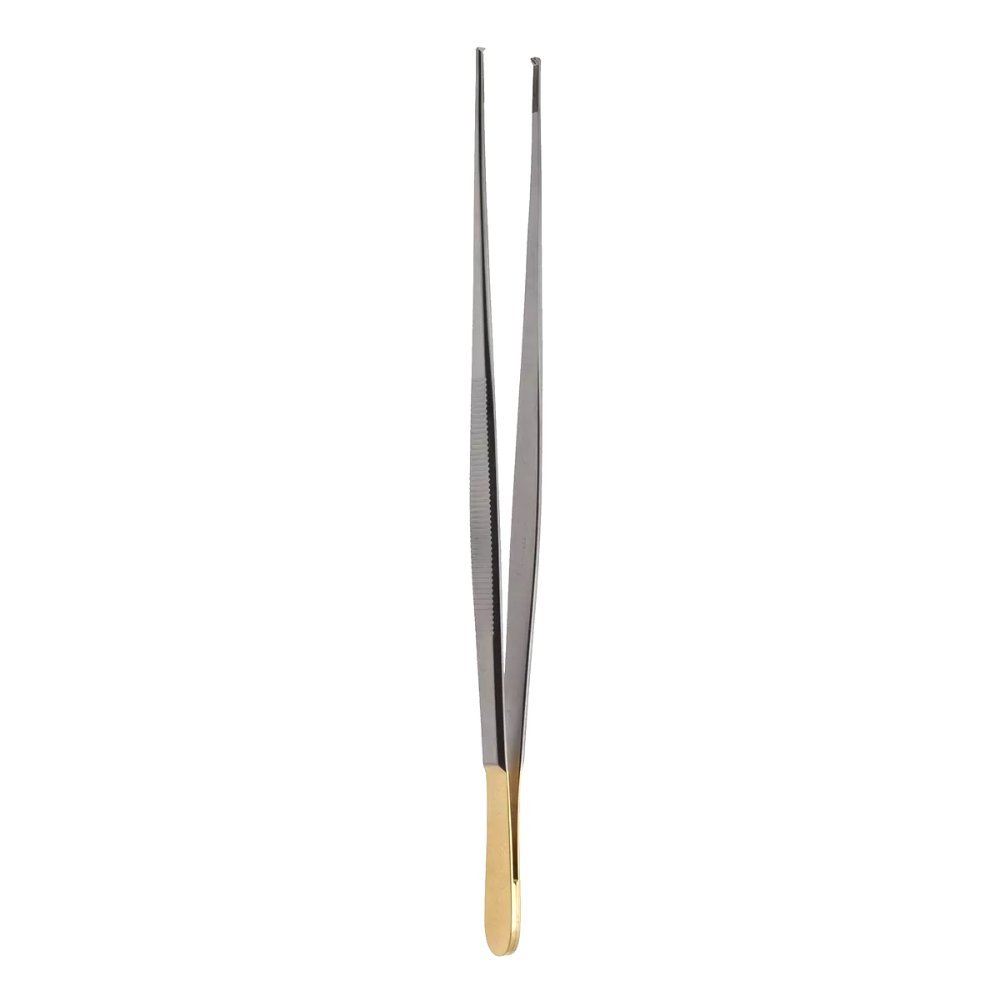


The Neurosurgery Surgical 9” Skinner Needle Forceps TC (1×2 Teeth, Small) are premium surgical instruments designed to meet the demanding requirements of neurosurgery, microsurgery, and other delicate surgical specialties. Combining the functionality of a precision tissue forceps with reliable needle handling capabilities, these forceps offer outstanding control, secure gripping performance, and exceptional durability. Their advanced design makes them an essential instrument for surgeons performing intricate procedures where precision and stability are critical.
With an overall length of 9 inches, these forceps provide extended reach for accessing deep operative fields while maintaining excellent balance and maneuverability. The longer profile allows surgeons to work comfortably around delicate anatomical structures without compromising visibility or precision. This makes the instrument particularly valuable during cranial neurosurgery, spinal surgery, vascular procedures, and microsurgical interventions.
The small 1×2 teeth configuration is carefully engineered to provide a secure grip on delicate tissues while minimizing tissue trauma. The interlocking teeth ensure reliable tissue stabilization with reduced slippage, allowing surgeons to manipulate fragile anatomical structures with confidence. In addition to tissue handling, the precision jaw design also facilitates controlled handling of fine surgical needles during suturing and wound closure.
A distinguishing feature of the Skinner Needle Forceps TC is the incorporation of tungsten carbide (TC) inserts. Tungsten carbide offers exceptional hardness and wear resistance, significantly extending the instrument’s service life while maintaining superior gripping performance. The TC inserts ensure consistent jaw alignment and dependable needle control, even after repeated use and sterilization cycles.
Manufactured from premium surgical-grade stainless steel, the Neurosurgery Surgical 9” Skinner Needle Forceps TC (1×2 Teeth, Small) provide excellent corrosion resistance and long-term durability. The high-quality construction withstands repeated steam autoclave sterilization and standard hospital reprocessing without affecting structural integrity or instrument precision. Precision manufacturing ensures smooth jaw movement and reliable performance throughout the instrument’s lifespan.
The ergonomic handle design enhances surgeon comfort during prolonged procedures by reducing hand fatigue and improving tactile feedback. The balanced construction enables precise instrument control, allowing surgeons to perform delicate suturing, tissue manipulation, and microsurgical techniques with greater confidence and accuracy.
These forceps are widely used in neurosurgery, spinal surgery, microsurgery, vascular surgery, reconstructive surgery, trauma surgery, and other specialties requiring fine needle handling and secure tissue grasping. Their versatility makes them a valuable addition to surgical instrument trays used in hospitals, ambulatory surgical centers, and specialty operating rooms.
The smooth satin finish minimizes glare under surgical lighting while facilitating thorough cleaning and efficient sterilization. Fully compatible with steam autoclave sterilization and standard hospital sterilization protocols, these forceps maintain their precision, durability, and clinical performance through repeated reprocessing cycles.
Each Neurosurgery Surgical 9” Skinner Needle Forceps TC (1×2 Teeth, Small) is manufactured under strict quality control standards to ensure precise jaw alignment, smooth operation, and dependable surgical performance. Their combination of tungsten carbide technology, ergonomic handling, premium materials, and precision engineering makes them an excellent choice for surgeons seeking reliable instruments for advanced neurosurgical procedures.
Key Features
- Designed for precise needle handling and delicate tissue grasping
- 9-inch length provides extended reach and excellent surgical control
- Small 1×2 teeth configuration ensures secure tissue stabilization
- Tungsten carbide (TC) inserts provide superior grip and extended instrument life
- Manufactured from premium surgical-grade stainless steel
- Precision-aligned jaws for consistent needle and tissue handling
- Corrosion-resistant construction for long-term durability
- Ergonomic handle minimizes hand fatigue during lengthy procedures
- Satin finish reduces glare and supports efficient cleaning
- Fully reusable and compatible with standard autoclave sterilization
- Suitable for neurosurgery, microsurgery, spinal surgery, and vascular procedures
- Professional-grade construction for hospitals and surgical centers
Product Specifications
| Specification | Details |
|---|---|
| Product Name | Neurosurgery Surgical 9” Skinner Needle Forceps TC (1×2 Teeth, Small) |
| Instrument Type | Needle Forceps |
| Overall Length | 9 Inches |
| Jaw Configuration | 1×2 Teeth (Small) |
| Insert Material | Tungsten Carbide (TC) |
| Material | Premium Surgical Grade Stainless Steel |
| Finish | Satin Finish |
| Specialty | Neurosurgery |
| Applications | Needle Handling, Tissue Grasping, Microsurgery |
| Sterilization | Autoclave Sterilizable |
| Reusable | Yes |
| Corrosion Resistant | Yes |
| Latex Free | Yes |
FAQs
1. What are the Neurosurgery Surgical 9” Skinner Needle Forceps TC (1×2 Teeth, Small) used for?
These forceps are designed for precise needle handling, suturing, and secure tissue grasping during neurosurgery, microsurgery, spinal surgery, and vascular procedures.
2. What is the advantage of the 1×2 teeth configuration?
The small 1×2 teeth provide a firm yet atraumatic grip on delicate tissues, helping reduce slippage while preserving tissue integrity.
3. Why are tungsten carbide (TC) inserts used in these forceps?
Tungsten carbide inserts enhance gripping performance, increase wear resistance, and significantly extend the lifespan of the instrument compared to standard stainless steel jaws.
4. Can these forceps be sterilized and reused?
Yes. They are fully reusable and designed to withstand repeated steam autoclave sterilization and standard hospital reprocessing procedures.
5. Which surgical specialties commonly use these forceps?
These forceps are widely used in neurosurgery, microsurgery, spinal surgery, vascular surgery, reconstructive surgery, and trauma surgery for precision needle handling and delicate tissue manipulation.


Reviews
There are no reviews yet.