
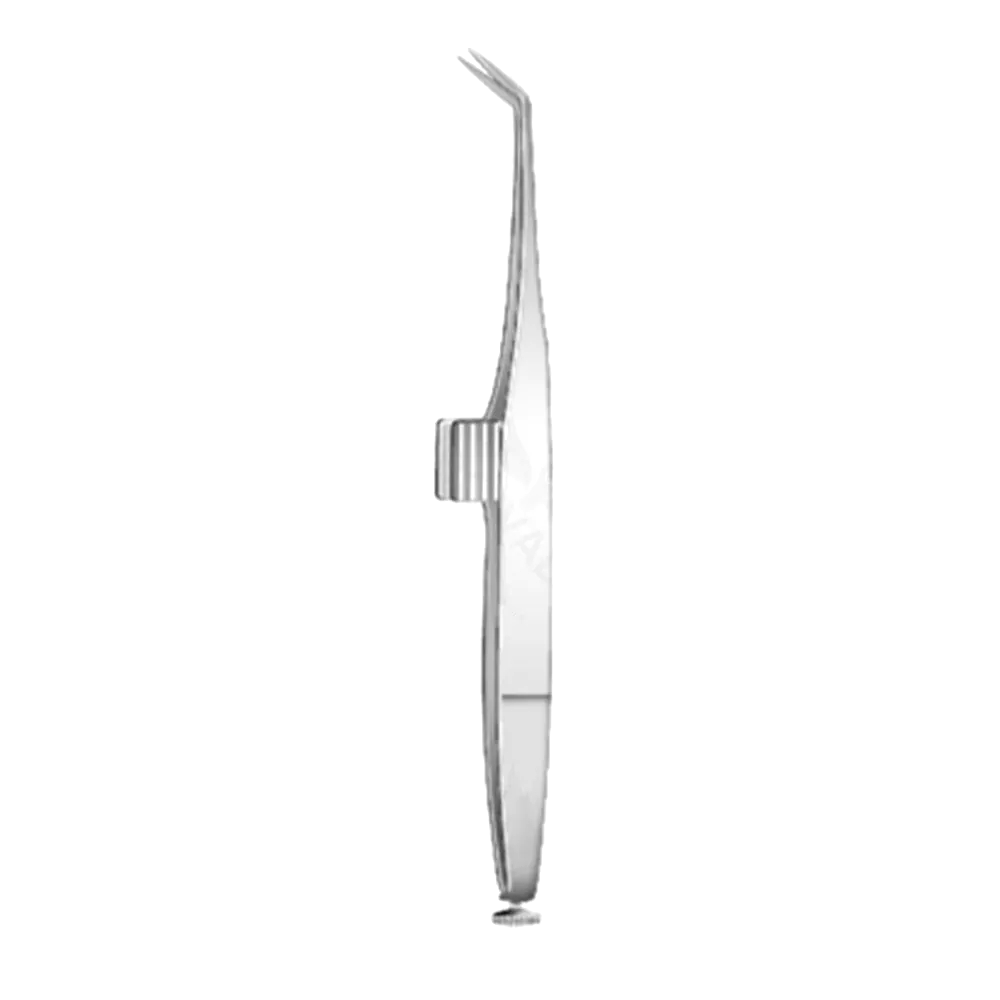
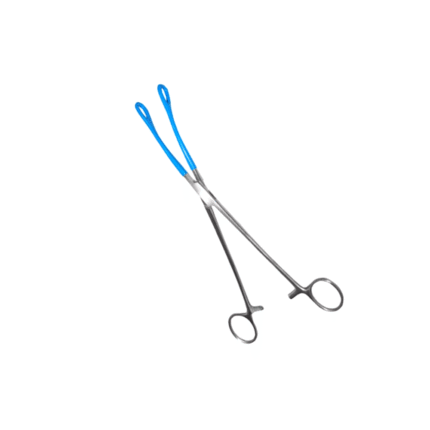
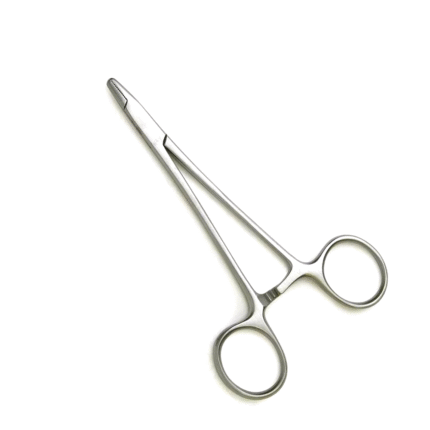
Dewecker Iris Scissors Fine Surgical Cutting Instrument are specialized fine surgical scissors designed for precise cutting and delicate dissection of soft tissues in ophthalmic, plastic, and microsurgical procedures. They are widely used where accuracy and fine control are essential, particularly in eye surgery and other procedures involving sensitive and delicate tissues.
Manufactured from premium surgical-grade stainless steel, Dewecker Iris Scissors offer excellent durability, corrosion resistance, and long-term reliability. The high-quality stainless steel construction ensures consistent sharpness and structural integrity even after repeated sterilization cycles. The polished finish provides a smooth surface that is easy to clean and suitable for sterile surgical environments.
The fine, sharp blades are designed for highly precise cutting with minimal tissue trauma. Their slender profile allows surgeons to work in confined and delicate anatomical areas with maximum accuracy and control. This makes them ideal for microsurgical dissection and ophthalmic procedures where precision is critical.
The instrument features a smooth hinge mechanism that ensures controlled opening and closing of the blades, allowing precise cutting movements. The balanced design enhances stability and reduces hand fatigue during prolonged surgical procedures.
Dewecker Iris Scissors are commonly used in ophthalmology, plastic surgery, ENT procedures, and general microsurgery for fine tissue cutting, trimming, and dissection.
Designed for repeated professional use, the instrument is fully reusable and compatible with standard sterilization methods, including steam autoclaving. Its stainless steel construction resists rust, corrosion, staining, and wear, ensuring long-term performance in clinical environments.
Available in straight and curved configurations, Dewecker Iris Scissors can be selected based on surgical requirements and access needs during procedures.
Each instrument undergoes strict quality control testing to ensure blade sharpness, alignment accuracy, and smooth mechanical performance for safe and effective surgical use.
Key Features
- Premium surgical-grade stainless steel construction
- Designed for fine and precise cutting
- Ideal for ophthalmic and microsurgical procedures
- Sharp slender blades for minimal tissue trauma
- Straight and curved variants available
- Smooth hinge mechanism for controlled cutting
- Lightweight and ergonomic design
- Corrosion, rust, and stain resistant
- Fully reusable and autoclavable
- Suitable for delicate tissue dissection
- High precision surgical control
- Manufactured to international surgical standards
Product Specifications
| Specification | Details |
|---|---|
| Product Name | Dewecker Iris Scissors |
| Instrument Type | Fine Surgical Scissors |
| Specialty | Ophthalmology, Microsurgery, Plastic Surgery |
| Material | Premium Surgical Grade Stainless Steel |
| Blade Type | Fine Sharp Blades |
| Configuration | Straight / Curved |
| Handle Type | Finger Ring Handles |
| Sterility | Non-Sterile |
| Reusable | Yes |
| Autoclavable | Yes |
| Corrosion Resistant | Yes |
| Rust Resistant | Yes |
| Latex Free | Yes |
| Clinical Application | Fine Cutting, Tissue Dissection, Microsurgery |
| Quality Standard | CE & ISO 13485 (Manufacturer Dependent) |
Frequently Asked Questions (FAQs)
1. What are Dewecker Iris Scissors used for?
They are used for fine cutting and delicate tissue dissection in ophthalmic and microsurgical procedures.
2. What makes them suitable for eye surgery?
Their fine sharp blades and precise control make them ideal for delicate ocular tissues.
3. What material are they made from?
They are made from premium surgical-grade stainless steel for durability and corrosion resistance.
4. Are they reusable?
Yes. They are designed for repeated professional use after proper cleaning and sterilization.
5. Can they be autoclaved?
Yes. They are fully compatible with standard steam autoclave sterilization procedures.
6. In which configurations are they available?
They are available in straight and curved blade configurations.
7. Do they reduce tissue damage?
Yes. Their fine blades are designed for precise cutting with minimal trauma.
8. How should they be maintained?
Clean after each use, inspect blade sharpness regularly, and sterilize according to hospital protocols.

Reviews
There are no reviews yet.