
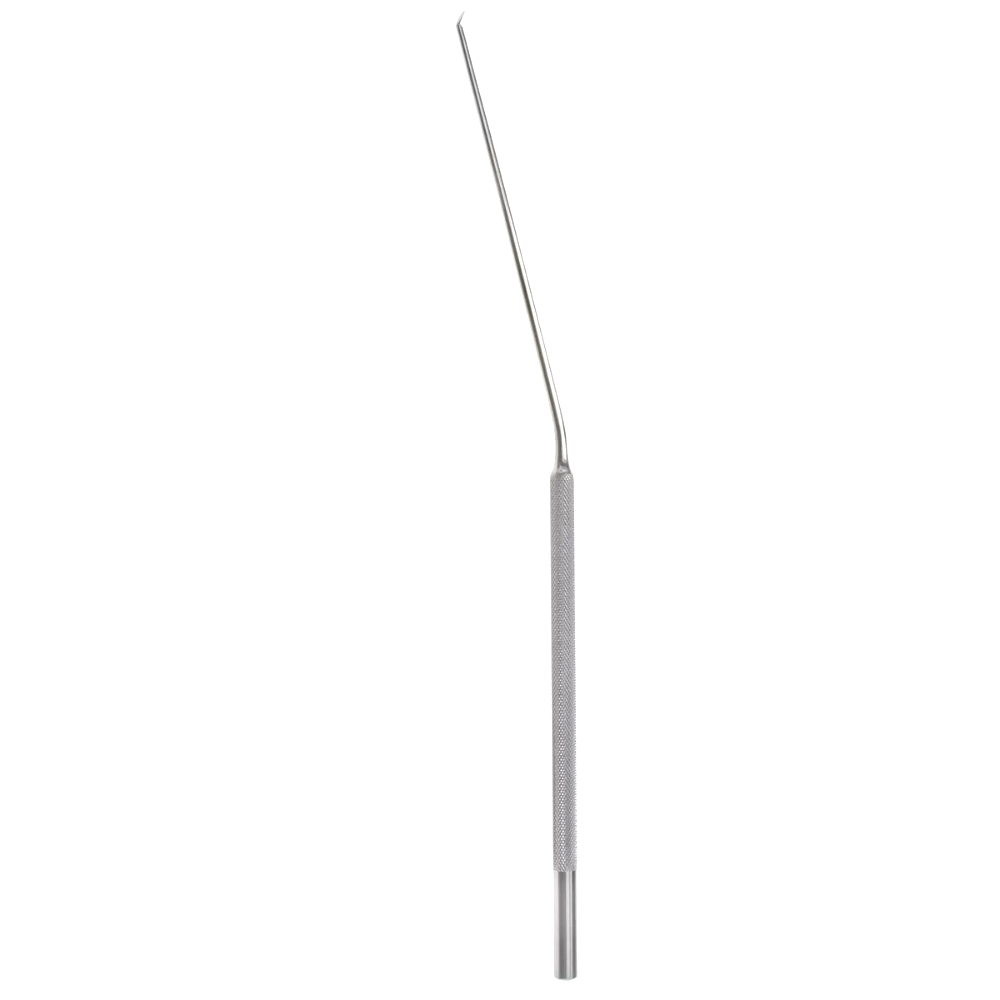

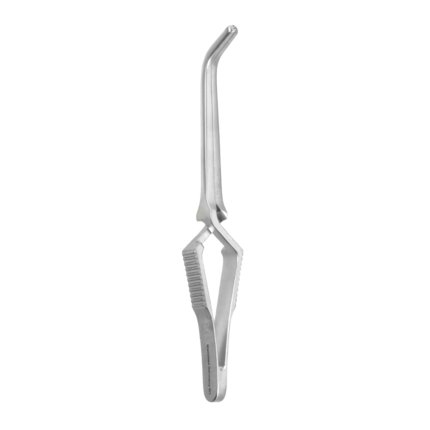
The Apfelbaum Round Dissector 3mm with Sharp Edge is a specialized neurosurgical instrument designed for controlled tissue dissection, combining atraumatic blunt guidance with a functional sharp edge for enhanced precision. Developed in the context of advanced spinal surgical techniques associated with Theodore H. Apfelbaum, this instrument is widely used in complex spinal and cranial procedures where both gentle tissue separation and selective cutting are required.
The instrument features a 3mm round working tip designed to follow natural anatomical planes while the integrated sharp edge provides added efficiency when encountering fibrous or resistant tissue. This dual-function design allows surgeons to perform smooth blunt dissection while also having the ability to carefully divide tougher connective structures without switching instruments.
The rounded geometry of the tip helps maintain safe tissue navigation, reducing the risk of unintended injury to delicate neurovascular structures. At the same time, the sharp edge enhances versatility in areas where scar tissue, adhesions, or dense fascial layers require more precise mechanical division.
This instrument is particularly useful in spinal decompression procedures, where careful separation of tissue layers is essential for exposing neural structures. It is also effective in cranial and skull base surgery, where controlled dissection in confined anatomical spaces is required.
Manufactured from premium surgical-grade stainless steel, the Apfelbaum Round Dissector offers excellent durability, corrosion resistance, and long-term reliability. It is fully autoclavable and engineered to maintain its edge integrity and structural performance through repeated sterilization cycles. The satin anti-glare finish improves visibility under operating room lighting conditions.
The ergonomically balanced handle provides secure grip and precise control, enabling surgeons to perform fine dissection with reduced fatigue. Its lightweight construction supports smooth handling and fine motor accuracy during prolonged microsurgical procedures.
The Apfelbaum Round Dissector 3mm Sharp Edge is widely used in neurosurgery, spinal surgery, and skull base procedures. It is especially valuable for spinal decompression, laminectomy, nerve root exposure, tumor dissection, and complex tissue plane development.
Key Features
- 3mm round tip with integrated sharp edge
- Combines blunt and sharp dissection capability
- Designed for spinal and cranial microsurgical use
- Excellent control in confined anatomical spaces
- Atraumatic guidance with precise cutting ability
- Ergonomic lightweight handle reduces fatigue
- Durable surgical-grade stainless steel construction
- Fully autoclavable and reusable
- Satin anti-glare finish for improved visibility
- Ideal for advanced neurosurgical procedures
Product Specifications Table
| Specification | Details |
|---|---|
| Product Name | Apfelbaum Round Dissector 3mm Sharp Edge |
| Material | Surgical Grade Stainless Steel |
| Instrument Type | Neurosurgical Dissector |
| Tip Size | 3mm Round with Sharp Edge |
| Usage | Blunt dissection, sharp tissue separation, spinal decompression |
| Reusability | Reusable |
| Sterilization | Autoclavable |
| Finish | Satin / Matte (Anti-Glare) |
| Application | Neurosurgery, spinal surgery, skull base surgery |
FAQs
1. What is the Apfelbaum Round Dissector 3mm used for?
It is used for controlled blunt and sharp dissection in spinal and neurosurgical procedures.
2. What is the benefit of the sharp edge?
The sharp edge allows controlled cutting of fibrous or resistant tissue while maintaining dissection precision.
3. Is it suitable for spinal surgery?
Yes. It is commonly used in spinal decompression and nerve root exposure procedures.
4. How does the round tip help?
The round tip helps guide safe dissection along natural tissue planes.
5. Which surgical specialties use this instrument?
It is primarily used in neurosurgery and spinal surgery for advanced tissue dissection and decompression procedures.
Reviews
There are no reviews yet.