
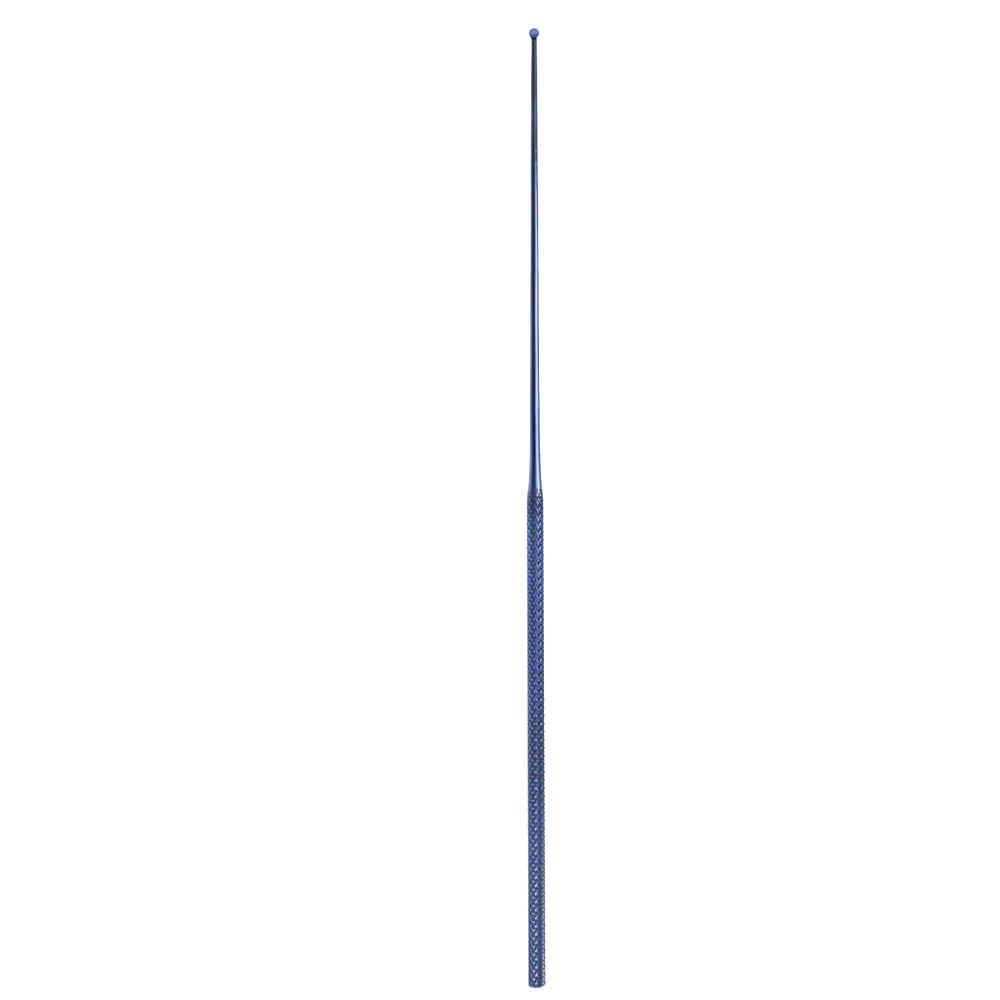

The Rhoton Round Dissector 2mm 19cm is a high-precision microsurgical instrument designed for ultra-delicate blunt dissection and atraumatic tissue handling in advanced neurosurgical procedures. Developed in line with refined microsurgical techniques associated with Albert Rhoton Jr., this instrument is widely used in neurosurgery, skull base surgery, and spinal microsurgery where extreme precision and minimal tissue trauma are essential.
The instrument features a finely crafted 2mm rounded atraumatic tip designed for controlled separation of soft neural and vascular tissues. The ultra-small rounded profile allows surgeons to gently develop natural anatomical planes, separate arachnoid membranes, mobilize delicate neurovascular structures, and perform precise blunt dissection in confined or high-risk operative fields. This makes it especially valuable for fine microsurgical work where accuracy is critical.
The 19cm straight shaft provides excellent balance between reach and precision. It allows surgeons to maintain a stable hand position under the operating microscope while ensuring direct alignment with the surgical field. The straight configuration supports controlled advancement along defined anatomical planes, improving accuracy and reducing unnecessary movement during delicate dissection.
Manufactured from premium surgical-grade stainless steel or titanium variants (depending on model configuration), the instrument offers excellent strength, corrosion resistance, and long-term durability. Its lightweight design helps reduce hand fatigue during prolonged microsurgical procedures while improving tactile feedback and fine motor control.
The ergonomically balanced handle ensures a secure and stable grip, allowing surgeons to perform ultra-precise dissections with confidence. Its lightweight construction supports smooth, controlled movements essential for high-precision neurosurgical work.
The Rhoton Round Dissector 2mm 19cm is widely used in neurosurgery, skull base surgery, spinal surgery, and microsurgical procedures. It is particularly valuable during tumor resections, aneurysm surgery, microvascular decompression, cranial nerve dissection, and arachnoid plane development where ultra-fine blunt dissection is required.
Trusted in modern microsurgical practice, this instrument reflects the precision-oriented principles of contemporary neurosurgical instrumentation and is commonly used in operating rooms worldwide.
Key Features
- Ultra-fine 2mm rounded atraumatic tip
- 19cm straight microsurgical shaft for precise control
- Designed for delicate blunt dissection and tissue plane separation
- Excellent tactile feedback under magnification
- Ideal for neural and vascular microsurgical structures
- Lightweight and fatigue-reducing design
- Corrosion-resistant and fully autoclavable
- Ergonomic balanced handle for stable control
- Suitable for neurosurgery, skull base surgery, and spinal microsurgery
- Optimized for high-precision microsurgical dissection
Product Specifications Table
| Specification | Details |
|---|---|
| Product Name | Rhoton Round Dissector 2mm 19cm |
| Material | Surgical Grade Stainless Steel / Titanium (variant dependent) |
| Instrument Type | Microsurgical Round Dissector |
| Tip Size | 2mm Round Tip |
| Shaft Design | Straight |
| Length | 19cm |
| Usage | Ultra-fine blunt dissection, neural tissue separation, microsurgical manipulation |
| Reusability | Reusable |
| Sterilization | Autoclavable |
| Finish | Satin / Matte (Anti-Glare) |
| Application | Neurosurgery, skull base surgery, spinal surgery, microsurgery |
FAQs
1. What is the Rhoton Round Dissector 2mm used for?
It is used for ultra-fine blunt dissection, arachnoid plane separation, and delicate manipulation of neural and vascular structures in microsurgical procedures.
2. What makes the 2mm tip important?
The 2mm rounded tip allows extremely precise dissection in tight anatomical spaces with minimal risk of tissue injury.
3. Is the straight 19cm design advantageous?
Yes. It provides direct control and stable alignment for precise microsurgical work under magnification.
4. What materials is this instrument made from?
It is typically manufactured from surgical-grade stainless steel, with some variants in titanium for reduced weight.
5. Which specialties use this instrument?
It is widely used in neurosurgery, skull base surgery, spinal surgery, and microsurgery for delicate blunt dissection and tissue handling.


Reviews
There are no reviews yet.