
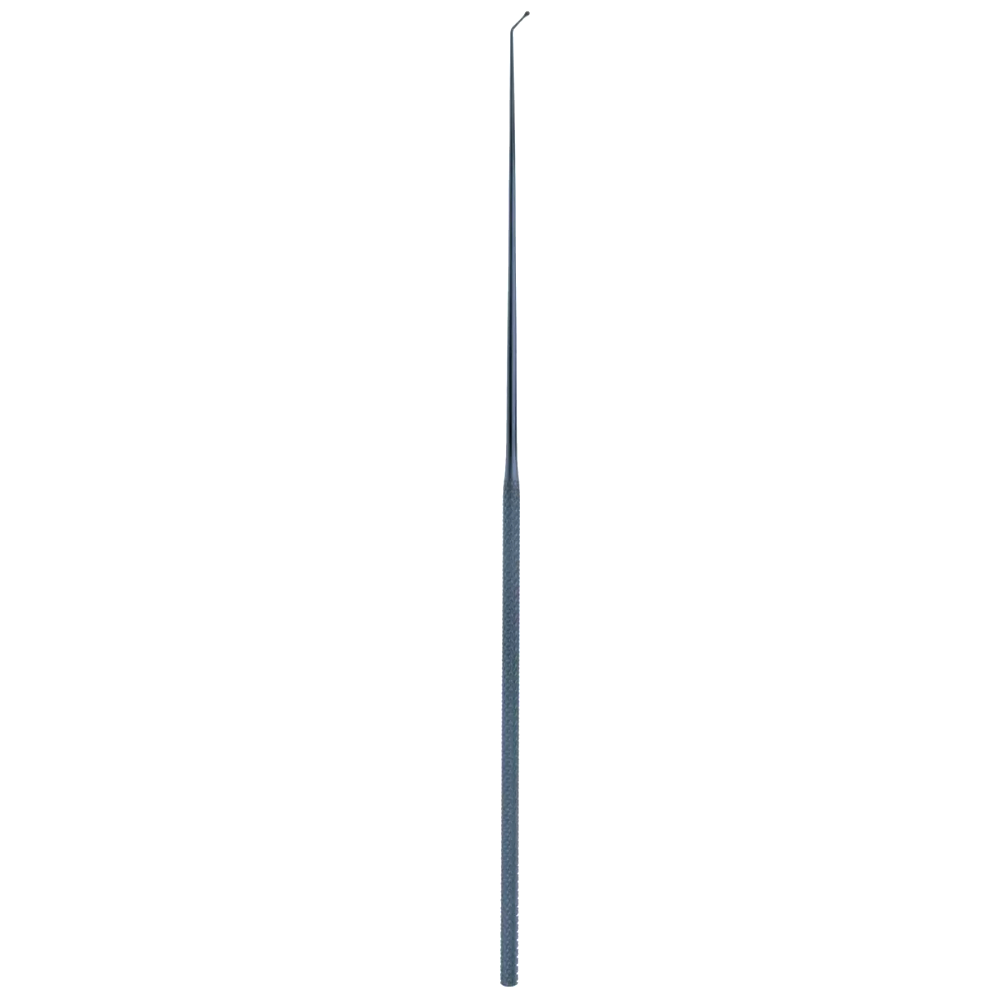
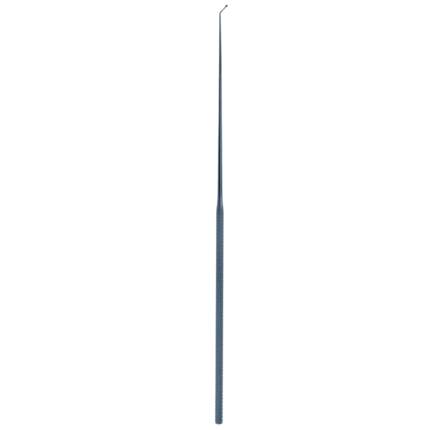
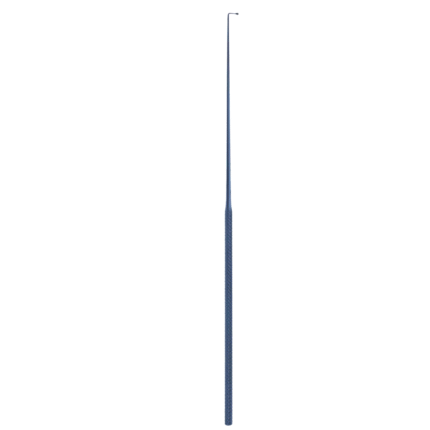
The Ball Dissector 3mm 90° Angled Titanium Lightweight Neurosurgical Tool is a premium microsurgical instrument designed to deliver exceptional precision, control, and reliability during advanced neurosurgical and microsurgical procedures. Manufactured from high-quality surgical-grade titanium, this instrument combines superior strength with an exceptionally lightweight design, allowing surgeons to perform delicate tissue dissection with enhanced comfort and reduced hand fatigue. Featuring a precision-crafted 3mm atraumatic ball tip and a 90-degree angled working end, it is ideally suited for blunt tissue separation, neurovascular manipulation, soft tissue mobilization, and anatomical exploration within confined surgical spaces.
The instrument incorporates a smooth, polished 3mm spherical ball tip specifically engineered for atraumatic blunt dissection. The rounded working end enables surgeons to gently separate arachnoid membranes, elevate soft tissues, mobilize cranial nerves, expose cerebral blood vessels, and develop natural tissue planes while minimizing trauma to surrounding anatomical structures. The smaller 3mm ball tip provides exceptional precision, making it particularly effective for working around delicate nerves, perforating vessels, and other critical microsurgical anatomy.
The 90-degree angled working end is designed to provide superior access to deep and difficult-to-reach operative fields. Its right-angle configuration allows surgeons to approach tissues from perpendicular angles, making it easier to navigate complex anatomical pathways while maintaining clear visualization under the operating microscope. This design is especially valuable during skull base surgery, cerebrovascular procedures, cranial nerve operations, spinal microsurgery, and other interventions where precise angled access is essential.
Manufactured from premium surgical-grade titanium, the Ball Dissector offers exceptional durability while weighing significantly less than comparable stainless steel instruments. The lightweight construction reduces hand fatigue during prolonged microsurgical procedures and improves instrument responsiveness, enabling smoother and more controlled movements. Titanium also provides excellent corrosion resistance, biocompatibility, and long-term reliability, ensuring consistent performance after repeated sterilization cycles.
The satin anti-glare finish minimizes reflections from operating room lighting and microscope illumination, enhancing visibility throughout delicate surgical procedures. The instrument is fully autoclavable and engineered to maintain its structural integrity, smooth surface, and precise working profile after repeated sterilization.
The ergonomically balanced handle provides a secure, comfortable grip while maximizing tactile sensitivity and surgical precision. Its lightweight design allows surgeons to perform prolonged microsurgical dissections with greater stability and reduced hand strain. Excellent balance and responsive handling contribute to improved control during blunt tissue separation and neurovascular manipulation.
The Ball Dissector 3mm 90° Angled Titanium is widely used in neurosurgery, cerebrovascular surgery, skull base surgery, spinal microsurgery, peripheral nerve surgery, and vascular microsurgery. It is particularly valuable during cerebral aneurysm clipping, microvascular decompression, brain tumor resections, cranial nerve surgery, arteriovenous malformation procedures, spinal decompressions, and other operations requiring meticulous tissue preservation. Its compact 3mm ball tip and right-angle configuration make it an ideal instrument for working safely around highly delicate anatomical structures.
Trusted by neurosurgeons and microsurgical specialists worldwide, the Ball Dissector 3mm 90° Angled Titanium Lightweight Neurosurgical Tool combines advanced titanium construction, precision engineering, ergonomic comfort, and long-term durability. Whether performing blunt tissue dissection, neurovascular manipulation, anatomical exploration, or delicate microsurgical procedures, this instrument provides the precision, control, and reliability required in today’s most demanding surgical environments.
Key Features
- Premium surgical-grade titanium construction
- Lightweight design reduces surgeon hand fatigue
- Precision 3mm atraumatic ball tip
- 90-degree angled working end for superior surgical access
- Designed for blunt tissue dissection and neurovascular manipulation
- Excellent tactile feedback for microsurgical precision
- Smooth rounded tip minimizes tissue trauma
- Satin anti-glare finish enhances microscopic visibility
- Corrosion-resistant and fully autoclavable
- Ideal for neurosurgery, cerebrovascular surgery, skull base surgery, spinal surgery, peripheral nerve surgery, and microsurgery
Product Specifications Table
| Specification | Details |
|---|---|
| Product Name | Ball Dissector 3mm 90° Angled Titanium Lightweight Neurosurgical Tool |
| Material | Surgical Grade Titanium |
| Instrument Type | Microsurgical Ball Dissector |
| Ball Tip Size | 3mm |
| Tip Angle | 90° |
| Design | Single End |
| Usage | Blunt tissue dissection, neurovascular manipulation, soft tissue mobilization, anatomical exploration |
| Reusability | Reusable |
| Sterilization | Fully Autoclavable |
| Finish | Satin / Matte (Anti-Glare) |
| Application | Neurosurgery, cerebrovascular surgery, skull base surgery, spinal surgery, peripheral nerve surgery, microsurgery |
FAQs
1. What is the Ball Dissector 3mm 90° Angled Titanium used for?
It is used for blunt tissue dissection, neurovascular manipulation, soft tissue mobilization, and anatomical exploration during advanced neurosurgical and microsurgical procedures.
2. What is the benefit of the 3mm ball tip?
The 3mm atraumatic ball tip provides highly precise tissue separation and gentle manipulation around delicate nerves and blood vessels while minimizing tissue trauma.
3. Why is titanium used for this instrument?
Titanium offers exceptional strength, lightweight performance, superior corrosion resistance, excellent biocompatibility, and reduced hand fatigue during lengthy microsurgical procedures.
4. What is the advantage of the 90-degree angled working end?
The 90-degree angle provides improved access to deep or confined surgical fields, allowing precise manipulation around complex neurovascular structures while maintaining excellent microscopic visibility.
5. Which surgical specialties commonly use this instrument?
It is widely used in neurosurgery, cerebrovascular surgery, skull base surgery, spinal surgery, peripheral nerve surgery, vascular microsurgery, and other advanced microsurgical specialties requiring precise blunt tissue dissection and neurovascular manipulation.

Reviews
There are no reviews yet.