
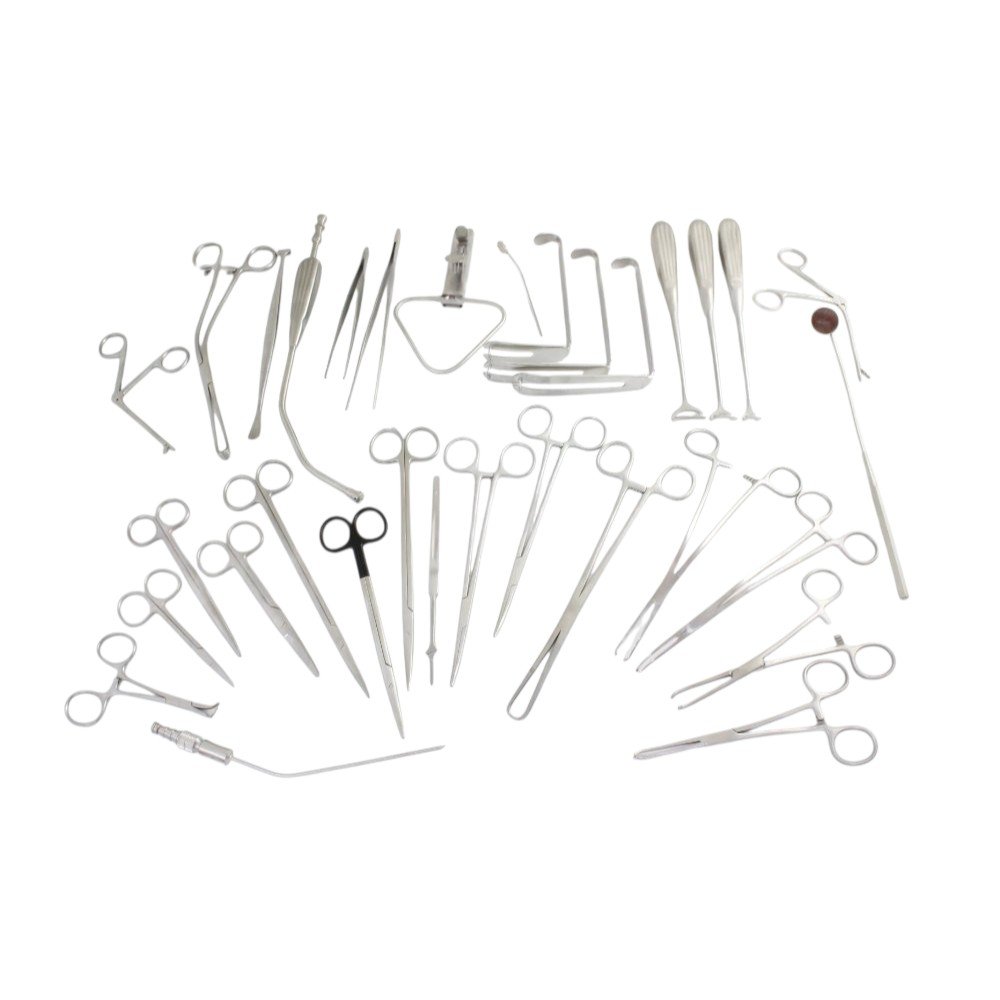
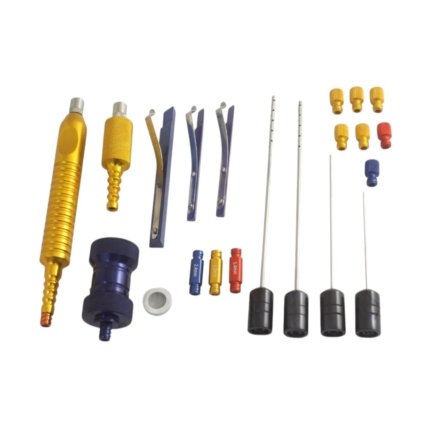
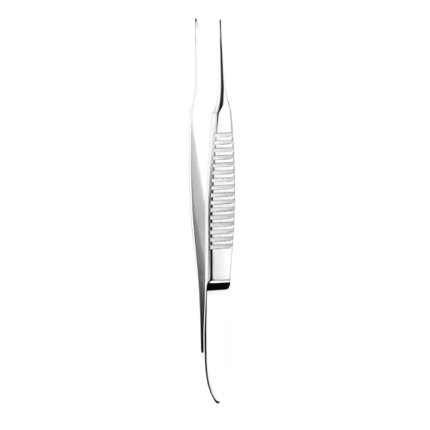
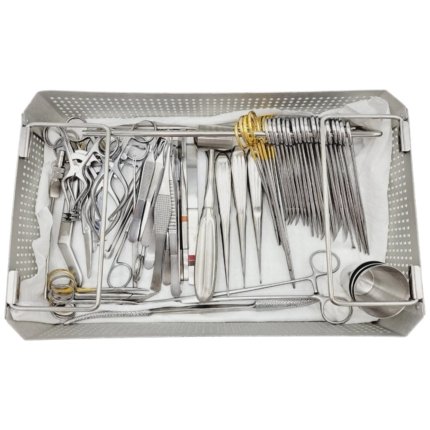
The Tonsil & Adenoid Tray – 30 Pcs Set is a specialized ENT surgical instrument collection designed for procedures involving the tonsils and adenoids. Tonsillectomy and adenoidectomy require controlled surgical access, tissue manipulation, dissection, hemostasis, and visualization, making a well-organized instrument set valuable for maintaining an efficient operating-room workflow.
The 30-piece configuration provides a broad selection of instruments intended to support different stages of tonsil and adenoid surgery. Depending on the supplied configuration, the tray may include instruments for oral exposure, tissue grasping, dissection, retraction, suction, hemostasis, and other procedural requirements. The exact instrument names and quantities should be verified against the supplied set inventory.
A dedicated tonsil and adenoid tray helps the surgical team keep frequently required ENT instruments organized and readily accessible. Proper organization can reduce unnecessary instrument handling during surgery and allow the surgeon to select the appropriate tool for each procedural step.
During tonsillectomy, instruments may be used to provide exposure of the oropharynx, grasp and manipulate tonsillar tissue, perform controlled dissection, and manage bleeding. During adenoidectomy, appropriate instruments may assist with exposure and removal of adenoid tissue from the nasopharyngeal region. The exact surgical technique varies according to the surgeon, patient anatomy, clinical indication, and available equipment.
The instruments are designed for controlled handling in the confined anatomy of the oral cavity and upper airway. Proper instrument selection is important because different working-end shapes, lengths, and jaw configurations may provide different levels of access and tissue control. Instruments should be selected according to the specific procedure and surgeon preference.
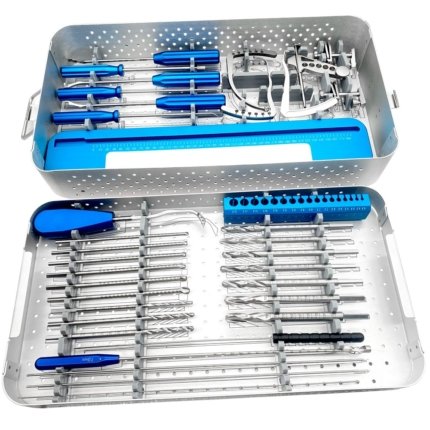
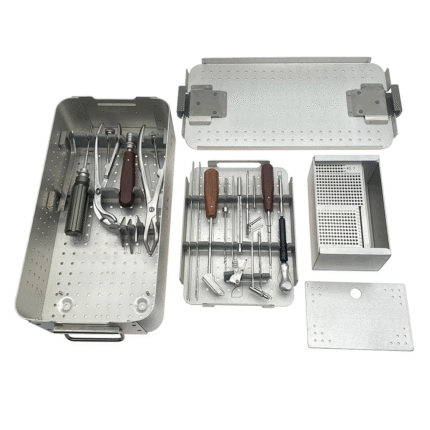
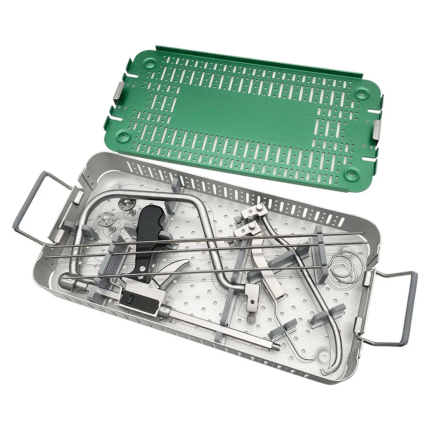
The tray configuration provides an organized storage and processing solution for the included instruments. When compatible with validated sterilization procedures, the tray can help maintain instrument organization during storage and preparation. Instruments should be placed in the tray according to the manufacturer’s loading instructions to ensure appropriate cleaning and sterilization.
If the instruments are supplied as reusable surgical devices, they should be cleaned promptly after use. Blood, tissue, and other biological material should be removed thoroughly, with particular attention to serrations, hinges, box locks, suction passages, and other difficult-to-clean areas. Following cleaning, instruments should be rinsed, dried, inspected, and sterilized according to validated manufacturer instructions and healthcare facility protocols.
The Tonsil & Adenoid Tray – 30 Pcs Set provides ENT surgical teams with an organized collection of instruments for selected tonsil and adenoid procedures. Its 30-piece configuration offers practical procedural coverage while the tray supports organized storage, handling, and preparation of the instruments.
Key Features
- 30-piece tonsil and adenoid surgical instrument set
- Designed for ENT and otorhinolaryngology procedures
- Suitable for selected tonsillectomy procedures
- Supports selected adenoidectomy procedures
- Provides instruments for exposure, grasping, dissection, and tissue handling
- Organized tray helps keep instruments readily accessible
- Suitable for professional hospital and ENT surgical environments
- Reusable instruments when designated by the manufacturer
- Stainless-steel construction where applicable to individual instruments
- Tray assists with instrument organization and storage
- Instrument configuration may vary according to the supplied set
- Requires validated cleaning, inspection, and sterilization procedures
Product Specifications
| Specification | Details |
|---|---|
| Product Name | Tonsil & Adenoid Tray |
| Set Quantity | 30 Pieces |
| Instrument Type | ENT Surgical Instruments |
| Specialty | Otolaryngology / ENT Surgery |
| Primary Applications | Tonsillectomy and Adenoidectomy |
| Instrument Functions | Retraction, Grasping, Dissection, Exposure & Tissue Handling |
| Tray | Included |
| Construction | Surgical Instrument Material, Configuration Dependent |
| Reusable | Depending on instrument designation |
| Sterilization | Follow validated manufacturer and facility protocols |
| Set Contents | 30-Piece Configuration, Contents May Vary |
| Intended Users | Qualified ENT Surgical Professionals |
FAQs
1. What is a Tonsil and Adenoid Tray?
A Tonsil and Adenoid Tray is an organized collection of ENT surgical instruments designed to support procedures involving the tonsils and adenoids, including tonsillectomy and adenoidectomy.
2. How many instruments are included in this set?
This product contains 30 pieces. The exact instruments included should be confirmed against the supplied instrument inventory.
3. What procedures can this set be used for?
The set is designed primarily for selected tonsillectomy and adenoidectomy procedures and may support related ENT surgical applications depending on its configuration.
4. What types of instruments may be included?
Depending on the configuration, the set may include retractors, forceps, scissors, dissectors, suction instruments, hemostatic instruments, and other tools used during ENT procedures.
5. Is the tray included with the instruments?
Yes. The product is described as a 30-piece set supplied in a tray for organization, storage, and appropriate instrument processing.
6. Are the instruments reusable?
Instruments designated as reusable can be cleaned, inspected, maintained, and sterilized according to validated manufacturer instructions and facility protocols.
7. Can this set be used for pediatric ENT surgery?
Tonsil and adenoid procedures are performed in both pediatric and adult patients, but instrument size and configuration must be appropriate for the patient’s anatomy and the surgeon’s technique.
8. How should the instruments be sterilized?
Reusable instruments should be thoroughly cleaned, rinsed, dried, inspected, and sterilized according to validated manufacturer instructions and the healthcare facility’s established reprocessing protocol.




Reviews
There are no reviews yet.