

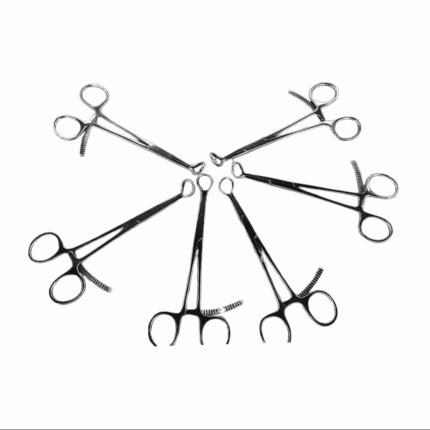

The 3.5mm LCP Posteromedial Proximal Tibial Plate Set is a specialized orthopedic implant system designed to support fixation of selected fractures involving the proximal tibia. The system combines 3.5 mm LCP posteromedial proximal tibial plates with compatible locking compression plate screws, providing orthopedic surgeons with multiple plate-length options for different fracture patterns and fixation requirements.
The proximal tibia has complex anatomy and is subjected to significant mechanical forces during weight bearing. Fractures in this region can require carefully planned fixation based on fracture morphology, bone quality, soft-tissue condition, and the anatomical location of the fracture fragments. A dedicated posteromedial plate can provide a fixation option for fractures where support along the posteromedial aspect of the proximal tibia is appropriate.
The LCP design incorporates locking screw technology in which compatible screw heads engage the threaded portions of the plate holes. This creates a fixed-angle relationship between the plate and screw and can provide angular stability within the construct. Locking fixation may be particularly useful in selected fracture patterns or bone-quality situations, but the appropriate fixation strategy must always be determined by the operating orthopedic surgeon.
This set provides 3-, 5-, 7-, and 9-hole plate configurations, offering different plate lengths and fixation capacities. Shorter plates may be appropriate where a compact fixation construct is required, while longer configurations can provide additional screw positions when a greater working length or more extensive fixation is indicated. Exact plate dimensions and anatomical suitability should be verified against the manufacturer’s implant specifications.
The 3.5 mm system size places the implants within a commonly used orthopedic small-fragment fixation platform. The accompanying LCP screws should be matched precisely to the plate system. Compatibility is determined by factors such as thread geometry, locking interface, screw head configuration, and manufacturer specifications—not simply by screw diameter. The supplied screws should therefore be used according to the applicable implant system instructions.
A posteromedial proximal tibial plate can be selected as part of a broader fixation strategy depending on the fracture configuration. In complex proximal tibial injuries, surgeons may use more than one fixation approach or combine different implants when clinically indicated. The exact implant selection, plate position, screw trajectory, reduction technique, and fixation sequence depend on the individual patient and surgical plan.
The 30-piece set provides a consolidated implant inventory containing the specified plate configurations and compatible LCP screws. This type of organized set can be useful for orthopedic trauma departments and surgical facilities that routinely perform fracture fixation procedures. The exact quantity of each plate configuration and the individual screw assortment should be confirmed using the supplier’s current implant inventory.
The plates should be handled carefully to prevent unintended deformation, scratching, or damage to the locking holes. Implant surfaces and threaded interfaces should remain clean and free of contamination before use. Instruments used for plate insertion, contouring, drilling, and screw insertion should be compatible with the implant system and used according to the manufacturer’s surgical technique.
Before implantation, each plate and screw should be inspected for damage, deformation, corrosion, contamination, or compromised packaging. Implantable fixation components are generally intended for single use unless the manufacturer specifically states otherwise. Sterile products should remain in their original sterile packaging until use, while non-sterile components must be processed according to validated manufacturer instructions.
The LCP Posteromedial Proximal Tibial Plate 3.5 mm – 30 Pc Set is intended for professional orthopedic trauma applications where a compatible posteromedial proximal tibial locking plate construct is clinically appropriate. Its multiple hole configurations and corresponding LCP screw system provide flexibility for selected proximal tibial fracture fixation strategies.
Key Features
- Complete 30-piece proximal tibial LCP plate and screw set
- 3.5 mm posteromedial proximal tibial plate system
- Available in 3, 5, 7, and 9-hole configurations
- Designed for selected proximal tibial fracture fixation
- Posteromedial plate geometry for appropriate anatomical applications
- Compatible LCP locking screw system
- Supports fixed-angle locking fixation
- Multiple plate lengths provide fixation options
- Suitable for orthopedic trauma surgery
- Designed for professional implant applications
- Implant system requires precise plate and screw compatibility
- Suitable for hospitals and orthopedic trauma centers
Product Specifications
| Specification | Details |
|---|---|
| Product Name | LCP Posteromedial Proximal Tibial Plate 3.5 mm |
| Set Quantity | 30 Pieces |
| Plate Type | Posteromedial Proximal Tibial LCP Plate |
| Plate Size | 3.5 mm |
| Hole Configurations | 3, 5, 7, 9 Holes |
| Screw Type | Compatible LCP Screws |
| Fixation Type | Locking / Fixed-Angle Fixation |
| Primary Application | Proximal Tibia Fracture Fixation |
| Surgical Specialty | Orthopedic Trauma |
| Anatomical Region | Proximal Tibia |
| Plate Position | Posteromedial |
| Material | Verify current manufacturer specification |
| Sterility | Verify supplied product configuration |
| Single Use | Implantable components are generally intended for single use |
| Intended Users | Orthopedic and Trauma Surgeons |
| Clinical Environment | Hospitals, Trauma Centers, Orthopedic Surgical Facilities |
FAQs
1. What is a posteromedial proximal tibial LCP plate used for?
A posteromedial proximal tibial LCP plate is designed for selected fracture fixation applications involving the proximal tibia where posteromedial plate support is appropriate.
2. What plate sizes are included in this set?
The set includes 3-hole, 5-hole, 7-hole, and 9-hole plate configurations.
3. What screw system is used with these plates?
The product is specified with LCP screws designed for use with the corresponding 3.5 mm LCP plate system. Exact compatibility should be confirmed from the manufacturer’s implant specifications.
4. How many pieces are included in the set?
The product is specified as a 30-piece set. The exact distribution between the different plate configurations and screw sizes should be confirmed from the supplier’s current inventory list.
5. What does LCP mean in orthopedic plates?
LCP stands for Locking Compression Plate. LCP systems combine conventional plate fixation concepts with threaded locking holes that can accept compatible locking screws to create a fixed-angle screw-plate construct.
6. Why are different hole configurations available?
Different hole counts provide different plate lengths and numbers of available fixation positions. The appropriate configuration depends on fracture morphology, anatomical requirements, and the surgeon’s fixation plan.
7. Are these plates suitable for every proximal tibia fracture?
No. Implant selection depends on fracture pattern, anatomical location, bone quality, soft-tissue condition, and the surgeon’s treatment strategy. The specific plate should only be used for indications supported by its manufacturer documentation.
8. Are the plates reusable?
Implantable plates and screws are generally intended for single use and should not be reused or resterilized unless specifically permitted by the manufacturer.

Reviews
There are no reviews yet.