
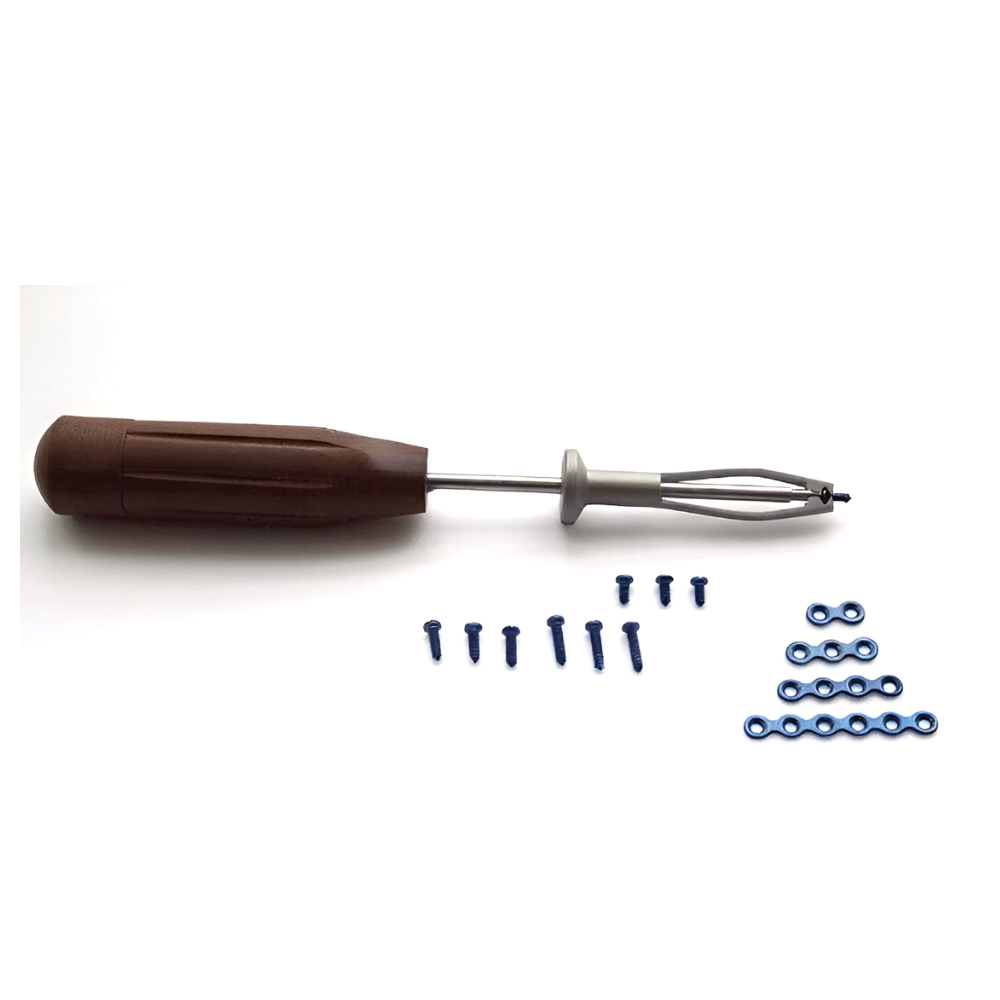
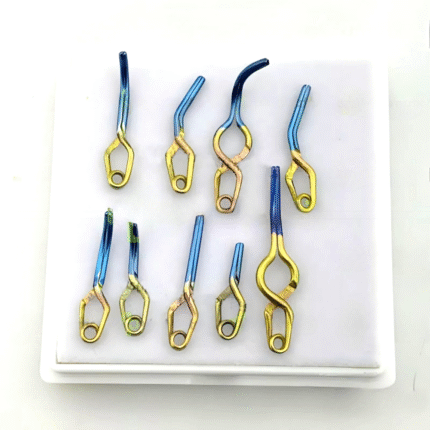
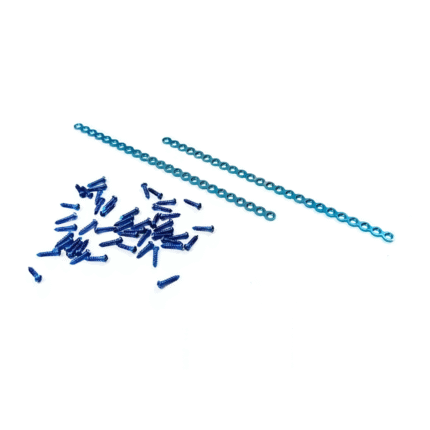
The Titanium Maxillofacial Adaptation Mini Plate is a precision-engineered fixation implant developed for the stabilization of facial bones during oral, maxillofacial, and craniofacial surgical procedures. Designed to provide secure fixation while conforming to the complex anatomy of the facial skeleton, this titanium mini plate is widely used in trauma reconstruction, orthognathic surgery, facial fracture repair, and reconstructive procedures requiring dependable bone stabilization.
Modern maxillofacial surgery demands implants that provide excellent strength while minimizing implant profile and patient discomfort. The Titanium Mini Plate is specifically designed to adapt easily to the anatomical contours of the facial skeleton, allowing surgeons to achieve accurate reduction and stable fixation of bone segments. Its low-profile design minimizes soft tissue irritation while maintaining the mechanical stability required for successful bone healing.
Manufactured from medical-grade titanium, the plate provides an outstanding combination of strength, lightweight construction, and superior biocompatibility. Titanium is recognized for its excellent corrosion resistance and compatibility with human tissue, making it one of the preferred materials for craniofacial and orthopedic implants. The implant maintains long-term structural integrity while supporting predictable clinical outcomes.
The Maxillofacial Adaptation Plate features precision-machined screw holes designed to accommodate compatible titanium maxillofacial screws, allowing secure fixation during surgical reconstruction. Its adaptable design enables intraoperative contouring to match patient-specific anatomy without compromising implant strength, making it suitable for a wide range of craniofacial applications.
The implant is commonly utilized in mandibular fracture fixation, maxillary fracture repair, zygomatic reconstruction, orbital fracture management, Le Fort fracture stabilization, orthognathic surgery, craniofacial reconstruction, bone graft fixation, and facial trauma procedures. Its versatility makes it an essential implant for oral and maxillofacial surgeons, craniofacial specialists, plastic surgeons, and trauma surgeons.
Each plate is manufactured using advanced precision machining techniques to ensure dimensional accuracy, smooth edges, and consistent quality. The carefully finished surface helps facilitate implantation while minimizing soft tissue irritation. The implant is supplied in sterile or non-sterile packaging depending on manufacturer specifications and institutional purchasing requirements.
The Maxillofacial Adaptation Plates – Titanium Mini Plate is compatible with standard maxillofacial fixation systems and is available in multiple configurations, lengths, hole patterns, and profiles to accommodate different anatomical locations and surgical techniques. Selection of the appropriate plate design should always be based on clinical requirements and surgeon preference.
Combining premium medical-grade titanium, precision engineering, anatomical adaptability, and dependable fixation performance, the Maxillofacial Adaptation Plates – Titanium Mini Plate is an essential implant solution for modern oral and maxillofacial surgery.
Key Features
- Premium Titanium Maxillofacial Adaptation Mini Plate
- Manufactured from medical-grade titanium
- Designed for craniofacial and maxillofacial bone fixation
- Low-profile design minimizes soft tissue irritation
- Excellent biocompatibility and corrosion resistance
- High strength with lightweight construction
- Easily contoured to match patient anatomy
- Precision-machined screw holes for secure fixation
- Suitable for trauma, reconstructive, and orthognathic surgery
- Compatible with standard titanium maxillofacial screw systems
- Available in multiple configurations and hole patterns
- Professional-quality implant for hospitals and maxillofacial surgical centers
Product Specifications Table
| Specification | Details |
|---|---|
| Product Name | Maxillofacial Adaptation Plates – Titanium Mini Plate |
| Product Type | Maxillofacial Bone Fixation Plate |
| Material | Medical-Grade Titanium |
| Implant Design | Adaptation Mini Plate |
| Surgical Specialty | Oral & Maxillofacial Surgery, Craniofacial Surgery, Plastic Surgery |
| Primary Applications | Facial Fracture Fixation, Orthognathic Surgery, Craniofacial Reconstruction, Bone Graft Fixation |
| Plate Compatibility | Standard Maxillofacial Titanium Screws |
| Available Configurations | Multiple Lengths, Hole Patterns, and Plate Designs |
| Biocompatibility | Excellent |
| Corrosion Resistance | High |
| Sterility | Sterile or Non-Sterile (Depending on Packaging Option) |
| Intended Users | Oral & Maxillofacial Surgeons, Craniofacial Surgeons, Plastic Surgeons |
FAQs
1. What is the Maxillofacial Adaptation Titanium Mini Plate used for?
The implant is used to stabilize facial bones during maxillofacial trauma repair, orthognathic surgery, craniofacial reconstruction, and other bone fixation procedures.
2. What material is the mini plate manufactured from?
The plate is manufactured from medical-grade titanium, offering excellent strength, lightweight performance, superior biocompatibility, and corrosion resistance.
3. Which surgical procedures commonly use adaptation plates?
These plates are commonly used for mandibular fractures, maxillary fractures, zygomatic fractures, orbital reconstruction, Le Fort fractures, orthognathic surgery, craniofacial reconstruction, and facial trauma fixation.
4. Can the plate be contoured during surgery?
Yes. The adaptation plate is designed to allow controlled intraoperative contouring so it can conform to the patient’s facial anatomy while maintaining stable fixation.
5. Is the Titanium Mini Plate compatible with standard maxillofacial screws?
Yes. The plate is designed for use with compatible titanium maxillofacial fixation screws as specified by the implant system manufacturer.
6. What are the advantages of titanium in maxillofacial implants?
Titanium offers exceptional biocompatibility, high mechanical strength, low weight, corrosion resistance, and long-term durability, making it one of the most widely used materials for craniofacial and maxillofacial bone fixation systems.

Reviews
There are no reviews yet.