
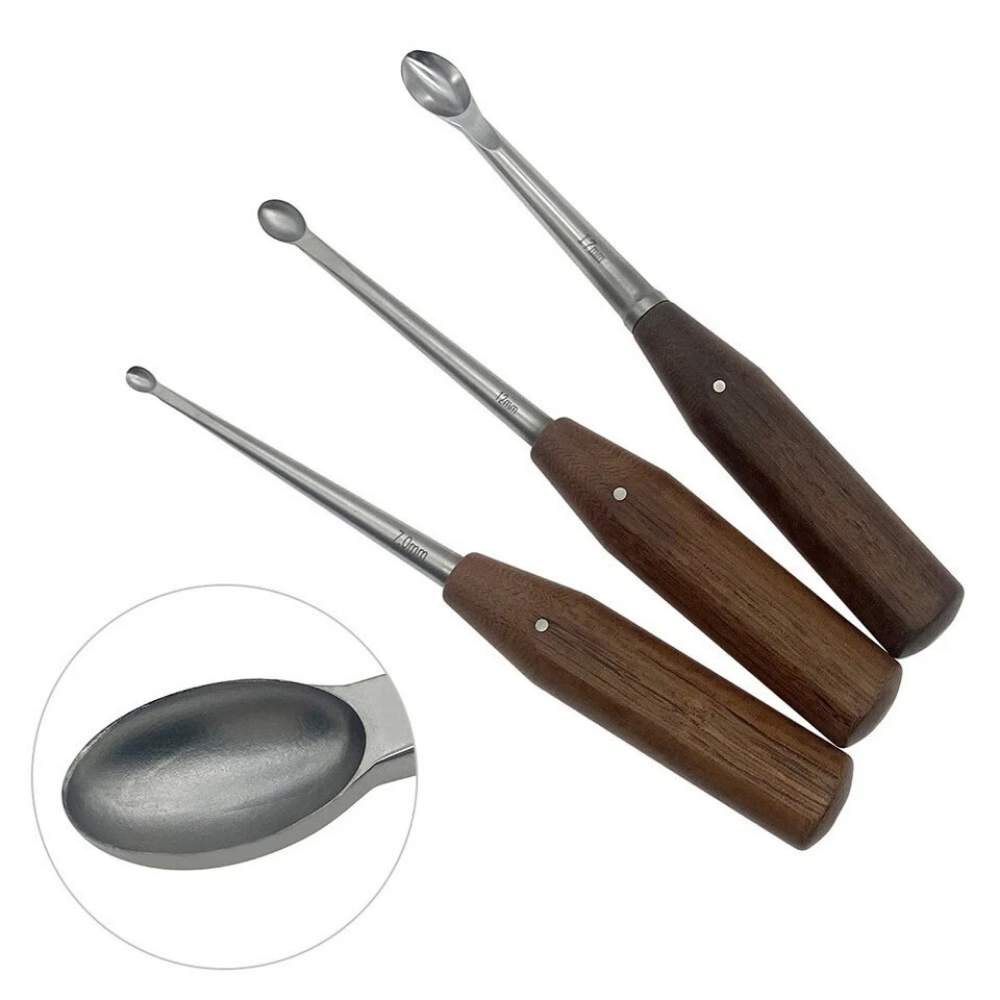

The Round Ligment Cutter Hatt Spoon Bone Curette Veterinary Orthopedic Instruments is a specialized veterinary orthopedic surgical instrument designed for controlled cutting, scraping, and removal of selected tissue or bone material during veterinary procedures. Its spoon-shaped working end provides a focused surface for manipulating and removing material from the operative site, making it useful for orthopedic and other surgical applications where controlled curettage is required.
The instrument combines the functional characteristics of a cutter and spoon-style bone curette. The working end is designed to provide controlled contact with the target area while the surgeon applies manual pressure through the handle. This allows material to be removed gradually rather than through uncontrolled force, supporting careful preparation of the surgical site.
In veterinary orthopedic surgery, curettes and specialized cutting instruments may be used during procedures involving bone preparation, removal of unwanted or compromised tissue, preparation of anatomical surfaces, and other selected orthopedic applications. The exact indication depends on the animal’s anatomy, surgical technique, and the dimensions and configuration of the instrument.
The spoon-shaped curette design provides a concave working surface that can help collect and remove small amounts of material from a prepared area. This can be useful when the surgeon needs controlled scraping or debridement within a localized surgical field. The instrument should be used only for the tissues or bone materials appropriate to its intended design.
Its compact working profile can support precise manipulation in veterinary operative fields where access and visibility are important. The surgeon can control the direction and depth of the working end through direct hand manipulation. Careful technique is particularly important around delicate anatomical structures and when working near healthy bone or soft tissue.
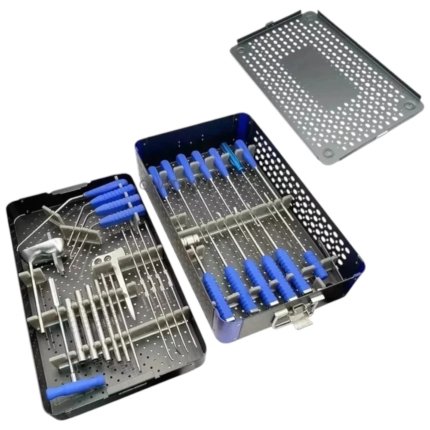
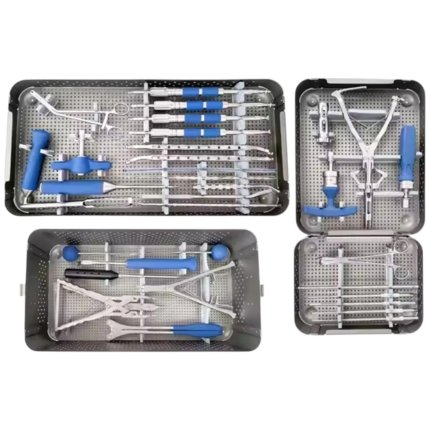
The instrument may be incorporated into veterinary orthopedic instrument trays for fracture-related procedures, bone preparation, debridement, and other selected surgical techniques. It can complement other veterinary surgical instruments such as bone curettes, elevators, rongeurs, osteotomes, and bone-holding forceps. The appropriate instrument should always be selected according to the specific procedure and patient anatomy.
For reusable surgical instruments, proper cleaning and maintenance are essential. After use, the working end should be thoroughly cleaned to remove blood, tissue, and bone debris. The instrument should be inspected for deformation, surface damage, corrosion, or other signs of wear. Cleaning, drying, packaging, and sterilization should be performed according to the manufacturer’s validated instructions and the veterinary facility’s established reprocessing protocol.
The Round Ligment Cutter Hatt Spoon Bone Curette is a practical addition to veterinary orthopedic surgical instrumentation where controlled tissue or bone manipulation is required. Its specialized spoon-style working end and manual design provide the surgeon with direct control during appropriate veterinary orthopedic procedures.
Key Features
- Specialized veterinary orthopedic surgical instrument
- Spoon-shaped curette working end
- Designed for controlled scraping and material removal
- Suitable for selected bone preparation procedures
- Useful for veterinary orthopedic and surgical applications
- Supports controlled manual manipulation
- Compact working profile for localized operative areas
- Can assist with selected debridement and bone preparation tasks
- Complements veterinary orthopedic instrument sets
- Reusable when designated for reusable surgical use
- Requires thorough cleaning after use
- Suitable for validated sterilization and reprocessing protocols
Product Specifications
| Specification | Details |
|---|---|
| Product Name | Round Ligment Cutter Hatt Spoon Bone Curette |
| Instrument Type | Veterinary Bone Curette / Surgical Cutter |
| Working End | Spoon-Shaped Curette |
| Primary Function | Controlled Cutting, Scraping and Curettage |
| Surgical Specialty | Veterinary Orthopedic Surgery |
| Application | Bone Preparation and Selected Surgical Procedures |
| Operation | Manual |
| Construction | Surgical Instrument Metal |
| Working Profile | Concave / Spoon Style |
| Reusable | Yes, when designated for reusable use |
| Sterilization | According to manufacturer-validated instructions |
| Use Environment | Veterinary Surgical / Orthopedic Procedures |
FAQs
What is a Hatt spoon bone curette used for?
A Hatt spoon bone curette is used for controlled scraping, curettage, and removal of selected bone or tissue material during appropriate surgical procedures.
Is this instrument suitable for veterinary orthopedic surgery?
Yes. This instrument is described for veterinary orthopedic applications and can be incorporated into surgical sets for selected bone preparation and related procedures.
What is the purpose of the spoon-shaped tip?
The spoon-shaped working end provides a concave surface that can help the surgeon collect and remove small amounts of material during controlled curettage.
Can this instrument be used for bone preparation?
Yes. It may be used for selected bone preparation procedures where controlled scraping or removal of material is appropriate to the surgical technique.
Is the Round Ligment Cutter reusable?
It may be reusable when designated by the manufacturer for reusable surgical use. Proper cleaning, inspection, maintenance, and sterilization are required.
How should the curette be cleaned?
Bone and tissue debris should be removed promptly after use. The instrument should then be cleaned, rinsed, dried, inspected, and sterilized according to the manufacturer’s validated reprocessing instructions.
What should be inspected before surgery?
Inspect the spoon-shaped working end, cutting surfaces, handle, and overall instrument condition for deformation, corrosion, cracks, or excessive wear before use.
Can this instrument be used for all veterinary orthopedic procedures?
No. Instrument selection depends on the animal’s anatomy, procedure, surgical technique, and the size and configuration of the instrument. The surgeon should select the appropriate instrument for each case.




Reviews
There are no reviews yet.