
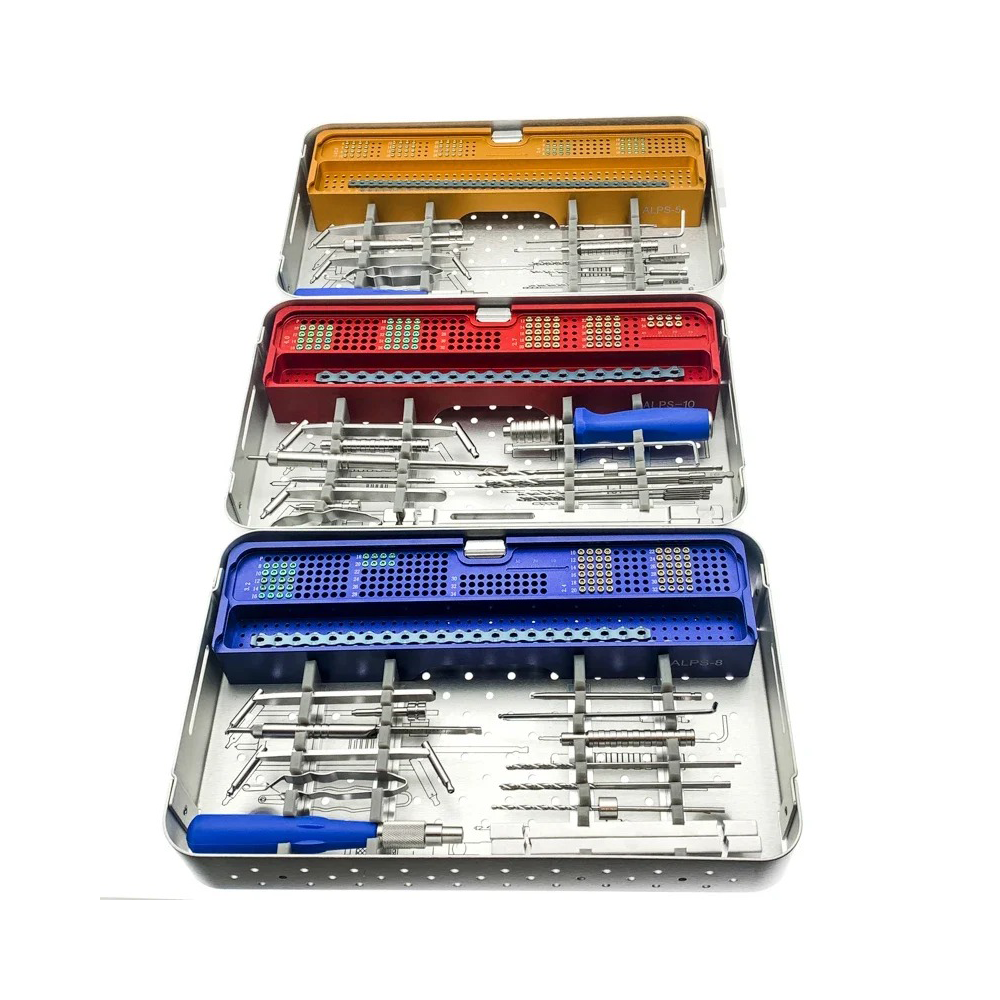
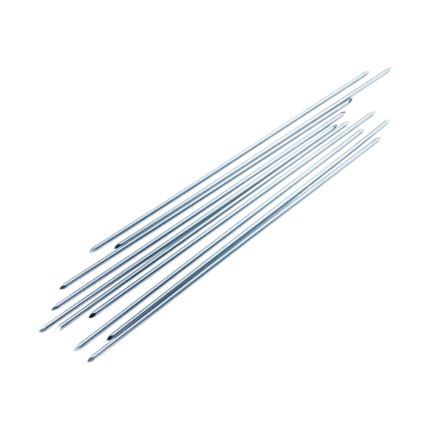
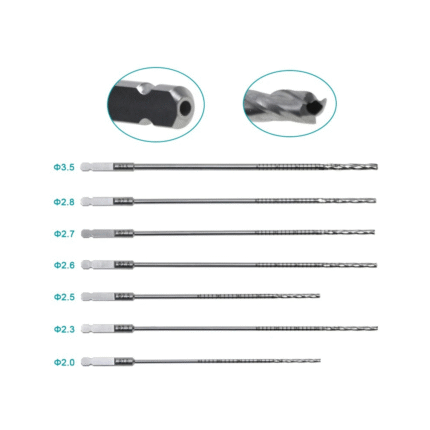
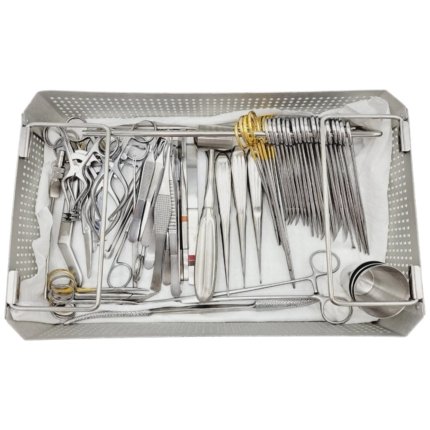
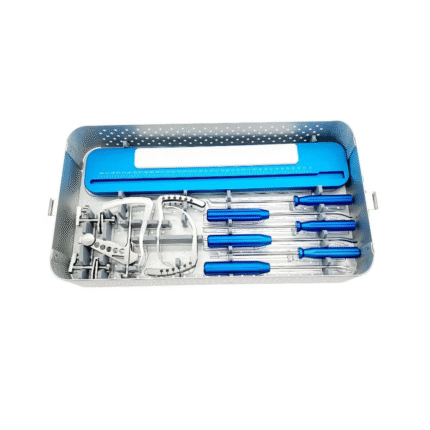
The Animal Pet Surgical Titanium Locking Plate System Veterinary Instruments Orthopedic Set is a specialized veterinary orthopedic system designed to support fracture fixation and selected reconstructive procedures in companion animals. The system combines titanium locking plates with compatible surgical instrumentation, providing veterinary professionals with a coordinated solution for bone stabilization in dogs, cats, and other appropriately sized animal patients.
Titanium is widely used in orthopedic implant applications because of its favorable strength-to-weight characteristics and corrosion resistance. A titanium locking plate can provide a lightweight fixation option while maintaining the structural properties required for selected veterinary orthopedic procedures. The appropriate implant size and configuration should always be selected according to the animal’s anatomy, body weight, bone dimensions, fracture pattern, and surgical requirements.
The locking plate design is intended to work with compatible locking screws. When properly engaged with the threaded holes of the plate, locking screws establish a fixed-angle relationship between the screw and plate. This can help create a stable fixation construct while reducing reliance on direct plate-to-bone compression. The specific fixation strategy should be determined by a qualified veterinary surgeon based on diagnostic imaging and the individual patient’s condition.
Veterinary locking plate systems may be used for selected fractures involving the radius, ulna, tibia, femur, metacarpals, metatarsals, and other bones, depending on the specific plate design and available sizes. Applications can include fracture stabilization, corrective osteotomy, reconstruction, and revision procedures where a compatible locking fixation system is clinically appropriate.
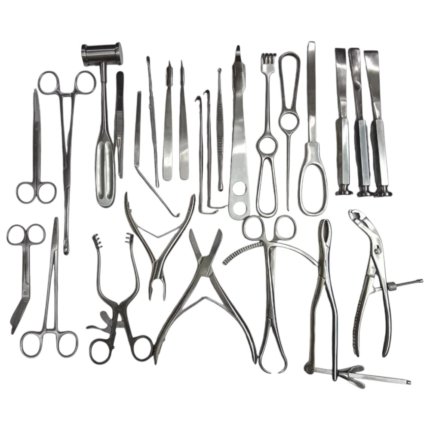
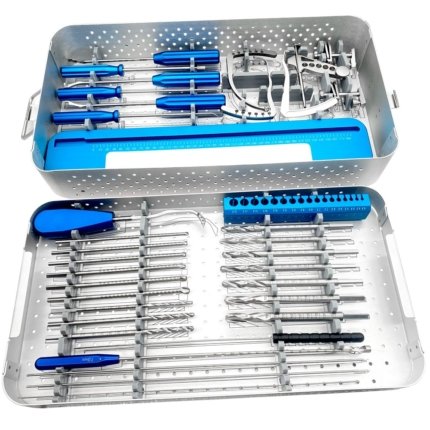
The included orthopedic instruments are intended to support essential stages of implant placement and bone preparation. Depending on the configuration of the set, instrumentation may be used for drilling, measuring, screw insertion, plate positioning, and other fixation-related tasks. Correct instrument-to-implant compatibility is important, particularly when using locking screws that require appropriately matched drill guides and drivers.
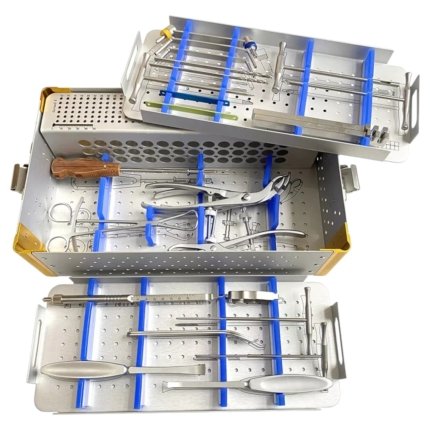
A complete veterinary orthopedic set can simplify surgical preparation by keeping compatible implants and instruments together. This can help the operating team identify appropriate components according to the patient’s anatomy and surgical plan. Before surgery, plates, screws, drill guides, drivers, and other instruments should be inspected to confirm that they are free from damage, corrosion, deformation, excessive wear, or other defects.
Proper surgical planning is essential when using veterinary orthopedic implants. Radiographic or other appropriate diagnostic imaging should be used to assess fracture location, bone dimensions, alignment, and fixation requirements. The surgeon should determine the appropriate plate length, screw number, screw diameter, screw length, and positioning based on the individual animal.
The titanium plate should be handled carefully to avoid unnecessary scratching, deformation, or damage to the locking holes. Repeated bending or contouring should only be performed when specifically permitted by the implant manufacturer and according to the recommended technique. Instruments should also be used only for their intended functions to prevent damage to precision components.
Reusable surgical instruments should be thoroughly cleaned after every procedure. Blood, tissue, bone debris, and other contaminants should be removed from working ends, threaded components, drill guides, screwdriver interfaces, and other difficult-to-clean areas. Instruments should be inspected again before sterilization.
Sterilization should be performed using a validated method appropriate for the reusable instruments and according to the manufacturer’s reprocessing instructions and veterinary facility infection-control protocols. Implant components should be handled and prepared according to their intended use and manufacturer requirements.
The Animal Pet Surgical Titanium Locking Plate System provides veterinary orthopedic professionals with an integrated implant and instrumentation platform for selected companion-animal fracture fixation procedures. Its titanium locking plate technology, compatible surgical instruments, and veterinary orthopedic configuration make it suitable for professional veterinary surgical environments.
Key Features
- Veterinary titanium locking plate fixation system
- Designed for orthopedic procedures in companion animals
- Suitable for selected canine and feline fracture fixation
- Lightweight titanium implant construction
- Locking plate design for compatible fixed-angle screws
- Supports stable orthopedic fixation constructs
- Includes veterinary orthopedic surgical instrumentation
- Suitable for selected fracture repair and osteotomy procedures
- Supports drilling, measuring, plate positioning, and screw insertion
- Designed for professional veterinary surgical use
- Multiple implant sizes can accommodate different animal anatomies
- Reusable instruments can be cleaned and sterilized according to validated protocols
Product Specifications
| Specification | Details |
|---|---|
| Product Type | Veterinary Titanium Locking Plate System |
| System Type | Orthopedic Fixation Set |
| Primary Material | Titanium |
| Plate Type | Locking Bone Plate |
| Intended Patients | Dogs, Cats & Suitable Companion Animals |
| Primary Application | Veterinary Fracture Fixation |
| Fixation Type | Locking Plate & Screw Fixation |
| Screw Type | Compatible Locking Screws |
| Instrumentation | Veterinary Orthopedic Instruments |
| Surgical Specialty | Veterinary Orthopedics |
| Applications | Fracture Fixation, Osteotomy & Reconstruction |
| Use | Professional Veterinary Surgery |
FAQs
What is a veterinary titanium locking plate system used for?
A veterinary titanium locking plate system is used for selected fracture fixation and orthopedic reconstruction procedures in companion animals such as dogs and cats.
Why are titanium plates used in veterinary orthopedic surgery?
Titanium provides a favorable strength-to-weight ratio and corrosion resistance, making it a useful material for selected veterinary orthopedic implant applications.
Can this locking plate system be used for dogs and cats?
The system is intended for veterinary orthopedic applications and may be suitable for dogs, cats, and other appropriately sized animals when the selected implant matches the patient’s anatomy and surgical requirements.
What are locking plates used for in veterinary surgery?
Locking plates are used to stabilize selected bone fractures and osteotomies. Compatible locking screws engage with threaded plate holes to create a fixed-angle fixation relationship.
What veterinary procedures can use locking plates?
Depending on the implant design and size, veterinary locking plates may be used for selected fractures of the radius, ulna, femur, tibia, metacarpals, metatarsals, and other bones.
Are surgical instruments included with the titanium plate system?
The product is described as a veterinary orthopedic set with surgical instrumentation. The exact instruments and implant configuration should be verified against the supplied set specification.
How is the appropriate veterinary plate size selected?
Plate size should be selected according to the animal’s body size, bone dimensions, fracture location, fracture pattern, bone quality, and the surgeon’s fixation plan.
Can titanium locking plates be bent?
Plate contouring or bending should only be performed when permitted by the specific implant design and manufacturer instructions. Improper bending can affect the plate’s geometry and mechanical performance.
How should the veterinary instruments be sterilized?
Reusable instruments should be thoroughly cleaned, inspected, and sterilized using validated procedures specified by the manufacturer and the veterinary facility’s infection-control protocol.



Reviews
There are no reviews yet.