
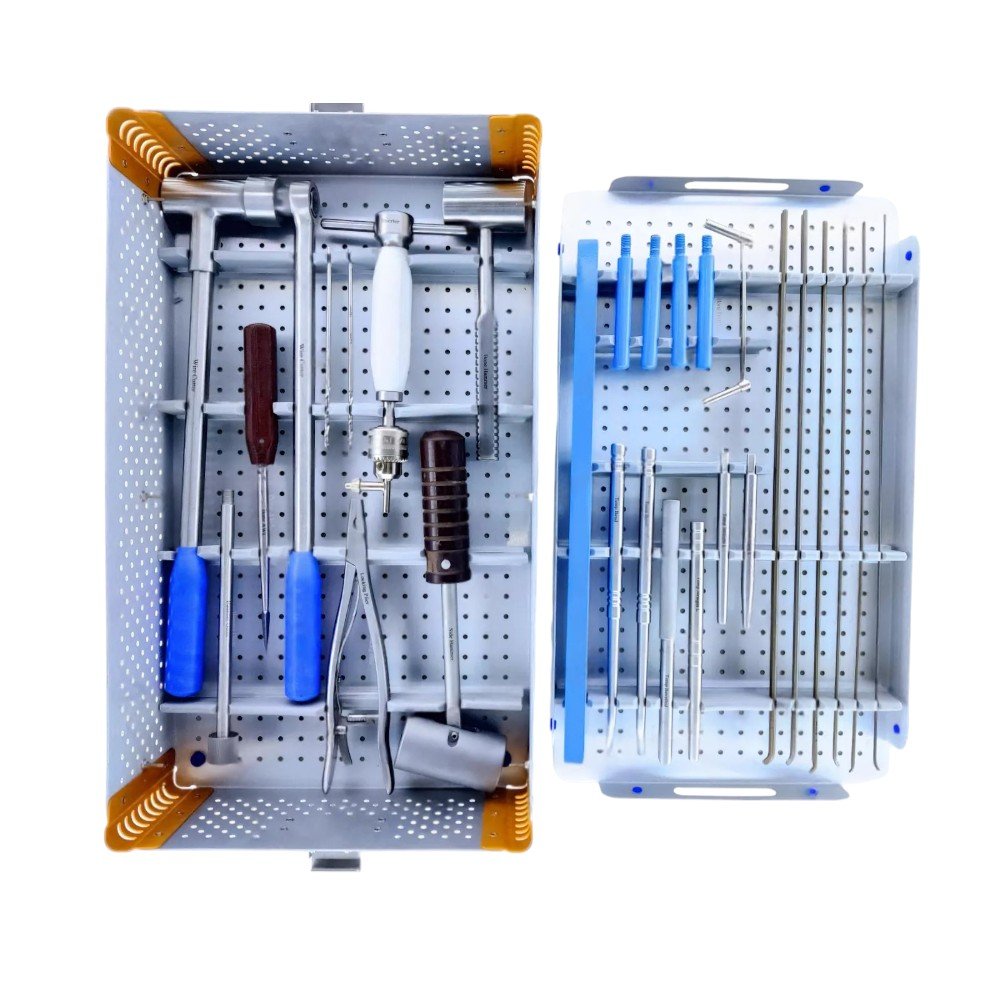

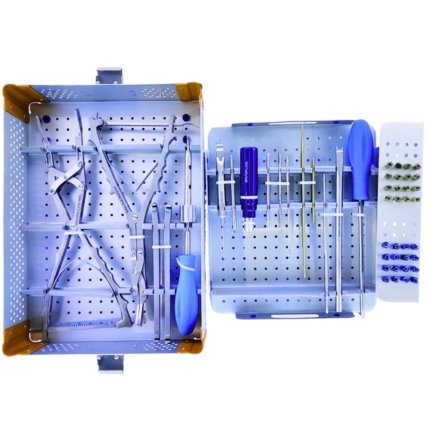
The Veterinary 2.4mm, 2.7mm, 3.5mm Locking Plates, Screws & Surgical Instrument System is a specialized orthopedic fixation solution designed for selected veterinary fracture repair and bone stabilization procedures. The system combines locking plates, screws, and supporting surgical instruments in different size categories to accommodate varying anatomical and fixation requirements.
Locking plate systems are designed to provide stable fixation by allowing compatible screws to engage with threaded or locking features in the plate. This creates a fixed-angle relationship between the screw and plate, which can be useful in selected fracture configurations where stable fixation and preservation of the surrounding bone environment are important.
The 2.4mm, 2.7mm, and 3.5mm sizes provide different fixation options for veterinary orthopedic applications. Smaller systems may be appropriate for selected smaller bones or smaller patients, while larger sizes may be selected when greater implant dimensions and fixation requirements are appropriate. The correct plate and screw size must always be determined according to the animal’s species, body size, bone anatomy, fracture pattern, and surgeon’s clinical assessment.
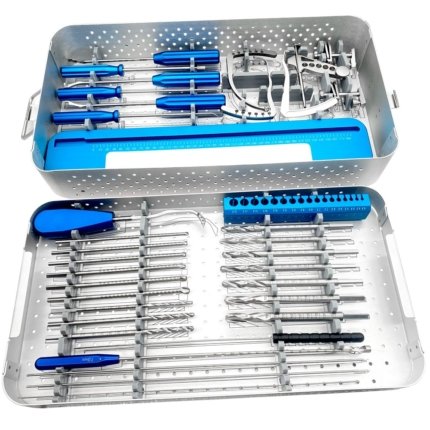
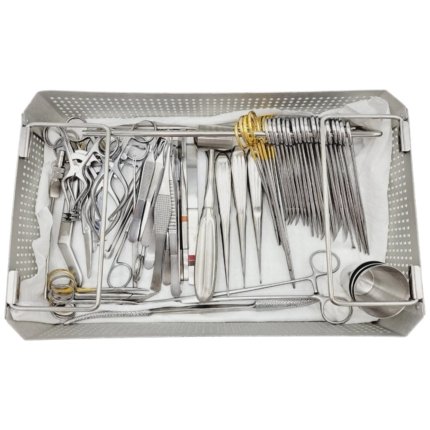
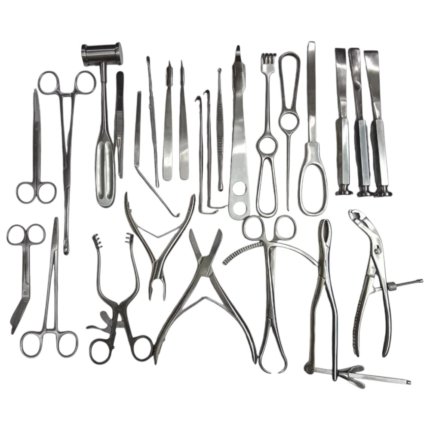
The accompanying surgical instruments are intended to assist with preparation and placement of the fixation components. Depending on the supplied configuration, instrumentation may include compatible screwdrivers, drill guides, drill bits, taps, depth gauges, plate bending tools, or other orthopedic instruments. Exact system contents and component compatibility should be verified before clinical use.
Veterinary locking plate systems may be used in selected procedures involving fracture stabilization, corrective osteotomy, reconstruction, and other orthopedic applications. The specific implant design, plate profile, screw diameter, screw length, and instrumentation should be selected according to the intended procedure and the manufacturer’s specifications.
Proper implant selection and surgical technique are essential. Locking plates and screws should only be used with components that are specifically compatible with the system. Mixing plates, screws, drill guides, or drivers from unrelated systems should not be assumed to be safe or compatible without confirmation.
The instruments should be handled and maintained according to their intended use. Reusable surgical instruments should be cleaned, inspected, dried, and sterilized using validated methods appropriate for their material and construction. Implant components require handling according to their labeling, packaging, sterility status, and manufacturer instructions.
The Veterinary 2.4mm, 2.7mm, 3.5mm Locking Plates, Screws & Surgical Instrument System provides veterinary orthopedic professionals with a size-based fixation platform for selected small-animal procedures. Its combination of implants and instrumentation supports organized surgical preparation while allowing the surgeon to select components appropriate to the patient’s anatomical and clinical requirements.
Key Features
- Veterinary orthopedic locking plate and screw system
- Includes 2.4mm, 2.7mm and 3.5mm size options
- Designed for selected small-animal orthopedic procedures
- Supports fracture fixation and bone stabilization
- Locking plate and compatible screw configuration
- Instrumentation designed for controlled implant preparation and placement
- Suitable for selected reconstructive orthopedic procedures
- Size selection based on patient anatomy and surgical requirements
- Useful for veterinary orthopedic hospitals and surgical practices
- System components should be used according to compatibility specifications
- Reusable instruments require appropriate reprocessing
- Implant handling should follow manufacturer instructions
Product Specifications
| Specification | Details |
|---|---|
| Product Type | Veterinary Locking Plate, Screw & Instrument System |
| System Sizes | 2.4mm, 2.7mm, 3.5mm |
| Primary Application | Veterinary Orthopedic Surgery |
| Main Use | Selected fracture fixation and bone stabilization |
| Plate Type | Locking Plate |
| Screw Type | Compatible Locking Screws |
| Instrumentation | Configuration dependent |
| Patient Type | Veterinary / Small Animal, as appropriate |
| Material | Implant and instrument material, configuration dependent |
| Compatibility | Use only with specified compatible components |
| Implant Sterility | Verify product labeling and supplied configuration |
| Instrument Reprocessing | Follow validated manufacturer/facility protocol |
| Size Selection | Based on animal anatomy and surgical requirements |
FAQs
What is the veterinary locking plate system used for?
It is designed for selected veterinary orthopedic procedures involving fracture fixation, bone stabilization, reconstruction, and corrective osteotomy.
What locking plate sizes are included?
The system is specified for 2.4mm, 2.7mm, and 3.5mm size categories. Exact plates, screw lengths, and quantities depend on the supplied configuration.
What animals can use these locking plates?
They may be suitable for selected small-animal orthopedic applications. The appropriate size depends on the species, patient size, bone anatomy, fracture pattern, and surgeon’s assessment.
What is the advantage of a locking plate system?
A compatible locking screw engages with the plate’s locking feature to create a fixed-angle construct. This can provide stable fixation in appropriately selected orthopedic procedures.
Are the 2.4mm, 2.7mm and 3.5mm screws interchangeable?
They should not be assumed to be interchangeable. Screws must match the corresponding plate system, thread design, diameter, and instrumentation specifications.
What instruments are included with the system?
The exact instruments depend on the supplied configuration. A system may include compatible drill guides, drill bits, screwdrivers, taps, depth gauges, and other fixation instruments.
Can these implants be used with plates from another system?
Compatibility should not be assumed. Plates, screws, and instruments should be used only when their dimensions and specifications are confirmed to be compatible.
Are the plates and screws reusable?
Implantable plates and screws are generally intended for their labeled clinical use and should be handled according to the manufacturer’s instructions. Reusable surgical instruments are a separate consideration.
How should the surgical instruments be sterilized?
Reusable instruments should be cleaned, inspected, dried, and sterilized using a validated process appropriate for their construction. Manufacturer reprocessing instructions should always take precedence.




Reviews
There are no reviews yet.