
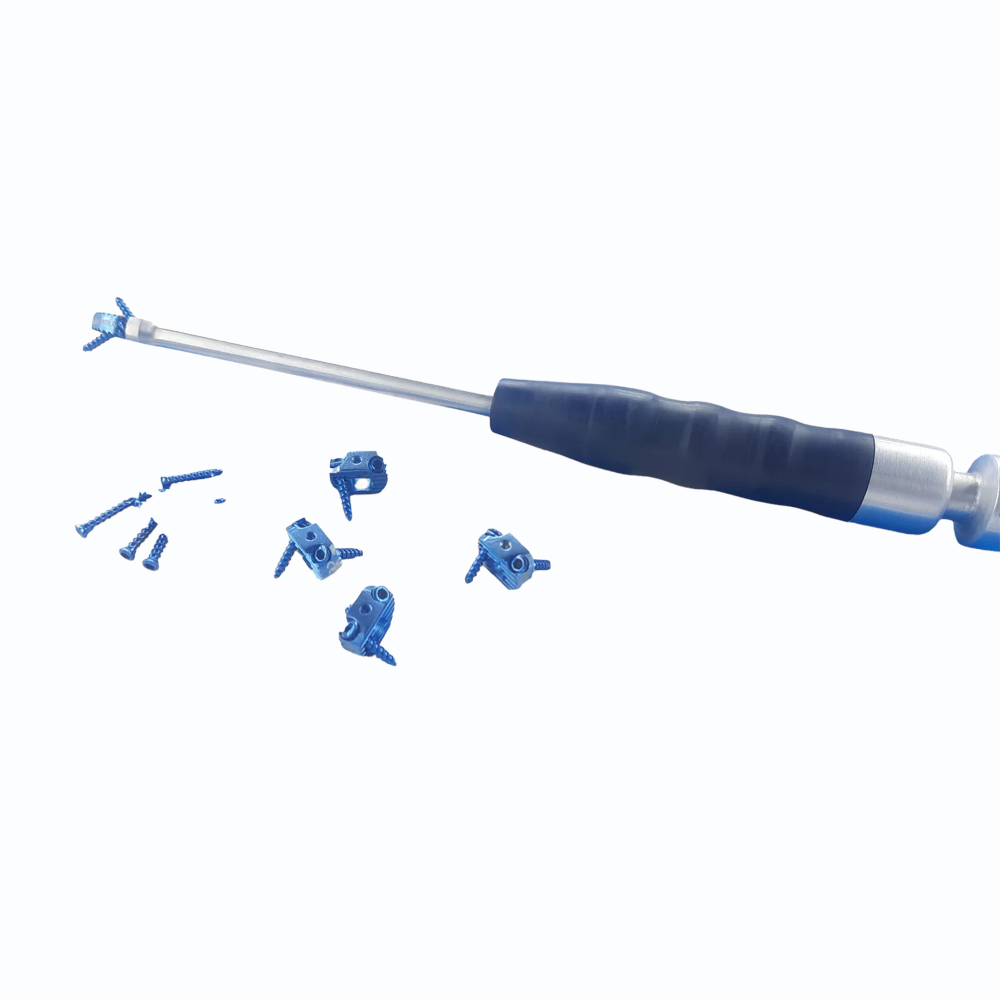

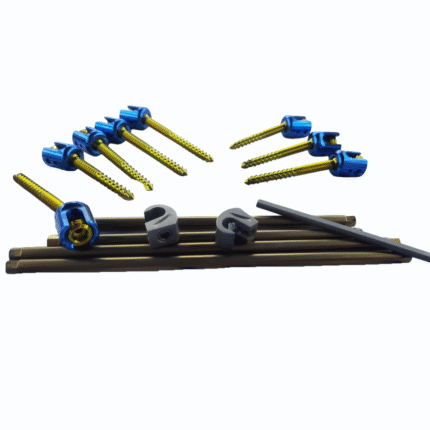
The 7mm Cervical Fusion Spine Cage with Screws Titanium is a specialized cervical interbody fusion system designed for selected anterior cervical spinal fusion procedures. The system combines five 7 mm cervical fusion cages with 14 compatible fixation screws in 16 mm and 18 mm lengths, providing a range of components for qualified spine surgeons performing cervical interbody stabilization.
Cervical interbody fusion is a surgical technique used to stabilize selected cervical spinal segments following removal of a diseased or damaged intervertebral disc or other appropriate spinal decompression procedure. An interbody cage is positioned within the prepared disc space to help maintain the intended intervertebral height and provide a structural environment for fusion. The exact clinical indication depends on the patient’s pathology, anatomy, imaging findings, and the manufacturer’s approved use.
The 7 mm cage height provides a defined implant dimension for the system. Cage height selection is an important part of surgical planning because the implant must correspond appropriately to the prepared intervertebral space and the patient’s anatomy. The surgeon should assess disc-space height, segmental alignment, endplate condition, bone quality, and the desired reconstruction before selecting the appropriate cage size.
The cages are designed for placement within the cervical interbody space following appropriate preparation of the disc space and vertebral endplates. Depending on the specific implant design, an interbody cage can provide structural support while creating an environment suitable for bone graft or other approved fusion material. The exact graft requirements, cage preparation, and surgical technique should follow the manufacturer’s validated instructions.
The system includes 14 screws in 16 mm and 18 mm lengths, providing two specified fixation-length options. These screws are intended to secure the cage to the adjacent vertebral structures according to the implant system’s design. Correct screw length and trajectory are particularly important in cervical spine surgery because the implant is positioned close to important neurological and vascular structures.
The availability of two screw lengths allows the surgeon to select an appropriate option according to vertebral anatomy, cage position, bone stock, and the intended fixation construct. Screw selection should never be based on length alone. The surgeon should verify the implant geometry, fixation trajectory, vertebral dimensions, and manufacturer’s recommended parameters before insertion.
The cage and screws are specified as Titanium, a material widely established in orthopedic and spinal implant applications. Titanium provides favorable mechanical properties, corrosion resistance, and a long history of use in implantable medical devices. The exact titanium grade, alloy composition, surface treatment, and mechanical specifications should be confirmed through the manufacturer’s technical documentation when required.
The 5-piece cage configuration provides multiple 7 mm cervical interbody implants, while the accompanying 14 screws provide compatible fixation components. This can support spinal surgery departments and specialist facilities by maintaining several cage components and screw options for appropriately selected cervical fusion procedures.
Proper cage placement requires careful preparation of the intervertebral disc space and endplates. Excessive endplate preparation can compromise structural support, while insufficient preparation may interfere with appropriate cage seating. The surgeon should use appropriate cervical spine instrumentation and follow the manufacturer’s validated surgical technique.
The fixation screws should be inserted using compatible instrumentation and according to the specified trajectory. Screw engagement, depth, and final seating should be confirmed before completing the procedure. Improper screw placement or excessive insertion depth can compromise surrounding structures or the intended fixation construct.
Before implantation, every cage and screw should be inspected for deformation, damage, contamination, surface defects, or other abnormalities. Particular attention should be given to the cage fixation features and screw interfaces. Only compatible components from the intended implant system should be assembled together.
Cleaning and sterilization requirements depend on the supplied condition of the implant system. If the components are intended for reusable processing before implantation, healthcare facilities should follow the manufacturer’s validated instructions for use (IFU) for cleaning, sterilization, handling, and storage. The generic description “Titanium” alone does not establish a universal sterilization cycle.
With a 7 mm cervical cage height, five cage components, 14 fixation screws in 16 mm and 18 mm lengths, and titanium construction, this Cervical Fusion Spine Cage System provides qualified spine surgeons with a dedicated implant option for selected cervical interbody fusion procedures.
Key Features
- 7 mm cervical fusion spine cage designed for selected cervical interbody fusion procedures.
- Includes 5 cervical fusion cages.
- Supplied with 14 compatible fixation screws.
- Screw lengths include 16 mm and 18 mm options.
- Titanium construction for an established spinal implant material platform.
- Designed for selected cervical interbody stabilization and fusion applications.
- Cage geometry supports placement within a prepared cervical disc space.
- Multiple screw lengths provide fixation options according to vertebral anatomy.
- Designed for use with compatible cervical spine instrumentation.
- Supports professional spinal surgery and orthopedic neurosurgical applications.
- Cage and screw dimensions should be selected according to patient anatomy and surgical requirements.
- Components should be inspected for integrity before implantation.
- Cleaning and sterilization should follow the manufacturer’s validated instructions.
Product Specifications
| Specification | Details |
|---|---|
| Product Name | Cervical Fusion Spine Cage |
| Cage Type | Cervical Interbody Fusion Cage |
| Cage Height | 7 mm |
| Cage Quantity | 5 Pieces |
| Screw Quantity | 14 Pieces |
| Screw Lengths | 16 mm & 18 mm |
| Material | Titanium |
| Primary Application | Cervical Interbody Fusion |
| Anatomical Site | Cervical Spine |
| Fixation Method | Cage with Fixation Screws |
| Surgical Specialty | Spine Surgery / Orthopedic Surgery / Neurosurgery |
| Intended Procedure | Selected Cervical Spinal Fusion Procedures |
| Instrument Compatibility | Use specified compatible instrumentation |
| Intended Users | Qualified Spine Surgeons |
| Implant Selection | Based on anatomy, disc-space preparation and surgical plan |
| Sterilization | Follow manufacturer’s validated instructions |
FAQs
1. What is a cervical fusion spine cage?
A cervical fusion spine cage is an interbody implant designed to occupy a prepared cervical disc space during selected spinal fusion procedures. It can provide structural support and may be used with appropriate bone graft material according to the surgical technique.
2. What does the 7 mm specification mean?
The 7 mm specification identifies the stated cage height. The appropriate cage height should be selected according to the patient’s anatomy, prepared disc space, endplate condition, and surgical requirements.
3. How many cervical cages are included?
The system includes 5 cervical fusion cages, each specified with a 7 mm height.
4. How many screws are included?
The system includes 14 fixation screws with specified lengths of 16 mm and 18 mm.
5. What material is the cervical cage made from?
The product is specified as being manufactured from Titanium, a material widely used in spinal and orthopedic implant applications.
6. What are the 16 mm and 18 mm screws used for?
The 16 mm and 18 mm screws provide different fixation-length options for securing the cage according to the patient’s vertebral anatomy and the implant system’s surgical technique.
7. What procedures can use cervical interbody cages?
Cervical interbody cages may be used in selected cervical spinal fusion procedures where interbody stabilization is clinically indicated. The specific procedure and implant selection should be determined by the qualified spine surgeon.



Reviews
There are no reviews yet.