
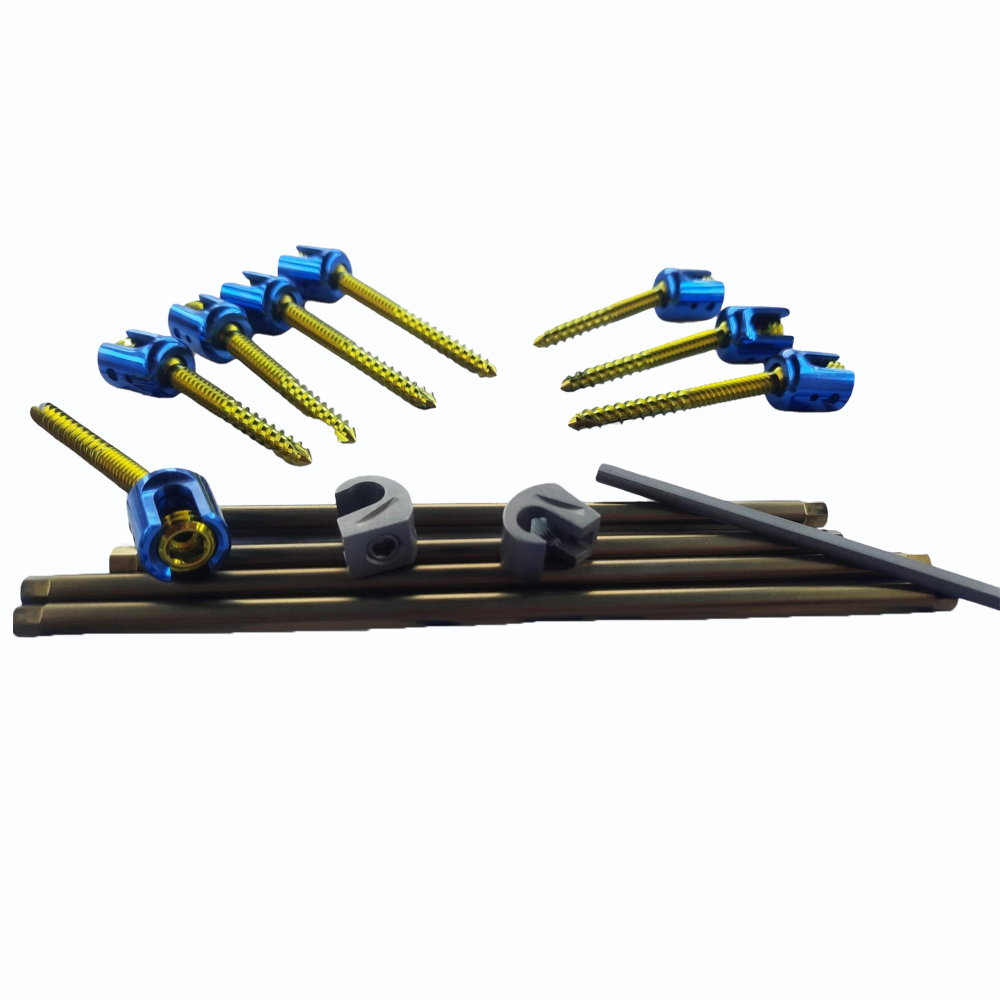
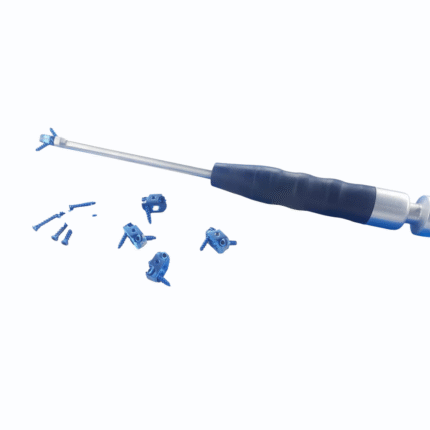

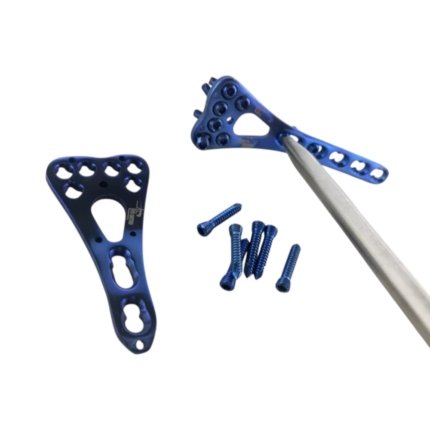
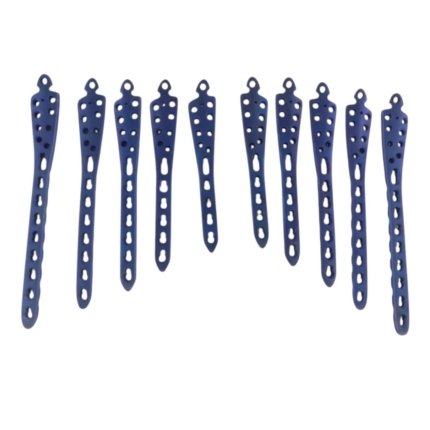
The 5.5mm Double Thread Polyaxial Pedicle Screw Spine System is a specialized spinal instrumentation system designed for selected posterior spinal fixation and stabilization procedures. The system combines 5.5 mm double-thread polyaxial pedicle screws, compatible rods, and clamps to provide a modular fixation construct for qualified spinal surgeons.
Pedicle screw systems are commonly used in spinal surgery to provide segmental fixation and stabilization of selected spinal motion segments. Depending on the patient’s condition and the surgeon’s treatment plan, pedicle screw fixation may be incorporated into procedures involving spinal deformity correction, degenerative conditions, instability, trauma, or other indications requiring posterior spinal stabilization. The specific indication and configuration should always be determined by the treating surgeon and according to the manufacturer’s approved use.
The 5.5 mm screw diameter provides a defined implant size for the system. Screw selection should be based on the patient’s vertebral anatomy, pedicle dimensions, bone quality, spinal level, surgical objective, and available fixation corridor. Proper preoperative imaging and intraoperative assessment are essential when planning pedicle screw placement because the pedicle provides a narrow anatomical pathway adjacent to important neural and vascular structures.
The polyaxial screw design allows the screw head to articulate relative to the screw shaft within its intended range. This can provide flexibility during rod alignment and construct assembly while maintaining the screw’s fixation within the vertebral pedicle. Polyaxial technology can facilitate rod placement across multiple fixation points where anatomical alignment varies between vertebral levels.
The double-thread configuration provides a defined thread design intended to engage bone during insertion. The exact mechanical characteristics, pitch, thread profile, and insertion behavior depend on the manufacturer’s engineering specifications. The surgeon should use the appropriate insertion instruments and follow the validated surgical technique supplied with the system.
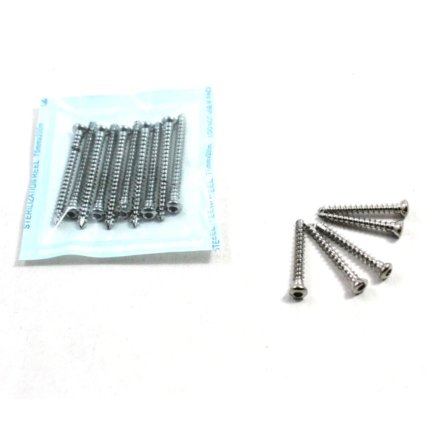
The system incorporates rods and clamps as part of the fixation construct. Rods connect the individual pedicle screw assemblies, while clamps or locking components secure the rod within the polyaxial screw head according to the system’s design. Proper rod contouring, seating, and locking are essential to achieve the intended construct stability.
A 15-piece configuration provides a compact selection of spinal fixation components. The exact distribution of pedicle screws, rods, and clamps should be verified against the manufacturer’s component inventory because the product title identifies the total quantity but does not specify the individual quantity of each component.
The modular design can support different posterior spinal fixation strategies by allowing the surgical team to assemble a construct appropriate to the targeted spinal levels and operative plan. However, implant selection should never be based solely on component availability. The surgeon should evaluate vertebral anatomy, bone quality, pathology, spinal alignment, fixation requirements, and the intended surgical technique before selecting the final construct.
Correct screw positioning is particularly important in spinal surgery. Pedicle screw placement should be performed using appropriate imaging, anatomical landmarks, surgical instrumentation, and validated technique. The surgeon should confirm screw trajectory and depth before final locking of the construct.
Before implantation, all components should be carefully inspected for deformation, surface damage, contamination, compromised threads, damaged rod interfaces, or other abnormalities. The polyaxial mechanism and locking interfaces should be handled carefully to avoid damage. Only components specifically designed and validated for compatibility should be assembled together.
The rods and clamps should be positioned and secured according to the manufacturer’s surgical instructions. Over-tightening, improper component engagement, incorrect rod seating, or use of incompatible components can compromise the intended fixation construct.
Cleaning and sterilization should follow the manufacturer’s validated instructions for use (IFU). The specific material composition of the components and their supplied condition determine the appropriate processing requirements. Healthcare facilities should use validated sterilization cycles and follow applicable infection-control procedures rather than relying on generic material assumptions.
With a 5.5 mm double-thread polyaxial pedicle screw design, compatible rods and clamps, and a 15-piece system configuration, this Spine Fixation System provides qualified spinal surgeons with a modular option for selected posterior spinal stabilization and fixation procedures.
Key Features
- 5.5 mm polyaxial pedicle screw spine system for selected spinal fixation applications.
- Double-thread screw design for controlled bone engagement.
- Polyaxial screw head allows angular adjustment for rod alignment.
- Includes pedicle screws, rods, and clamps.
- 15-piece system provides a compact spinal fixation component set.
- Designed for selected posterior spinal stabilization procedures.
- Modular rod-and-screw configuration supports segmental spinal fixation.
- 5.5 mm screw diameter provides a defined system size.
- Compatible components should be assembled according to the manufacturer’s specifications.
- Suitable for professional spinal surgery and orthopedic neurosurgical applications.
- Screw size and trajectory should be selected according to vertebral anatomy and surgical requirements.
- Components should be inspected for integrity before implantation.
- Cleaning and sterilization should follow the manufacturer’s validated instructions.
Product Specifications
| Specification | Details |
|---|---|
| Product Name | Double Thread Polyaxial Screw Spine System |
| Screw Type | Polyaxial Pedicle Screw |
| Screw Diameter | 5.5 mm |
| Thread Design | Double Thread |
| System Components | Pedicle Screws, Rod & Clamp |
| Total Quantity | 15 Pieces |
| Fixation Type | Posterior Spinal Fixation |
| Primary Application | Spinal Stabilization |
| Surgical Specialty | Spine Surgery / Orthopedic Surgery / Neurosurgery |
| Screw Head | Polyaxial |
| Rod | Included |
| Clamp | Included |
| Intended Users | Qualified Spine Surgeons |
| Implant Selection | Based on vertebral anatomy and surgical requirements |
| Component Compatibility | Use specified compatible system components |
| Sterilization | Follow manufacturer’s validated instructions |
FAQs
1. What is a 5.5 mm polyaxial pedicle screw?
A 5.5 mm polyaxial pedicle screw is a spinal fixation implant with a 5.5 mm specified screw diameter and an articulating screw head designed to facilitate rod alignment within a posterior spinal fixation construct.
2. What does double thread mean on a pedicle screw?
Double-thread refers to the screw’s specified thread configuration. The exact thread pitch, profile, and mechanical characteristics depend on the manufacturer’s design specifications.
3. What is a polyaxial pedicle screw used for?
Polyaxial pedicle screws are used in selected spinal fixation procedures to anchor a rod-based stabilization construct to the vertebrae. The articulating head provides flexibility for rod alignment.
4. Are rods and clamps included in this system?
Yes. The product is specified as a system containing pedicle screws, rods, and clamps, with a total stated quantity of 15 pieces.
5. What spinal procedures can use pedicle screw systems?
Pedicle screw systems may be used in selected posterior spinal stabilization procedures involving conditions such as spinal instability, deformity, trauma, or degenerative pathology. Specific indications depend on the implant system and surgeon’s treatment plan.
6. Why is polyaxial movement useful in spinal fixation?
Polyaxial movement allows the screw head to adjust relative to the screw shaft within its designed range. This can help facilitate rod alignment between multiple fixation points.
7. How many pieces are included?
The system is specified as a 15-piece spinal fixation system. The exact number of screws, rods, and clamps should be confirmed from the manufacturer’s detailed component inventory.
Reviews
There are no reviews yet.