
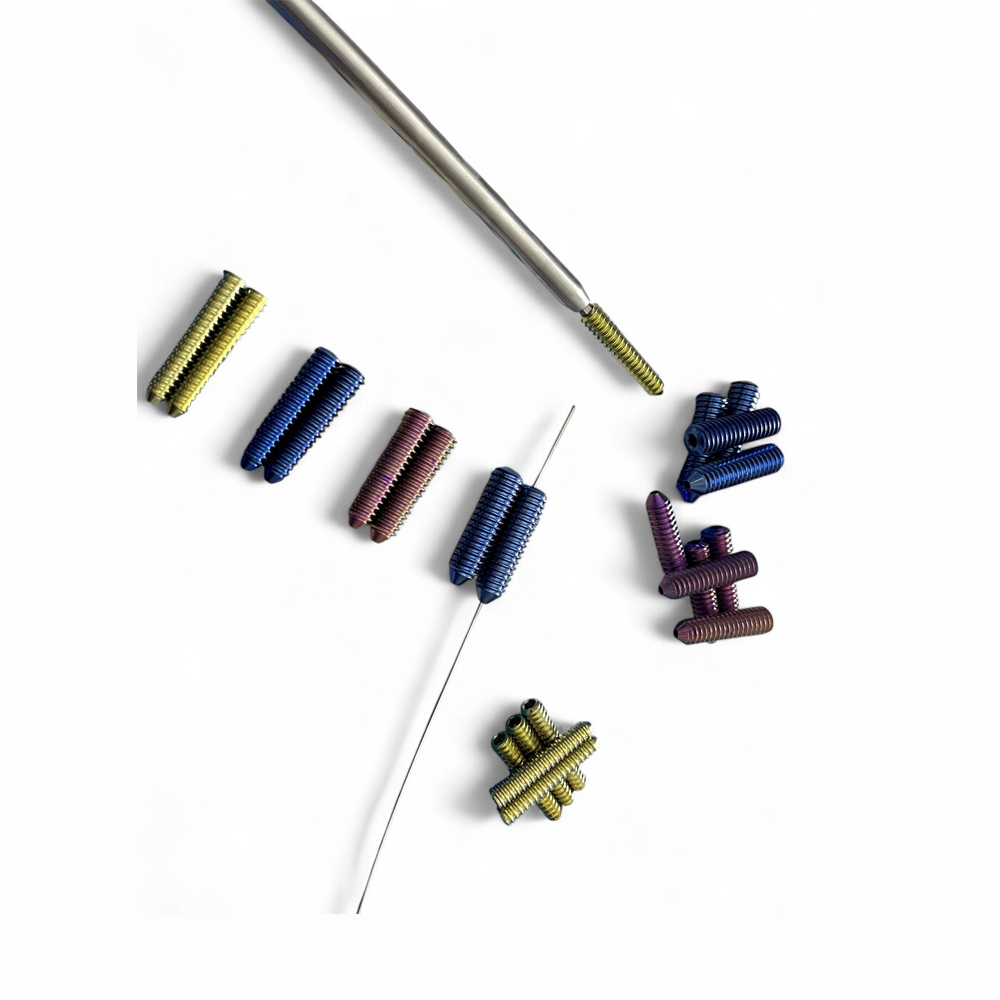
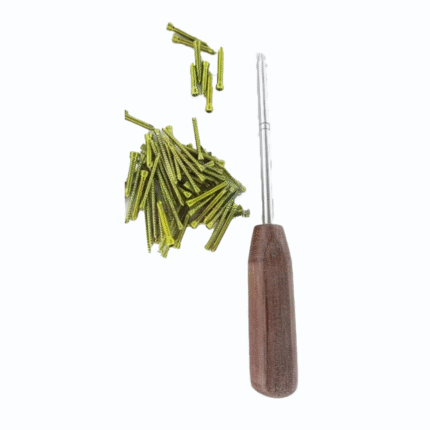
ACL Interference Screws Titanium Grade 5 7 10mm are orthopedic fixation implants designed for use in ligament reconstruction procedures, particularly anterior cruciate ligament (ACL) reconstruction. Interference screws are used to secure a soft-tissue or bone-tendon graft within a prepared bone tunnel, providing mechanical fixation during reconstructive orthopedic surgery.
The screw design allows the implant to be positioned within the bone tunnel alongside the graft. When appropriately selected and inserted using the recommended surgical technique, an interference screw can provide fixation of the graft within the tunnel. The specific screw diameter and length should be selected by the orthopedic surgeon according to graft dimensions, tunnel size, bone quality, fixation technique, and the requirements of the applicable surgical system.
This set includes 7 mm, 8 mm, 9 mm, and 10 mm diameter options, providing a range of implant sizes for different anatomical and surgical requirements. Available lengths from 20 mm to 35 mm further expand the selection, allowing the surgeon to choose a screw configuration appropriate for the intended fixation site and tunnel dimensions.
Manufactured from Titanium Grade 5, also known as Ti-6Al-4V, these interference screws are made from a titanium alloy widely utilized in orthopedic implant applications. Titanium Grade 5 provides a combination of high strength, relatively low density, corrosion resistance, and established biocompatibility characteristics. The material is suitable for applications where mechanical reliability and resistance to corrosion are important considerations.
The screw geometry is intended to facilitate controlled insertion into the bone tunnel while maintaining contact with the graft. Thread design, screw diameter, length, and insertion technique are important factors in achieving appropriate graft fixation. Surgical insertion should be performed using compatible instrumentation and according to the manufacturer’s recommended technique.
The 49-piece configuration provides a broad selection of ACL interference screw sizes for orthopedic surgical facilities, sports medicine centers, hospitals, and professional implant suppliers. Maintaining multiple diameters and lengths can help surgical teams select an appropriately sized interference screw based on preoperative planning and intraoperative findings.
These ACL interference screws may be used in reconstructive procedures involving ligament or tendon graft fixation, subject to the approved indications of the specific device. Common applications may include ACL reconstruction and other ligament reconstruction procedures where interference screw fixation is clinically appropriate. The final implant selection must be determined by a qualified orthopedic surgeon based on patient anatomy, graft type, bone tunnel dimensions, surgical technique, and applicable device instructions.
Proper implant handling is essential. Screws should be protected from contamination, physical damage, and inappropriate handling before implantation. Compatible surgical drivers and instrumentation should be used to support controlled insertion and reduce the risk of implant or instrument damage.
Sterility and processing requirements depend on the specific product configuration and manufacturer labeling. Implant components supplied sterile should remain within their validated sterile packaging until use. Any reusable instrumentation associated with the procedure should be cleaned, inspected, packaged, and sterilized according to validated healthcare-facility procedures and the applicable manufacturer’s instructions.
With 7–10 mm diameter options, 20–35 mm length options, Titanium Grade 5 construction, and a 49-piece selection, this ACL Interference Screw system provides a versatile range of fixation implants for professional orthopedic and sports medicine reconstruction procedures.
Key Features
- Designed for ACL reconstruction and ligament graft fixation.
- Available in 7, 8, 9, and 10 mm diameters.
- Length options range from 20 to 35 mm.
- Manufactured from Titanium Grade 5 (Ti-6Al-4V).
- Supplied as a 49-piece selection.
- Designed for interference fixation of tendon or ligament grafts.
- Suitable for use in prepared bone tunnels according to the applicable surgical technique.
- Multiple diameter options accommodate different graft and tunnel requirements.
- Multiple length options provide flexibility for orthopedic fixation planning.
- Titanium construction provides high strength and corrosion resistance characteristics.
- Suitable for professional orthopedic, sports medicine, and ligament reconstruction applications.
- Use with compatible surgical drivers and instrumentation as specified by the manufacturer.
Product Specifications
| Specification | Details |
|---|---|
| Product Name | ACL Interference Screws |
| Primary Application | ACL / Ligament Reconstruction |
| Screw Type | Interference Screw |
| Diameters | 7 mm, 8 mm, 9 mm, 10 mm |
| Length Range | 20–35 mm |
| Material | Titanium Grade 5 |
| Material Designation | Ti-6Al-4V |
| Quantity | 49 Pieces |
| Fixation Method | Graft-to-Bone Tunnel Interference Fixation |
| Surgical Specialty | Orthopedic / Sports Medicine |
| Intended Application | Ligament and Tendon Graft Fixation |
| Implant Type | Orthopedic Fixation Implant |
| Instrument Compatibility | Use compatible insertion instrumentation |
| Sterilization | Follow product-specific manufacturer labeling and validated protocols |
FAQs
1. What are ACL Interference Screws used for?
ACL Interference Screws are orthopedic implants used to secure tendon or ligament grafts within prepared bone tunnels during ACL reconstruction and other selected ligament reconstruction procedures.
2. What diameters are available in this ACL Interference Screw set?
The set includes 7 mm, 8 mm, 9 mm, and 10 mm diameter interference screws, providing multiple sizing options for different graft and bone tunnel requirements.
3. What lengths are available?
The screws are available in lengths ranging from 20 mm to 35 mm, allowing selection based on the surgical fixation site, tunnel dimensions, graft characteristics, and surgical technique.
4. What material are these ACL screws made from?
The screws are manufactured from Titanium Grade 5 (Ti-6Al-4V), a titanium alloy widely used for orthopedic implant applications because of its strength, corrosion resistance, and biocompatibility characteristics.
5. How many ACL Interference Screws are included?
The product is supplied as a 49-piece selection, providing multiple diameter and length combinations for orthopedic surgical applications.
6. Can these screws be used for ACL reconstruction?
They are designed for ACL reconstruction and ligament graft fixation applications, subject to the specific device’s approved indications and the surgeon’s selected fixation technique.
7. How is an interference screw used in ligament reconstruction?
An interference screw is positioned within a prepared bone tunnel alongside or against the graft to provide mechanical fixation. The exact placement and insertion technique depend on the graft type, reconstruction method, anatomy, and applicable surgical system.
8. Why is Titanium Grade 5 used for orthopedic screws?
Titanium Grade 5 offers a combination of high strength, relatively low density, corrosion resistance, and biocompatibility characteristics that make it suitable for many orthopedic implant applications.
9. How should ACL Interference Screws be handled before surgery?
Implants should be handled according to the manufacturer’s instructions and protected from contamination or damage. Sterile packaging should be inspected before use, and compatible surgical instrumentation should be used for insertion.

Reviews
There are no reviews yet.