

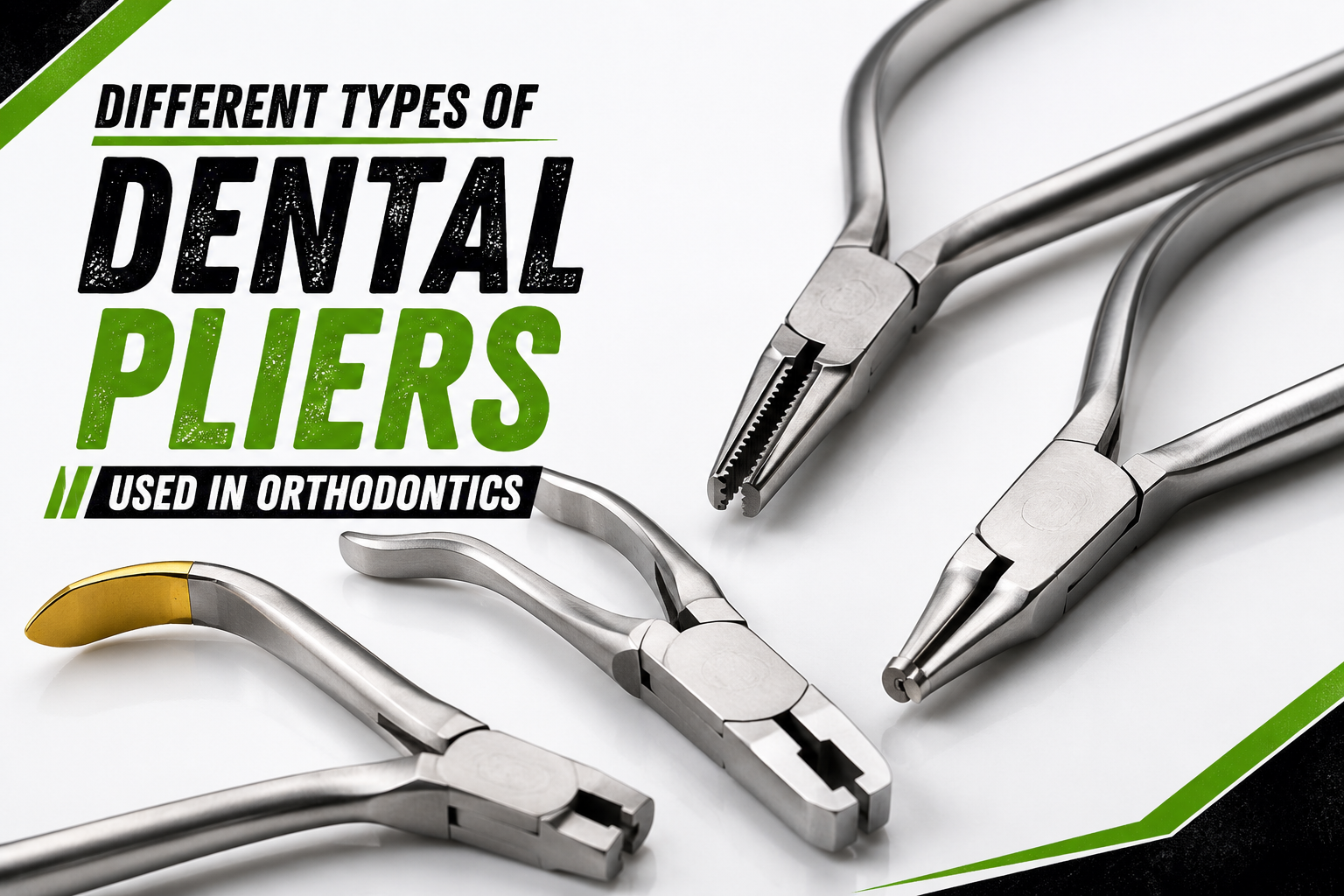
Orthodontic treatment relies on a wide variety of specialized dental pliers designed to bend wires, hold brackets, adjust appliances, remove components, and perform precise finishing procedures. Each type of orthodontic plier serves a specific purpose, helping orthodontists achieve accurate tooth movement while minimizing damage to wires and appliances.
Unlike general dental forceps used for tooth extraction, orthodontic pliers are precision instruments engineered for wire manipulation, bracket placement, ligature handling, and appliance adjustment. Choosing the correct plier improves treatment efficiency, enhances patient comfort, and reduces the risk of damaging orthodontic materials.
During orthodontic procedures, it is common to see several different pliers used within a single appointment. Each instrument is selected based on the stage of treatment and the type of wire or appliance being adjusted.
Why Are Different Orthodontic Pliers Needed?
Orthodontic treatment involves many delicate procedures that require different gripping surfaces, tip designs, and cutting mechanisms. No single plier can perform every task effectively.
Some pliers are designed to bend stainless steel wires, while others are intended to place brackets, remove bands, contour archwires, or cut excess ligature wire. Using the correct instrument improves precision and helps prevent unnecessary damage to orthodontic appliances.
Common Types of Dental Pliers Used in Orthodontics
Bird Beak Pliers
Bird beak pliers are among the most versatile orthodontic instruments. One jaw is round while the other is flat, allowing orthodontists to create loops, bends, and customized wire configurations with excellent precision.
They are commonly used for:
Creating loops
Forming springs
Adjusting archwires
Bending orthodontic wires
Fabricating removable appliances
Weingart Pliers
Weingart pliers are long, narrow utility pliers designed to hold and guide orthodontic wires into brackets and buccal tubes.
Their serrated tips provide a secure grip while minimizing wire slippage.
Typical applications include:
Archwire insertion
Wire adjustment
Holding ligature wires
Positioning orthodontic appliances
General wire handling
How Pliers
How pliers are multipurpose orthodontic utility pliers with smooth, tapered jaws that provide excellent control during wire manipulation.
Orthodontists frequently use them for:
Holding wires
Adjusting appliances
Closing loops
Bending light wires
General orthodontic procedures
Distal End Cutter
Distal end cutters are specially designed to cut the distal portion of an archwire after it has been inserted into the molar tube.
Most modern distal end cutters safely hold the cut wire segment, preventing it from falling into the patient’s mouth.
They are primarily used for:
Cutting excess archwire
Improving patient comfort
Preventing soft tissue irritation
Finishing orthodontic wire placement
Ligature Cutter
Ligature cutters are precision cutting pliers designed specifically for cutting thin ligature wires.
Their sharp cutting edges provide clean cuts without distorting surrounding orthodontic components.
They are commonly used during routine wire changes and appliance adjustments.
Hard Wire Cutter
Hard wire cutters are engineered to cut thicker orthodontic wires made from stainless steel or other high-strength alloys.
These pliers generate significant cutting force while maintaining clean, precise cuts.
Applications include:
Cutting rectangular wires
Cutting stainless steel archwires
Removing heavy orthodontic wires
Laboratory wire fabrication
Bracket Removing Pliers
Bracket removing pliers safely detach orthodontic brackets from tooth surfaces after treatment is completed.
Their design minimizes stress on both the tooth enamel and the bracket.
These instruments are used during the debonding phase of orthodontic treatment.
Band Removing Pliers
Band removing pliers are designed to remove orthodontic bands from molars with controlled force.
Many designs incorporate a protective plastic pad that rests against the tooth while the plier gently lifts the orthodontic band.
This helps reduce patient discomfort and protects the enamel.
Mathieu Pliers
Mathieu pliers are spring-loaded instruments primarily used to hold and place elastic ligatures around orthodontic brackets.
Their locking mechanism allows orthodontists to maintain a secure grip during elastic placement.
Three-Prong Pliers
Three-prong pliers contain two opposing tips and one central tip, allowing orthodontists to produce precise wire bends without flattening the wire.
They are commonly used for:
Adjusting archwires
Creating offsets
Forming first-order bends
Wire contouring
Adams Pliers
Adams pliers are commonly used in removable orthodontics for fabricating and adjusting Adams clasps and other removable appliance components.
They are particularly useful in orthodontic laboratories.
Jarabak Pliers
Jarabak pliers feature strong tapered jaws suitable for bending heavy orthodontic wires.
They are commonly selected when significant wire adjustment is required while maintaining excellent control.
Utility Pliers
Utility pliers are general-purpose orthodontic instruments used for multiple clinical tasks, including wire adjustment, appliance positioning, and routine orthodontic procedures.
Because of their versatility, they are found in nearly every orthodontic instrument tray.
Quick Comparison of Orthodontic Pliers
| Orthodontic Plier | Primary Purpose |
|---|---|
| Bird Beak Pliers | Wire bending and loop formation |
| Weingart Pliers | Holding and inserting archwires |
| How Pliers | General wire handling |
| Distal End Cutter | Cutting excess archwire |
| Ligature Cutter | Cutting ligature wires |
| Hard Wire Cutter | Cutting heavy orthodontic wires |
| Bracket Removing Pliers | Removing orthodontic brackets |
| Band Removing Pliers | Removing orthodontic bands |
| Mathieu Pliers | Placing elastic ligatures |
| Three-Prong Pliers | Wire contouring and precise bends |
| Adams Pliers | Fabricating removable appliances |
| Jarabak Pliers | Heavy wire bending |
| Utility Pliers | General orthodontic procedures |
How to Choose the Right Orthodontic Pliers
Selecting the appropriate orthodontic plier depends on the clinical procedure, wire material, appliance type, and the level of precision required. Wire-bending procedures require specialized forming pliers, while cutting tasks demand dedicated orthodontic cutters. Bracket removal and band removal should always be performed with instruments specifically designed for those procedures to protect both the appliance and the patient’s teeth.
High-quality orthodontic pliers should offer excellent jaw alignment, ergonomic handles, corrosion-resistant surgical stainless steel construction, smooth hinge movement, and precise tip alignment to ensure long-term performance.
Final Thoughts
Orthodontic pliers are essential precision instruments that support every stage of orthodontic treatment, from initial wire placement to final appliance removal. Each plier is designed for a specific clinical purpose, allowing orthodontists to manipulate wires, place appliances, remove brackets, and adjust orthodontic components with accuracy and confidence.
Understanding the different types of dental pliers used in orthodontics helps orthodontists, dental students, dental assistants, and instrument buyers select the appropriate tool for every procedure. Investing in high-quality orthodontic pliers improves clinical efficiency, enhances treatment precision, and contributes to better patient outcomes.