

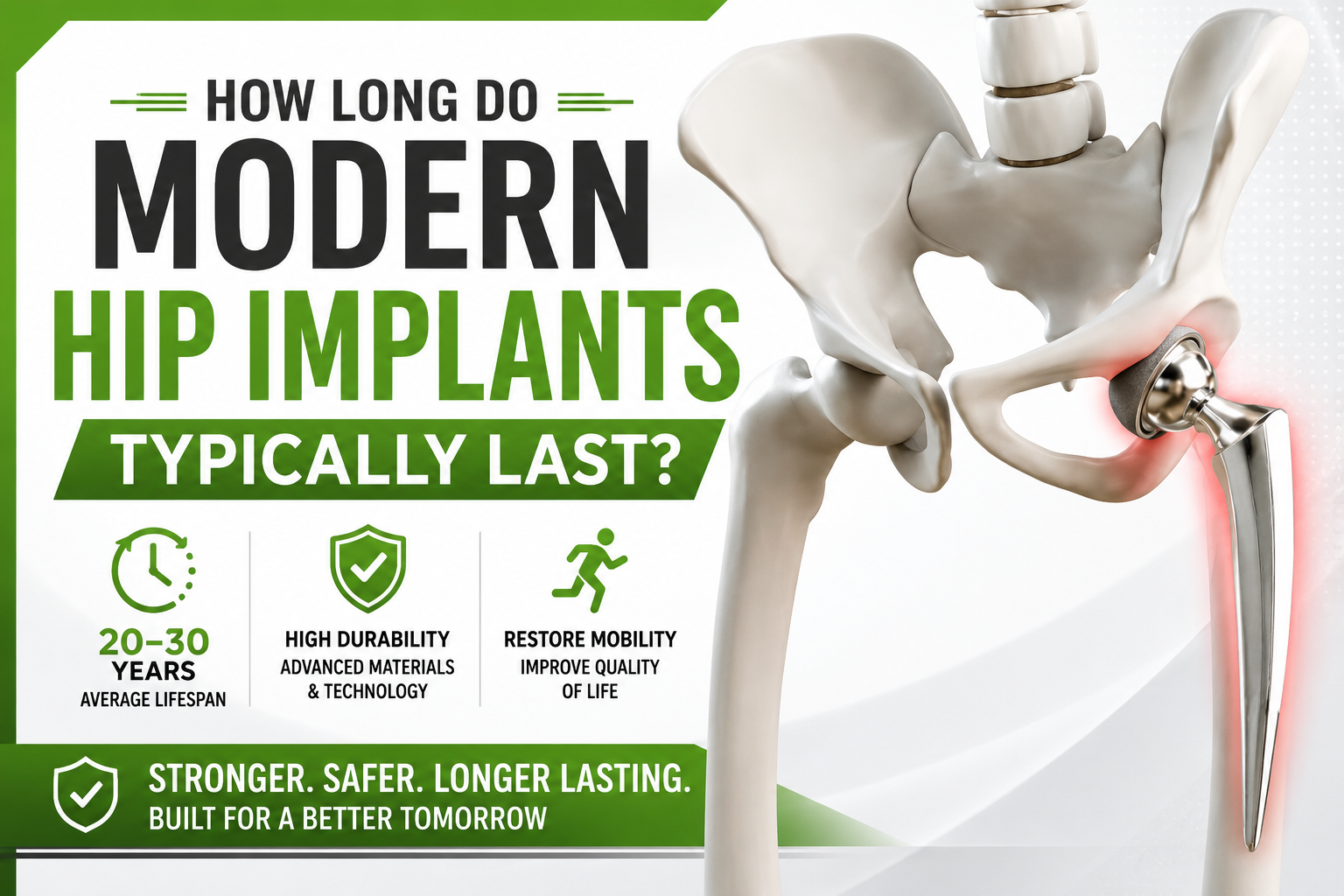
Modern hip implants are designed to provide long-term pain relief, restore mobility, and improve quality of life for people with severe hip arthritis, fractures, or other degenerative joint conditions. Thanks to advances in implant materials, surgical techniques, and manufacturing technology, today’s hip replacements are more durable than ever before.
For most patients, a modern hip implant can last 20 to 30 years, and many continue to function well beyond three decades with proper care. The actual lifespan depends on several factors, including the patient’s age, activity level, body weight, bone quality, implant design, surgical technique, and adherence to postoperative rehabilitation.
Average Lifespan of Modern Hip Implants
Recent clinical studies have shown significant improvements in the longevity of total hip replacements compared to earlier generations.
| Years After Surgery | Implant Survival Rate |
|---|---|
| 10 Years | More than 95% |
| 15 Years | Around 90–95% |
| 20 Years | Approximately 85–90% |
| 25–30 Years | Many implants continue to perform successfully |
These figures represent average outcomes, and individual results may vary depending on patient health and implant selection.
Why Do Modern Hip Implants Last Longer?
Today’s hip implants benefit from decades of engineering improvements. Manufacturers now use highly durable biomaterials that resist wear and provide better compatibility with the human body.
Several factors contribute to their extended lifespan, including highly cross-linked polyethylene liners that generate less wear, advanced ceramic bearing surfaces with exceptional scratch resistance, cobalt-chromium and titanium alloys that offer outstanding strength and corrosion resistance, improved implant designs that distribute forces more evenly, and refined surgical techniques that ensure accurate implant positioning.
Together, these innovations reduce implant wear, minimize complications, and improve long-term outcomes.
Factors That Affect Hip Implant Longevity
Although hip implants are built to last for decades, several factors influence how long they remain functional.
Patient Age
Younger patients generally place greater demands on their implants because they remain active for many years after surgery. Older patients often experience longer implant survival because their activity levels tend to be lower.
Activity Level
Walking, swimming, cycling, and other low-impact exercises help maintain joint function without placing excessive stress on the implant. High-impact activities such as long-distance running, jumping sports, or heavy lifting may accelerate wear over time.
Body Weight
Excess body weight increases the forces transmitted across the hip joint during everyday activities. Maintaining a healthy weight reduces mechanical stress and may extend implant longevity.
Implant Materials
Modern orthopedic implants are available in several bearing combinations, each offering different advantages.
Ceramic-on-ceramic implants provide excellent wear resistance and are commonly chosen for younger, active patients.
Ceramic-on-polyethylene implants combine low wear rates with excellent long-term performance.
Metal-on-highly cross-linked polyethylene remains one of the most widely used combinations due to its proven durability and cost-effectiveness.
Surgical Technique
Accurate implant positioning is essential for long-term success. Proper alignment reduces abnormal loading, improves joint stability, minimizes wear, and lowers the risk of dislocation.
Even the highest-quality implant may fail prematurely if it is not implanted correctly.
Can a Hip Implant Last a Lifetime?
For many patients, especially those undergoing hip replacement after the age of 65, there is a good possibility that the implant will last for the remainder of their lives.
Patients who receive hip replacements at a younger age may eventually require a revision procedure because they place more years of use on the implant. However, improvements in implant technology continue to reduce the need for revision surgery.
Signs That a Hip Implant May Need Revision
Although most modern hip implants perform reliably for many years, they may eventually require replacement.
Common signs include persistent hip pain, reduced mobility, joint instability, implant loosening, recurrent dislocation, infection, unusual noises during movement, or progressive wear identified during routine follow-up imaging.
Patients experiencing these symptoms should consult an orthopedic surgeon for evaluation.
How to Make a Hip Implant Last Longer
Patients can maximize implant longevity by following their surgeon’s recommendations after surgery.
Maintaining a healthy body weight, participating in low-impact exercise, strengthening the surrounding muscles, avoiding repetitive high-impact activities, attending regular follow-up appointments, and addressing any signs of infection or pain promptly all contribute to long-term implant success.
Consistent postoperative care is just as important as the quality of the implant itself.
Advances in Modern Hip Replacement Technology
Orthopedic implant technology continues to evolve rapidly. Manufacturers are developing implants with improved biomaterials, enhanced surface coatings, optimized fixation methods, and more anatomically accurate designs.
Robotic-assisted surgery, computer navigation, and patient-specific planning also help surgeons position implants with greater precision, contributing to improved longevity and better functional outcomes.
These advances are expected to further increase the lifespan of hip replacements in the coming decades.
Frequently Asked Questions
Can a hip replacement last 30 years?
Yes. Many modern hip replacements remain functional for 25 to 30 years or longer, particularly when high-quality implants are combined with proper surgical technique and healthy lifestyle habits.
What is the most durable hip implant material?
Ceramic and highly cross-linked polyethylene bearing surfaces are among the most durable options currently available. Titanium and cobalt-chromium alloys are also widely used because of their excellent strength and biocompatibility.
How often do hip replacements fail?
Failure is uncommon during the first decade after surgery. More than 95% of modern hip replacements continue to function successfully at 10 years, and many remain effective for 20 years or longer.
Can younger patients receive hip replacements?
Yes. Advances in implant design have made total hip replacement a successful option for younger, active patients when conservative treatments no longer provide relief. However, younger individuals are more likely to require revision surgery later in life due to the longer period of implant use.
Final Thoughts
Modern hip implants are among the most successful achievements in orthopedic surgery, offering reliable pain relief, improved mobility, and long-term durability. Most contemporary implants function effectively for 20 to 30 years, while many continue performing well beyond that timeframe.
The longevity of a hip replacement depends not only on the quality of the implant but also on proper surgical technique, patient health, activity level, and long-term postoperative care. With continued advancements in orthopedic implant technology and surgical precision, today’s patients can expect better outcomes and longer-lasting hip replacements than ever before.