

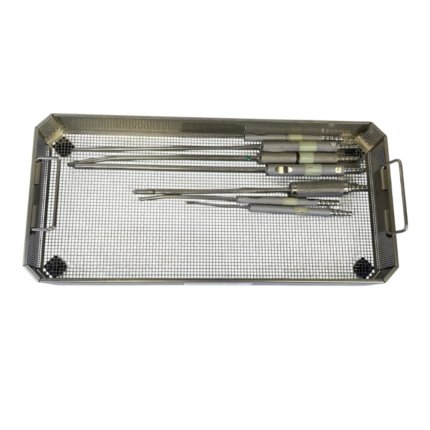

The Acland Micro Surgery Vessel Clamps Sets For Plastic Surgery & Neurosurgery are precision surgical instruments designed for delicate vascular procedures where controlled handling and temporary occlusion of small blood vessels are required. Their microsurgical configuration makes them suitable for specialized applications in reconstructive plastic surgery, vascular microsurgery, peripheral nerve surgery, neurosurgery, and other procedures involving fine anatomical structures.
Microsurgery requires instruments that allow the surgeon to work within a confined operative field while minimizing unnecessary manipulation of surrounding tissue. Vessel clamps are used when temporary vascular occlusion is required during anastomosis, vessel repair, reconstruction, or other microsurgical techniques. Appropriate clamp selection is important because small vessels can be delicate and require controlled application of pressure.
The Acland-style microsurgical vessel clamp configuration provides a specialized solution for surgeons working with small-caliber vessels. The fine working profile allows the instrument to be positioned accurately around the target vessel while maintaining visibility within the surgical field. Depending on the specific clamp configuration, different jaw designs and profiles may be selected according to vessel size, surgical access, and procedural requirements.
In plastic and reconstructive surgery, microsurgical vessel clamps can be used during free-flap reconstruction, tissue transfer, replantation, and other procedures involving microvascular anastomosis. They may also be incorporated into surgical setups where temporary control of small vessels is necessary during delicate reconstruction.
In neurosurgery, precision vascular instruments can be useful during procedures requiring careful manipulation of small vessels and delicate anatomical structures. The instrument’s intended application should always be determined by the surgeon according to the operative technique, vessel characteristics, and clinical circumstances.
The microsurgical design emphasizes precision, balance, and controlled handling. Fine instrument tips can help provide access to small operative sites, while appropriately engineered handles allow the surgeon to manipulate the clamp with minimal unnecessary movement. The instruments are intended for trained professionals familiar with microsurgical techniques and should be handled carefully to maintain alignment and working-tip integrity.
Durable surgical metal construction supports repeated professional use when the instruments are properly maintained. Because microsurgical instruments have fine working components, careful inspection is particularly important. Tips and jaws should be checked regularly for alignment, deformation, surface damage, corrosion, or other abnormalities that could affect performance.
Following each procedure, the vessel clamps should undergo appropriate cleaning and decontamination according to validated instrument-processing procedures. Fine microsurgical instruments should be handled carefully during cleaning to avoid bending or damaging the delicate working ends. After cleaning, instruments should be thoroughly dried and inspected before sterilization. A validated sterilization process compatible with the instrument material and manufacturer’s instructions should be used.
The Acland Microsurgery Vessel Clamp Set provides a practical option for specialist surgical environments requiring precision vascular instruments. Its applications across plastic surgery, reconstructive microsurgery, and neurosurgery make it a valuable component of a dedicated microsurgical instrument collection where controlled vessel occlusion and delicate tissue handling are required.
Key Features
- Precision microsurgical vessel clamp set
- Designed for delicate vascular procedures
- Suitable for plastic and reconstructive surgery
- Useful for neurosurgical microsurgical applications
- Designed for temporary vessel occlusion
- Fine working profile for small operative fields
- Supports controlled manipulation of small-caliber vessels
- Suitable for microvascular anastomosis procedures
- Durable surgical metal construction
- Designed for repeated professional microsurgical use
- Requires careful cleaning and handling of fine working tips
- Suitable for specialist surgical and microsurgical instrument sets
Product Specifications
| Specification | Details |
|---|---|
| Product Name | Acland Microsurgery Vessel Clamp Sets |
| Instrument Type | Microsurgical Vessel Clamp |
| Primary Application | Microsurgery and Vascular Occlusion |
| Surgical Applications | Plastic Surgery, Reconstructive Surgery, Neurosurgery |
| Vascular Use | Temporary Vessel Occlusion and Vascular Handling |
| Design | Precision Microsurgical Profile |
| Construction | Surgical Metal |
| Working Area | Small-Caliber Vessels and Delicate Surgical Fields |
| Reusable | Yes, subject to proper processing |
| Sterilization | Validated surgical instrument sterilization |
| Intended Users | Trained Surgeons and Microsurgical Specialists |
| Clinical Environment | Operating Rooms and Microsurgical Facilities |
FAQs
What are Acland microsurgical vessel clamps used for?
Microsurgical vessel clamps are used for controlled temporary occlusion and manipulation of small blood vessels during delicate vascular and reconstructive procedures.
Can Acland vessel clamps be used in plastic surgery?
Yes. Microsurgical vessel clamps can be used in reconstructive and plastic surgery procedures involving microvascular anastomosis, free-flap surgery, tissue transfer, and related vascular techniques.
Are microsurgical vessel clamps used in neurosurgery?
They can be used in selected neurosurgical procedures where controlled handling or temporary occlusion of small vessels is required. The appropriate instrument depends on the specific surgical technique and anatomy.
What is temporary vessel occlusion?
Temporary vessel occlusion involves briefly controlling blood flow through a vessel during a surgical procedure, such as vascular repair or anastomosis, before releasing the vessel.
Why are microsurgical vessel clamps designed with fine tips?
Fine working tips provide greater access and control when operating around small vessels and delicate anatomical structures in confined surgical fields.
How should microsurgical vessel clamps be maintained?
They should be cleaned, dried, inspected, and sterilized according to validated surgical instrument-processing procedures. Fine tips should be handled carefully to prevent bending or loss of alignment.
Are Acland vessel clamps reusable?
Reusable microsurgical clamps can be used repeatedly when they are properly processed, maintained, and inspected for alignment and working-tip condition according to manufacturer and facility protocols.



Reviews
There are no reviews yet.