
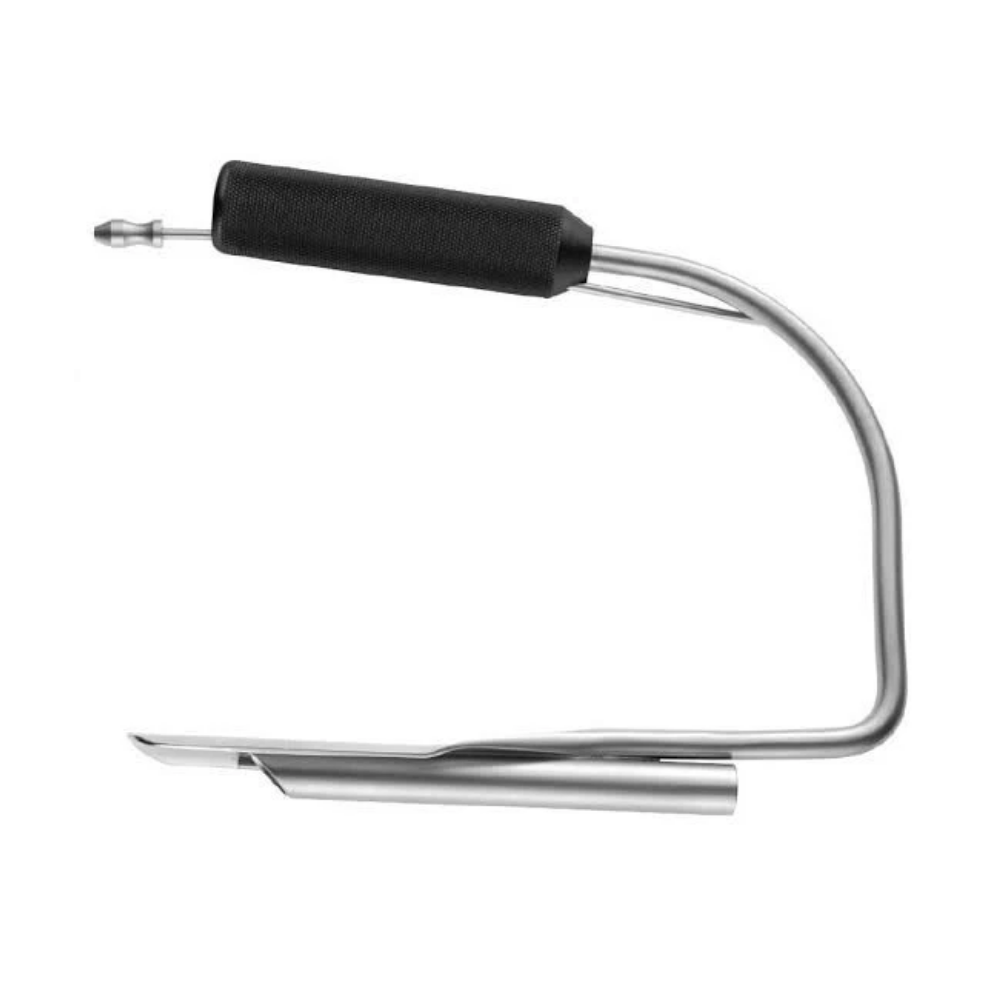
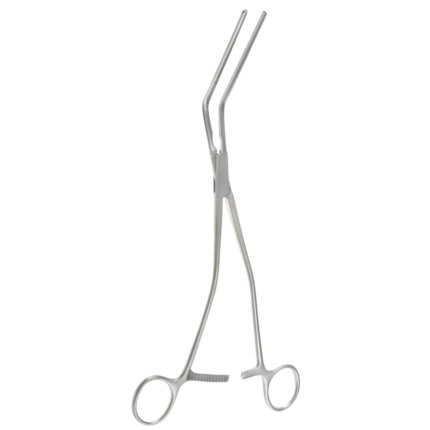
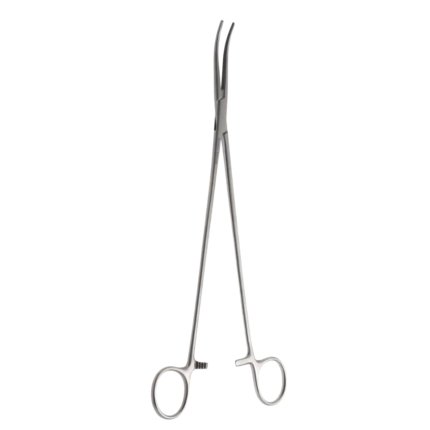
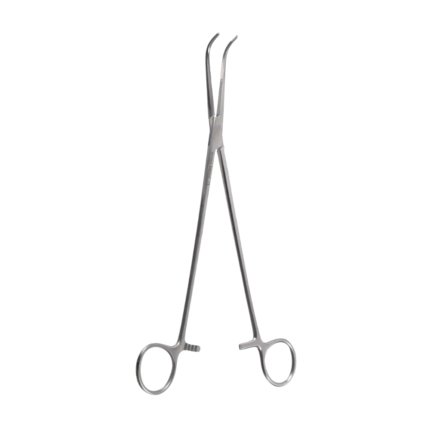
The Basic Surgical Emory Endoscopic Retractor with Lock is a specialized surgical instrument designed for controlled tissue retraction and maintenance of operative exposure during appropriate endoscopic and minimally invasive surgical procedures. The instrument combines a practical retractor configuration with an integrated locking mechanism, allowing the selected retraction position to be maintained during the procedure while reducing the need for continuous manual adjustment.
Tissue retraction is an important component of many surgical procedures because adequate visualization and access to the operative field can directly influence the surgeon’s ability to perform precise dissection, inspection, manipulation, and treatment. An endoscopic retractor is designed to assist with controlled displacement of soft tissue and other anatomical structures while providing the surgeon with improved access to the targeted surgical area.
The Emory Endoscopic Retractor is intended for professional surgical environments where controlled retraction is required. Its design supports use with appropriate endoscopic or minimally invasive surgical techniques, subject to the specific instrument configuration and the procedure being performed. The surgeon should select the appropriate retractor based on the anatomical location, tissue characteristics, required exposure, and operative approach.
A key feature of this instrument is the locking mechanism. A locking system can help secure the retractor in a selected position once the desired degree of tissue retraction has been achieved. This can provide greater consistency during surgery and may reduce the requirement for an assistant or surgeon to continuously hold the instrument in a fixed position. The locking mechanism should be operated according to the instrument’s design and should never be forced beyond its intended range.
Controlled retraction is particularly important in minimally invasive surgery, where access to the operative site can be restricted by small working channels and limited visualization. A properly positioned endoscopic retractor can help create working space while allowing the surgical team to maintain a clear field. However, retraction should always be performed carefully because excessive force or prolonged pressure can potentially damage delicate anatomical structures.
The Basic Surgical Emory Endoscopic Retractor is designed for repeated professional surgical use when supplied as a reusable instrument. Its construction should provide appropriate durability for routine handling, cleaning, sterilization, and operative use. The instrument should be inspected before and after each procedure for structural integrity, correct locking function, smooth operation, surface condition, and signs of wear or damage.
For reusable surgical instruments, appropriate cleaning and sterilization are essential. The retractor should be cleaned promptly after use to prevent blood, tissue, and other biological material from drying on its surfaces or within mechanical components. Particular attention should be given to the locking mechanism and moving areas, where retained contamination could interfere with proper operation. After cleaning, the instrument should be thoroughly inspected and processed using a validated sterilization method compatible with the manufacturer’s instructions and the instrument’s material.
The instrument may be suitable for hospitals, surgical centers, minimally invasive surgery departments, endoscopy units, orthopedic or general surgical facilities, and professional medical-device distributors. Its locking functionality provides an additional level of operational control compared with simple non-locking retractors.
The Basic Surgical Emory Endoscopic Retractor – With Locking Mechanism provides a practical solution for controlled tissue retraction and operative exposure. Its endoscopic configuration and integrated locking mechanism make it suitable for professional surgical applications where stable positioning, controlled access, and reliable instrument handling are required.
Key Features
- Emory endoscopic retractor for controlled surgical tissue retraction
- Integrated locking mechanism for maintaining the selected position
- Designed for professional endoscopic and minimally invasive procedures
- Supports controlled exposure of the operative field
- Helps reduce continuous manual holding during appropriate procedures
- Locking system provides stable positioning during tissue retraction
- Suitable for controlled manipulation of soft tissue within the surgical field
- Designed for professional surgical handling and repeated use when applicable
- Moving and locking components should be inspected before clinical use
- Reusable versions require validated cleaning and sterilization procedures
- Suitable for hospitals, surgical centers, and professional operating-room inventories
- Intended for use by qualified surgical professionals according to appropriate technique
Product Specifications
| Specification | Details |
|---|---|
| Product Name | Basic Surgical Emory Endoscopic Retractor |
| Instrument Type | Endoscopic Surgical Retractor |
| Locking Mechanism | Included |
| Primary Function | Tissue Retraction |
| Surgical Application | Endoscopic / Minimally Invasive Surgery |
| Design | Locking Retractor |
| Instrument Category | Surgical Retractor |
| Primary Purpose | Surgical Exposure and Tissue Retraction |
| Intended Users | Qualified Surgical Professionals |
| Reusable | According to Product Configuration |
| Cleaning | According to Manufacturer’s IFU |
| Sterilization | According to Manufacturer’s IFU |
| Application | Operative Field Exposure |
FAQs
1. What is an Emory Endoscopic Retractor used for?
The Emory Endoscopic Retractor is designed to provide controlled tissue retraction and maintain access to the operative field during appropriate endoscopic and minimally invasive surgical procedures.
2. What is the purpose of the locking mechanism?
The locking mechanism helps maintain the retractor at a selected position after appropriate tissue retraction has been achieved. This can reduce the need for continuous manual adjustment during the procedure.
3. Can this retractor be used for minimally invasive surgery?
It is designed for endoscopic and minimally invasive surgical applications, subject to the specific procedure, instrument configuration, and surgeon’s technique.
4. What are the benefits of a locking surgical retractor?
A locking mechanism can provide more stable positioning and consistent retraction during an appropriate procedure. It may also reduce the need for continuous manual holding by the surgical team.
5. Can the Emory Endoscopic Retractor be reused?
If supplied as a reusable surgical instrument, it can be reprocessed according to the manufacturer’s validated cleaning and sterilization instructions. Single-use versions, if applicable, must not be reused.
6. How should a reusable endoscopic retractor be sterilized?
The instrument should be thoroughly cleaned and sterilized according to the manufacturer’s instructions for use (IFU) and the healthcare facility’s validated instrument-processing protocol. Special attention should be given to the locking and moving components.

Reviews
There are no reviews yet.