
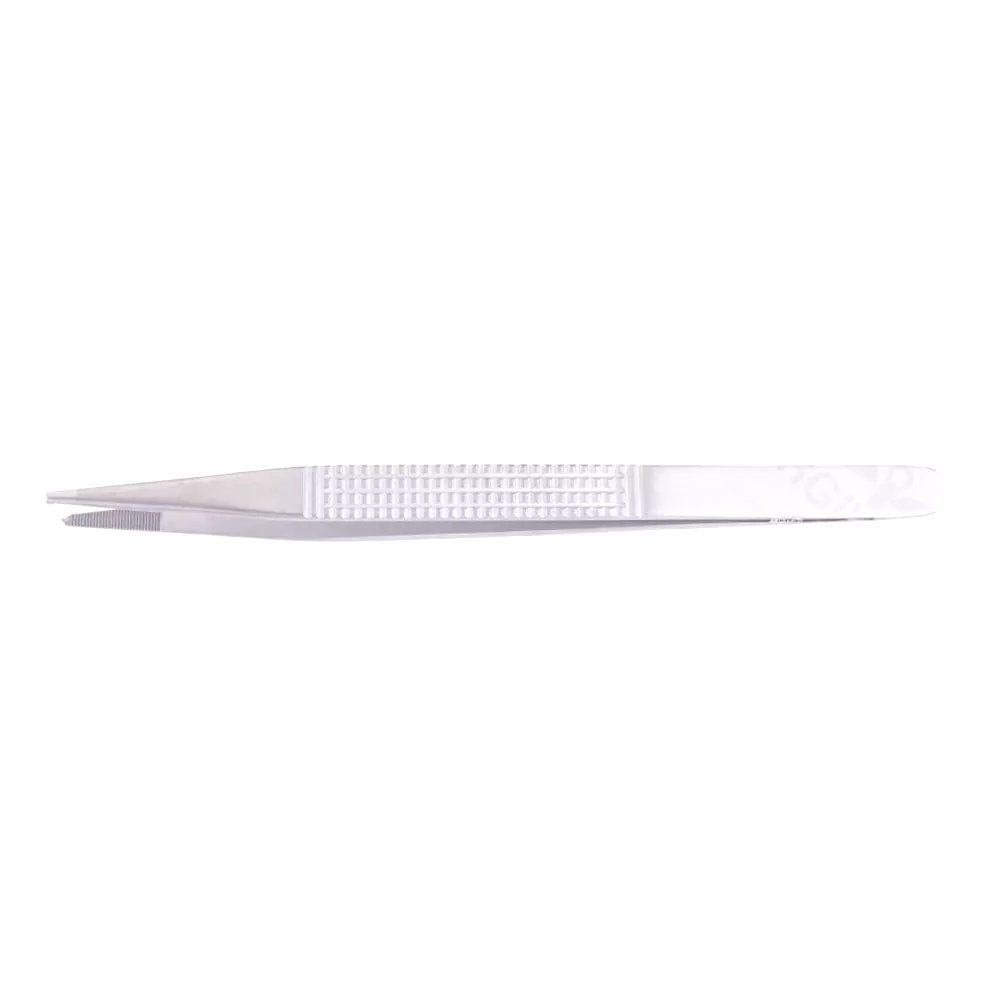
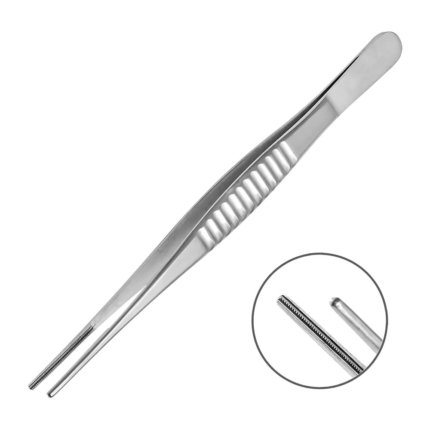
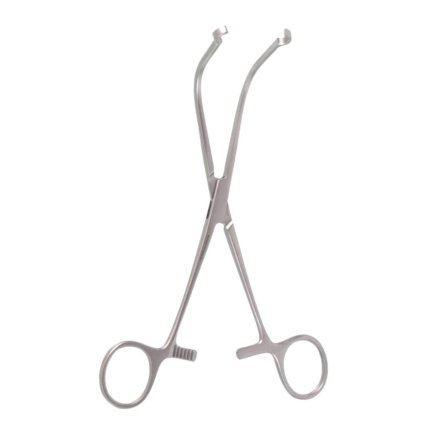
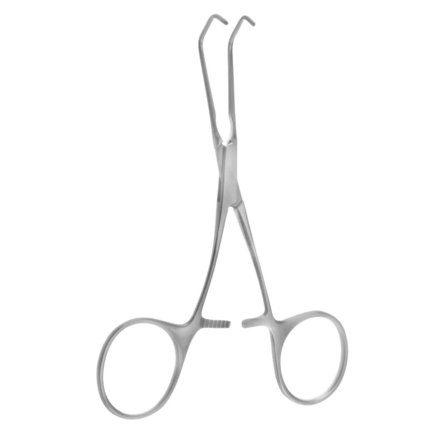
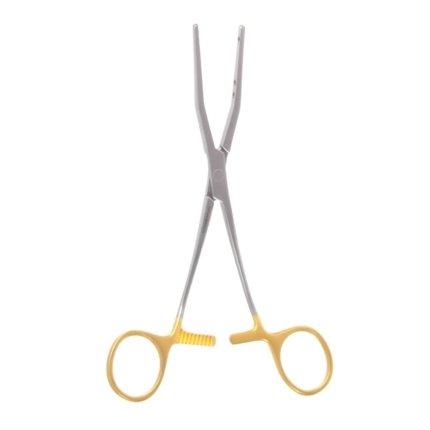
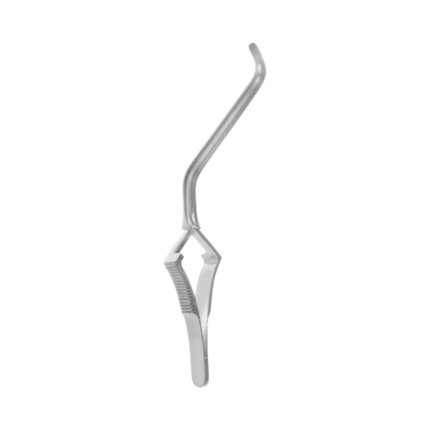
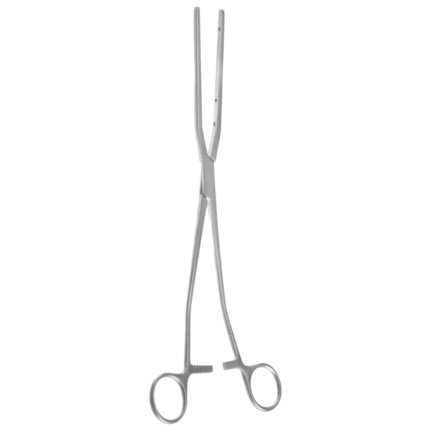
The Curtis Tissue Forceps Straight 1×2 Teeth Serrated Handle is a premium surgical instrument designed for secure tissue handling and precise manipulation during cardiovascular, thoracic, gastrointestinal, and general surgical procedures. Engineered for professional surgical environments, these forceps combine a straight jaw profile with a 1×2 toothed tip and an ergonomic serrated flat handle to provide exceptional control, accuracy, and reliability.
During surgical procedures, maintaining a secure grip on tissues is essential for precise dissection, retraction, and operative efficiency. The Curtis Tissue Forceps are specifically designed for intestinal grasping and handling soft tissues where controlled traction is required. The straight jaw configuration provides direct access and excellent visibility, allowing surgeons to work confidently in both superficial and deeper operative fields.
The 1×2 teeth configuration ensures a stable grip by allowing the interlocking teeth to securely engage tissue while minimizing unwanted movement. This design provides improved precision during tissue manipulation and is particularly useful when handling fascia, intestinal tissue, soft tissue layers, and other anatomical structures requiring reliable grasping. The fine serrations along the jaw further enhance grip and contribute to controlled tissue handling.
A distinguishing feature of these forceps is the serrated flat handle, which offers superior ergonomics and tactile feedback. The textured handle improves grip even when wearing surgical gloves, allowing surgeons to maintain precise instrument control throughout lengthy procedures. The balanced construction helps reduce hand fatigue while supporting smooth and accurate movements.
Manufactured from premium surgical-grade stainless steel, the Curtis Tissue Forceps provide exceptional durability, corrosion resistance, and long-term clinical performance. The high-quality stainless steel construction maintains precise jaw alignment and structural integrity after repeated sterilization cycles. The polished surgical finish facilitates easy cleaning and supports compliance with modern operating room hygiene standards.
These forceps are suitable for a broad range of surgical specialties, including cardiovascular surgery, thoracic surgery, gastrointestinal surgery, vascular surgery, and general surgery. They are commonly used for tissue grasping, intestinal manipulation, wound closure assistance, and surgical dissection where dependable tissue control is required.
The lightweight yet durable design provides excellent balance, allowing surgeons to perform delicate procedures with confidence. The precision-machined jaws ensure consistent alignment, providing dependable performance in both routine and complex surgical cases.
Proper maintenance is essential for preserving the instrument’s precision and longevity. After each procedure, the forceps should be thoroughly cleaned, inspected, and sterilized according to approved medical instrument reprocessing protocols. Regular maintenance helps maintain jaw alignment, tooth integrity, and overall instrument performance.
The Cardio Vascular Surgical Curtis Tissue Forceps – Intestinal Grasping, Straight, 1×2 Teeth, Serrated Flat Handle combines precision craftsmanship, ergonomic handling, and durable construction, making it an essential instrument for surgeons seeking reliable tissue control across a wide variety of surgical procedures.
Key Features
- Professional Curtis tissue forceps for cardiovascular, thoracic, gastrointestinal, and general surgery
- Straight jaw design provides direct access and improved surgical visibility
- 1×2 teeth configuration ensures secure tissue engagement
- Fine serrated jaws enhance grip and reduce tissue slippage
- Designed for intestinal grasping and precise tissue manipulation
- Ergonomic serrated flat handle improves comfort and instrument control
- Precision-balanced construction minimizes hand fatigue
- Manufactured from premium surgical-grade stainless steel
- Corrosion-resistant finish for long-lasting clinical durability
- Precision-aligned jaws ensure consistent surgical performance
- Fully autoclavable and compatible with standard sterilization methods
- Reusable professional-grade surgical instrument
Product Specifications Table
| Specification | Details |
|---|---|
| Product Name | Curtis Tissue Forceps – Intestinal Grasping |
| Instrument Type | Surgical Tissue Forceps |
| Jaw Design | Straight |
| Jaw Configuration | 1×2 Teeth |
| Handle Type | Serrated Flat Handle |
| Application | Cardiovascular, thoracic, gastrointestinal, vascular, and general surgery |
| Primary Function | Tissue grasping and manipulation |
| Material | Premium surgical-grade stainless steel |
| Finish | Satin/Polished surgical finish |
| Reusable | Yes |
| Sterilization | Autoclave and standard hospital sterilization compatible |
| Clinical Use | Hospitals, surgical centers, operating rooms |
FAQs
1. What are Curtis Tissue Forceps used for?
Curtis Tissue Forceps are used for grasping, holding, and manipulating soft tissues during cardiovascular, gastrointestinal, thoracic, vascular, and general surgical procedures.
2. What is the advantage of the 1×2 teeth design?
The 1×2 interlocking teeth provide a secure grip on tissue, reducing slippage while allowing precise surgical control.
3. Why does the handle have serrations?
The serrated flat handle improves grip and tactile feedback, helping surgeons maintain better control, even while wearing surgical gloves.
4. Are these forceps suitable for intestinal surgery?
Yes. They are specifically designed for intestinal grasping and can also be used in other procedures requiring secure tissue handling.
5. What material are Curtis Tissue Forceps made from?
They are manufactured from premium surgical-grade stainless steel for excellent durability, corrosion resistance, and repeated sterilization.
6. Can these forceps be reused?
Yes. They are fully reusable when properly cleaned, inspected, and sterilized according to standard medical protocols.
7. Who commonly uses Curtis Tissue Forceps?
These forceps are commonly used by cardiovascular surgeons, gastrointestinal surgeons, thoracic surgeons, vascular surgeons, general surgeons, and healthcare professionals in hospitals and surgical centers.

Reviews
There are no reviews yet.