
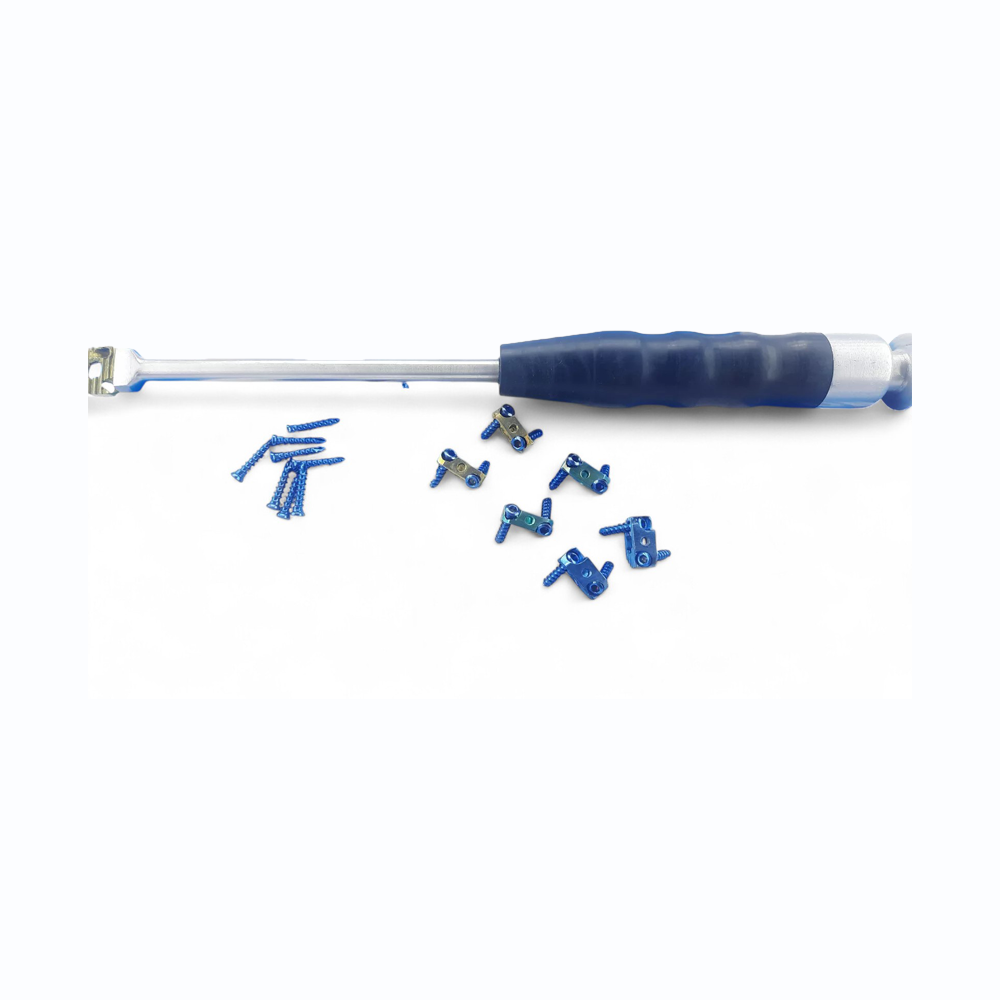
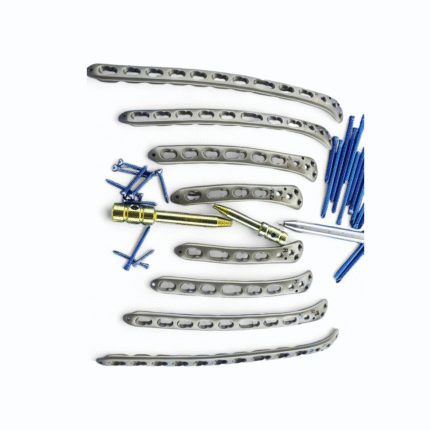
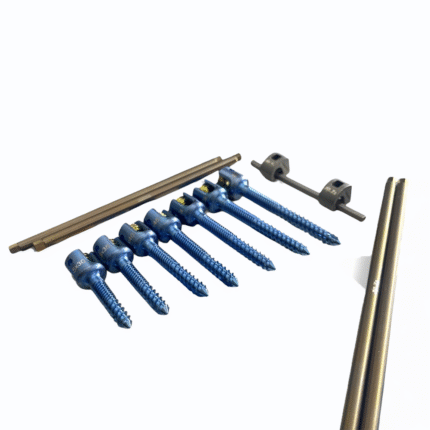
The Titanium Cervical Fusion Spine Cage Set 5 7 mm is a comprehensive orthopedic spinal implant system designed for professional use in appropriately selected cervical interbody fusion procedures. The system provides three cervical cage height options—5 mm, 6 mm, and 7 mm—together with 124 titanium fixation screws in 16 mm and 18 mm lengths. This broad configuration provides surgeons with multiple implant options for addressing different cervical disc-space dimensions and fixation requirements.
Cervical interbody fusion is a surgical technique used to stabilize a cervical spinal segment following appropriate preparation of the intervertebral disc space. A cervical fusion cage is positioned within the prepared interbody space to provide structural support and help maintain the intended disc-space relationship while fusion develops. The appropriate cage height is selected according to patient anatomy, preoperative imaging, intraoperative assessment, and the specific surgical objective.
The availability of 5 mm, 6 mm, and 7 mm cervical fusion cages allows the surgical team to select an implant height appropriate to the prepared disc space. Multiple heights can be particularly useful when maintaining a varied spinal implant inventory for different patient anatomies and surgical requirements. Cage selection should never be based on size alone and must be determined by a qualified spine surgeon using appropriate clinical and radiographic assessment.
The system includes 124 titanium screws in 16 mm and 18 mm lengths, providing multiple fixation options. Screw length selection is an important aspect of cervical implant placement because the selected screw must provide appropriate fixation while respecting the surrounding anatomical structures. The surgeon should determine the appropriate screw length and trajectory according to patient anatomy, implant position, imaging, operative findings, and the manufacturer’s approved surgical technique.
The fixation screws are manufactured from titanium, a material widely used in orthopedic and spinal implant systems. Titanium offers favorable mechanical strength, corrosion resistance, and established biocompatibility for implant applications. Its use in spinal fixation systems provides a durable material platform suitable for appropriately designed cervical implant components.
The combination of multiple cage heights and screw lengths provides flexibility during cervical fusion surgery. A 5 mm cage may be selected when a lower implant height is appropriate, while 6 mm and 7 mm cages provide progressively greater implant heights when clinically indicated. Final implant selection should be based on anatomical measurements and surgical assessment rather than a predetermined size.
Cervical fusion cages may be used in appropriately selected procedures following decompression and removal of damaged disc material, depending on the clinical indication and surgical approach. The cage provides structural support within the interbody space, while compatible fixation screws may be used to secure the implant according to the specific device design. The exact surgical technique, cage positioning, bone preparation, and fixation strategy must follow the manufacturer’s instructions and the surgeon’s established operative protocol.
The 124-piece titanium screw configuration makes this system particularly suitable for hospitals, spine surgery centers, orthopedic departments, neurosurgical facilities, and authorized medical-device distributors requiring a broad inventory of cervical fixation components. Multiple cage heights and screw lengths allow implant selection to be adapted to different surgical cases within the approved product range.
Proper medical-device handling is essential for implant safety and performance. The cervical cages and titanium screws should be stored, inspected, handled, and implanted according to the manufacturer’s instructions for use and applicable regulatory requirements. Implantable components designated for single use should not be reused. Any reusable surgical instrumentation associated with cage preparation or screw placement should undergo validated cleaning, inspection, packaging, and sterilization procedures according to manufacturer instructions and healthcare-facility protocols.
The Cervical Fusion Spine Cage (5 mm, 6 mm & 7 mm) with 124 Titanium Screws (16 mm & 18 mm) provides a versatile cervical interbody fusion inventory with multiple cage heights and fixation screw options. Its titanium construction, three cage size choices, and two screw lengths make it suitable for professional cervical spinal stabilization procedures where the specific implant configuration is clinically indicated.
Key Features
- Comprehensive cervical fusion spine cage system
- Includes 5 mm, 6 mm, and 7 mm cage heights
- Supplied with 124 titanium fixation screws
- Screw lengths include 16 mm and 18 mm
- Designed for cervical interbody fusion procedures
- Multiple cage heights support different anatomical requirements
- Multiple screw lengths provide fixation flexibility
- Titanium construction offers strength, durability, and corrosion resistance
- Designed for professional cervical spinal stabilization
- Suitable for orthopedic and neurosurgical spine applications
- Supports implant selection based on patient anatomy and prepared disc-space dimensions
- Intended for use by qualified spine surgeons according to applicable surgical technique
Product Specifications
| Specification | Details |
|---|---|
| Product Name | Cervical Fusion Spine Cage System |
| Cage Heights | 5 mm, 6 mm & 7 mm |
| Screw Material | Titanium |
| Number of Screws | 124 pcs |
| Screw Lengths | 16 mm & 18 mm |
| Implant Type | Cervical Interbody Fusion Cage |
| Application | Cervical Spinal Fusion |
| Surgical Region | Cervical Spine |
| Fixation | Screw Fixation |
| Product Category | Spinal Fusion Implants |
| Primary Purpose | Cervical Interbody Stabilization |
| Intended Users | Qualified Spine Surgeons / Medical Professionals |
| System Configuration | Multiple Cage Heights + Titanium Screws |
FAQs
1. What is a Cervical Fusion Spine Cage used for?
A Cervical Fusion Spine Cage is an interbody implant designed for appropriately selected cervical spinal fusion procedures. It provides structural support within the prepared intervertebral space and helps maintain the desired disc-space relationship during the fusion process.
2. What cage sizes are included in this cervical fusion system?
The system includes 5 mm, 6 mm, and 7 mm cervical fusion cage heights, providing multiple options for different anatomical and surgical requirements.
3. How many titanium screws are included?
The product includes 124 titanium fixation screws in total.
4. What screw lengths are supplied with the cervical fusion cages?
The titanium screws are available in 16 mm and 18 mm lengths. The appropriate screw length should be selected based on patient anatomy, implant position, surgical technique, and manufacturer specifications.
5. Why are multiple cage heights included?
Multiple cage heights provide the surgical team with implant options for different prepared cervical disc spaces. Selection should be based on anatomical measurements, imaging, intraoperative findings, and the surgeon’s clinical assessment.
6. What material are the fixation screws made from?
The fixation screws are manufactured from titanium, a widely used material for orthopedic and spinal implants because of its strength, corrosion resistance, and established biocompatibility.
7. Can the 5 mm, 6 mm, and 7 mm cages be used interchangeably?
Cage selection should not be based simply on interchangeability. The appropriate height and configuration must be determined according to the patient’s anatomy, prepared disc space, surgical objectives, and the specific implant system’s instructions.
8. What is the purpose of fixation screws with a cervical fusion cage?
Compatible fixation screws can help secure the cervical implant according to the design of the specific cage system. Correct screw trajectory, length, and fixation technique are determined by the surgeon using the manufacturer’s approved surgical technique.


Reviews
There are no reviews yet.