
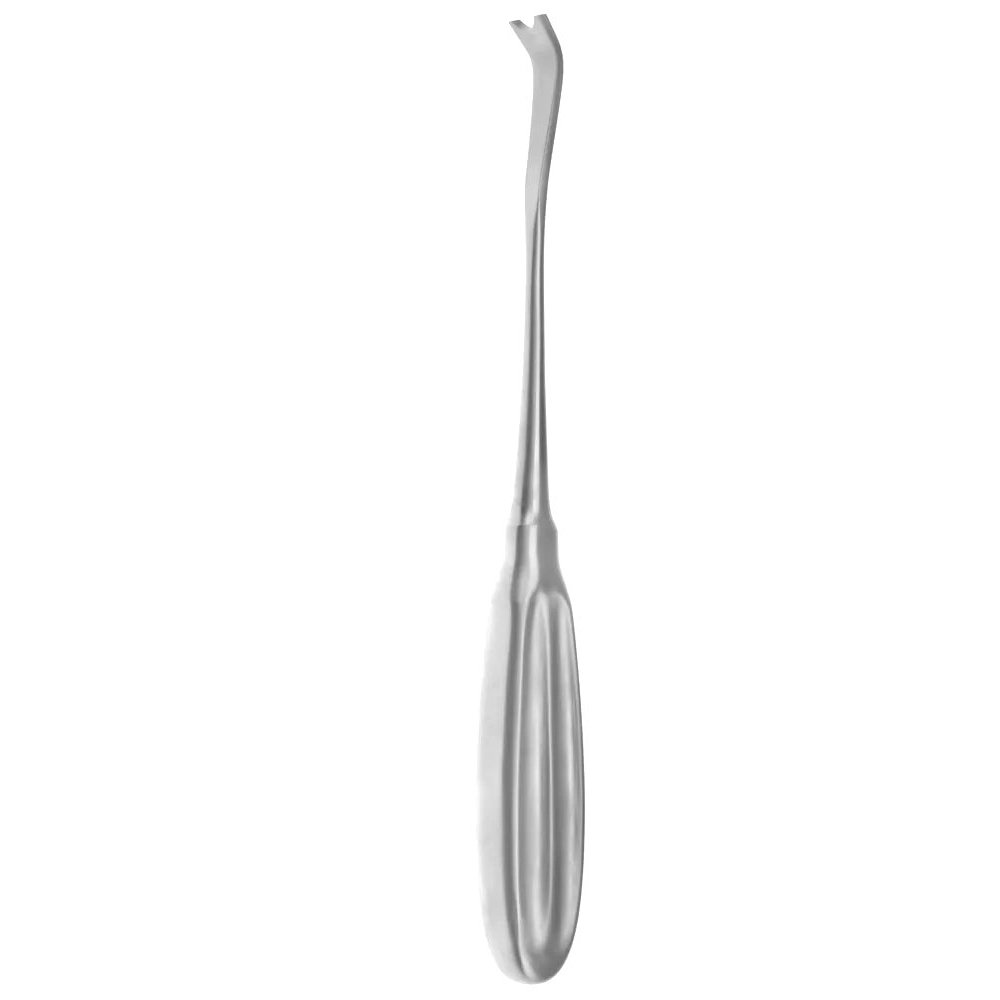
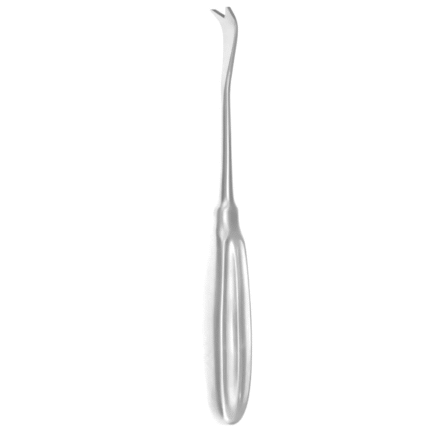
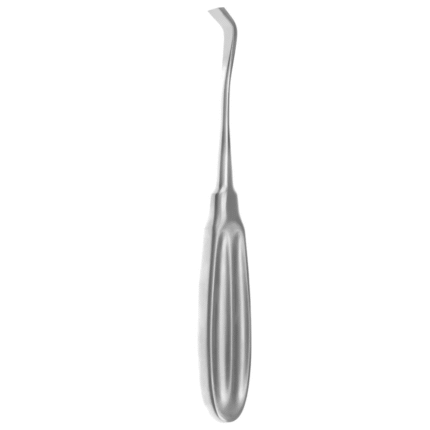
The Semb Rasp 9¼″ – Angled Blades with Notch is a specialized surgical instrument used in thoracic and orthopedic surgery for periosteal elevation and bone surface preparation. Based on the design principles established by Swedish thoracic surgeon Karl Gunnar Semb, this rasp has become a recognized standard for procedures requiring precise, controlled removal or elevation of tissue along curved bone surfaces, particularly in rib and thoracic wall surgery. This extended 9¼″ version provides additional reach for deeper surgical fields or larger-framed patients.
Surgical Purpose and Applications
Periosteal rasps are used to prepare bone surfaces by elevating or smoothing periosteal and adjacent tissue prior to further surgical steps such as rib resection, bone graft harvesting, or thoracic wall reconstruction. The Semb Rasp’s angled blade configuration is specifically engineered to accommodate the curved anatomy of the rib cage and thoracic structures, allowing surgeons to maintain consistent contact with the bone surface throughout the rasping stroke, even along non-linear contours.
This instrument is commonly used in thoracotomy procedures, rib resection surgery, and thoracoplasty, where careful preparation of the rib or bone surface is required before proceeding with excision, grafting, or reconstruction. The extended length of this version makes it particularly suited for procedures requiring access to deeper thoracic structures or larger anatomical fields.
Design Features
The Semb Rasp features angled dual blades positioned to maintain optimal contact with curved bone surfaces during use, reducing the need for repeated repositioning during the rasping motion. The integrated notch along the blade design serves as a functional guide, helping stabilize the instrument’s position against the rib or bone edge and improving control during repetitive strokes.
The instrument’s 9¼″ length provides surgeons with enhanced reach and leverage for deeper thoracic surgical access, while the dual-blade configuration allows for efficient bidirectional rasping, improving procedural efficiency compared to single-blade designs. This added length offers surgeons greater flexibility when working within larger surgical fields or when additional instrument reach is required.
Material and Build Quality
Manufactured from premium surgical-grade stainless steel, the Semb Rasp offers excellent strength, edge retention, and resistance to corrosion. This construction ensures the angled blades and notch feature maintain their precise geometry and functional sharpness even after extensive repeated use in demanding surgical environments.
Finish and Usability
Available in a satin or mirror-polished finish, this instrument is designed for clear visibility under surgical lighting while remaining easy to clean and inspect between procedures. The ergonomic handle supports a secure, stable grip, allowing surgeons to maintain consistent control and pressure during extended rasping sequences, even with the instrument’s longer profile.
Sterilization and Reusability
The Semb Rasp 9¼″ is fully autoclavable and compatible with standard hospital steam sterilization protocols. Its corrosion-resistant stainless-steel construction ensures the angled blades and notch retain their precise functional geometry across repeated sterilization cycles, supporting reliable long-term reuse in high-frequency thoracic surgical settings.
Durability and Long-Term Value
Built for institutional and repeated surgical use, this instrument is engineered to withstand the mechanical demands of bone surface preparation without deforming, dulling, or losing precision. Its angled dual-blade design, extended reach, and reinforced construction make it a practical, cost-effective addition to thoracic and orthopedic surgical trays, particularly valuable for procedures involving curved rib or bone anatomy in deeper or larger surgical fields.
Whether used in thoracotomy, rib resection, thoracoplasty, or general thoracic wall reconstruction, the Semb Rasp 9¼″ – Angled Blades with Notch delivers the precision, stability, and durability surgeons require for effective bone surface preparation.
Key Features
- Angled dual-blade design for curved bone surface access
- Integrated notch for improved stability and positioning
- Extended 9¼″ length for enhanced reach and leverage
- Efficient bidirectional rasping action
- Premium surgical-grade stainless steel construction
- Corrosion-resistant and long-lasting under repeated sterilization
- Ergonomic handle for secure, stable grip
- Fully autoclavable and reusable for institutional use
- Maintains precise geometry across repeated use
- Mirror-polished or satin finish available
- Ideal for thoracotomy, rib resection, and thoracoplasty procedures
- Reliable performance across high-frequency surgical use
Product Specifications
| Specification | Details |
|---|---|
| Product Type | Periosteal Rasp (Angled, Dual-Blade) |
| Application | Thoracic & Orthopedic Surgery |
| Material | Surgical-Grade Stainless Steel |
| Finish | Mirror Polished / Satin (Matte) |
| Sterilization | Autoclavable (Steam Sterilization Compatible) |
| Reusability | Reusable, Multi-Cycle Use |
| Specialty | Thoracic / Orthopedic Surgery |
| Instrument Type | Semb Rasp |
| Size | 9¼″ |
| Blade Configuration | Angled with Notch |
| Usage | Single or Multi-Procedure Reusable Instrument |
Product Contents
- 1 x Semb Rasp – 9¼″ (Angled Blades with Notch)
- Available in single-unit or bulk/case packaging (per institutional order requirements)
Applications
- Rib resection and thoracic wall surgery
- Thoracotomy and open thoracic procedures
- Thoracoplasty procedures
- Bone graft site preparation
- Periosteal elevation along curved bone surfaces
- General thoracic and orthopedic surgical preparation involving deeper access
FAQs
1. What is a Semb Rasp used for?
It is used to elevate periosteum and prepare bone surfaces, particularly along curved rib and thoracic wall anatomy, prior to further surgical steps.
2. How does the 9¼″ version differ from the standard 8″ Semb Rasp?
The 9¼″ version offers extended length for additional reach and leverage, making it better suited for deeper surgical fields or larger-framed patients.
3. What is the purpose of the angled blade design?
The angled configuration allows the instrument to maintain consistent contact with curved bone surfaces, such as ribs, throughout the rasping stroke.
4. What does the notch feature do?
The notch helps stabilize the instrument’s position against the bone edge, improving control and precision during repetitive rasping motions.
5. Is this instrument reusable after sterilization?
Yes. It is fully autoclavable and designed for repeated use following standard hospital sterilization protocols.
6. What material is the Semb Rasp made from?
It is manufactured from surgical-grade stainless steel, offering durability, corrosion resistance, and consistent rasping performance over time.
7. What surgical specialties commonly use this instrument?
The Semb Rasp is primarily used in thoracic surgery and orthopedic procedures involving rib and bone surface preparation.3


Reviews
There are no reviews yet.