


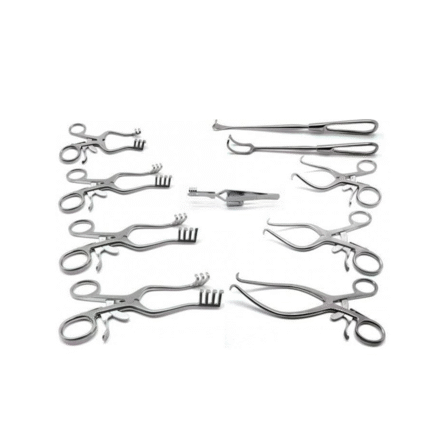
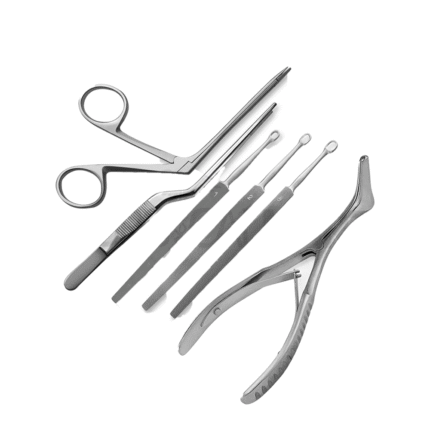
The FESS Instruments Set – Endoscopic Sinus Surgery ENT Kit German Stainless Steel with Box (A+ Grade) is designed for professional otolaryngology procedures requiring precise access and controlled manipulation within the nasal and paranasal sinus anatomy. Functional endoscopic sinus surgery, commonly referred to as FESS, uses specialized endoscopic instruments to work through the nasal passages while maintaining visualization of the surgical field.
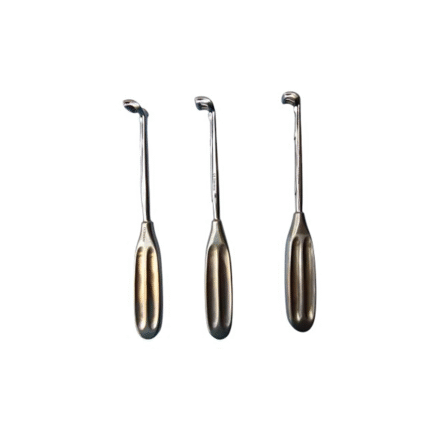
A dedicated FESS instrument set provides a coordinated selection of tools for common stages of endoscopic sinus surgery. Depending on the exact configuration, the set may include nasal forceps, sinus punches, grasping forceps, suction instruments, elevators, probes, cutting instruments, and other specialized ENT tools. The precise contents, lengths, angles, and working-end profiles should be verified against the actual set inventory.
The instruments are designed for use with endoscopic visualization, where slim shafts and appropriately sized working ends are important for accessing narrow anatomical spaces. Fine instrument profiles can help the surgeon manipulate tissue while maintaining visibility through the endoscope and minimizing obstruction of the operative field.
FESS instruments may be used during selected procedures involving the nasal cavity and paranasal sinuses, including endoscopic sinus surgery for chronic sinus disease and other conditions where endoscopic surgical intervention is indicated. Individual instruments have specific functions and should be selected according to the anatomical target and surgical technique.
The set can support procedures involving areas such as the maxillary, ethmoid, frontal, and sphenoid sinus regions, depending on the instrument design and operative approach. Different angled instruments may provide access to anatomical areas that are difficult to reach with straight instruments, while specialized graspers and punches can assist with tissue manipulation or removal.
The product is described as German stainless steel. This description is retained as part of the product listing; however, the exact stainless steel alloy, grade, hardness, surface treatment, and manufacturing standard should be confirmed from the applicable supplier documentation rather than assumed solely from the marketing description.
The listed A+ grade designation is also a product-quality description. Actual instrument quality should be evaluated using measurable characteristics such as material specification, finishing quality, jaw alignment, cutting performance, mechanical function, and manufacturing consistency.
The included storage box helps keep the FESS instruments organized and protected between procedures. Dedicated storage can reduce unnecessary contact between delicate tips, maintain separation of individual instruments, and simplify instrument counting and preparation in the operating room or sterile processing department.
Ergonomic instrument handling is particularly important during endoscopic sinus surgery. Long, slender shafts and angled working ends may require precise manipulation through a restricted surgical corridor. Excessive force, inappropriate leverage, or use of an instrument outside its intended purpose may damage the working end or affect surgical control.
Before each procedure, the instruments should be inspected carefully for tip alignment, jaw function, cutting-edge condition, shaft integrity, corrosion, surface damage, and smooth mechanical operation. Fine sinus instruments should be handled carefully during transportation and storage to avoid bending or deformation.
For reusable instruments, cleaning, disinfection, sterilization, and inspection should follow validated instructions applicable to the exact instrument materials and construction. Hinges, serrations, suction channels where present, narrow interfaces, and working ends require careful cleaning to remove biological residue.
The FESS Instruments Set for Endoscopic Sinus Surgery is suitable for ENT departments, otolaryngology clinics, hospitals, ambulatory surgical centers, and specialty sinus-surgery facilities. Its specialized configuration, storage box, and selection of endoscopic ENT instruments provide a practical foundation for professional sinus surgery workflows.
Key Features
- Specialized FESS endoscopic sinus surgery instrument set
- Designed for ENT and otolaryngology procedures
- Suitable for functional endoscopic sinus surgery
- Supports controlled nasal and sinus tissue manipulation
- May include forceps, punches, elevators, probes, and suction instruments
- Straight and angled profiles may be included depending on configuration
- Designed for use through endoscopic surgical approaches
- Fine working ends support precision within narrow anatomical spaces
- German stainless steel specification as stated in the product listing
- A+ grade quality designation as stated in the listing
- Supplied with a protective storage box
- Reusable instruments require validated cleaning and sterilization procedures
Product Specifications
| Specification | Details |
|---|---|
| Product Name | FESS Instruments Set |
| Product Type | Endoscopic Sinus Surgery ENT Instrument Set |
| Primary Specialty | ENT / Otolaryngology |
| Primary Application | Functional Endoscopic Sinus Surgery |
| Surgical Region | Nasal Cavity and Paranasal Sinuses |
| Possible Instruments | Forceps, Punches, Elevators, Probes, Suction, Configuration Dependent |
| Instrument Profile | Endoscopic / Fine Surgical |
| Working Angles | Straight / Angled, Configuration Dependent |
| Material Description | German Stainless Steel, Per Product Listing |
| Quality Designation | A+ Grade, Per Product Listing |
| Storage | Included Instrument Box |
| Instrument Length | Configuration Dependent |
| Reusable | Depending on Individual Components |
| Sterilization | Follow Validated Reprocessing Instructions |
| Contents | Verify Exact FESS Set Configuration Before Use |
FAQs
What is a FESS instrument set used for?
A FESS instrument set is designed for functional endoscopic sinus surgery and related ENT procedures involving controlled access, tissue manipulation, dissection, and removal within the nasal and sinus anatomy.
What does FESS stand for?
FESS stands for Functional Endoscopic Sinus Surgery, an endoscopic approach used for selected surgical treatment of conditions involving the nasal cavity and paranasal sinuses.
What instruments are commonly included in a FESS set?
Depending on the configuration, a FESS set may include sinus forceps, punches, graspers, elevators, probes, suction instruments, and other specialized ENT surgical tools.
Can this set be used for endoscopic sinus surgery?
Yes. The set is specifically described as an endoscopic sinus surgery ENT kit and is intended to support appropriately selected FESS procedures.
Which sinus areas can FESS instruments access?
Depending on the instrument’s length and angle, specialized FESS instruments may provide access to areas associated with the maxillary, ethmoid, frontal, and sphenoid sinuses.
Why are angled FESS instruments useful?
Angled working ends can provide alternative access to anatomical areas that may be difficult to reach using a straight instrument within the restricted endoscopic surgical corridor.
What is the purpose of sinus punches?
Sinus punches are specialized instruments designed for controlled cutting or removal of selected tissue or bony structures according to their specific working-end design and surgical application.
What does “German stainless steel” mean?
It is a material description in the product listing. The exact stainless steel alloy or grade should be confirmed from the applicable product documentation rather than inferred from the description alone.
What does “A+ Grade” mean?
“A+ Grade” is a quality designation used in the product listing. Actual instrument quality should be evaluated using measurable specifications such as material, finish, alignment, and mechanical performance.
Does the FESS set include a storage box?
Yes. The product listing specifies an included box for storage and organization of the instruments.
Are FESS instruments reusable?
They may be reusable when specifically designed and labeled for repeated clinical use. Reusable instruments must be properly cleaned, inspected, sterilized, and maintained.
How should FESS instruments be sterilized?
Cleaning and sterilization should follow validated instructions for the exact instruments and materials. Fine working ends, hinges, serrations, and narrow channels require careful processing.
What should be inspected before using the FESS set?
Check forceps and punches for alignment and function, inspect working tips and cutting edges for damage, examine shafts for deformation, and verify overall cleanliness and structural integrity.



Reviews
There are no reviews yet.