
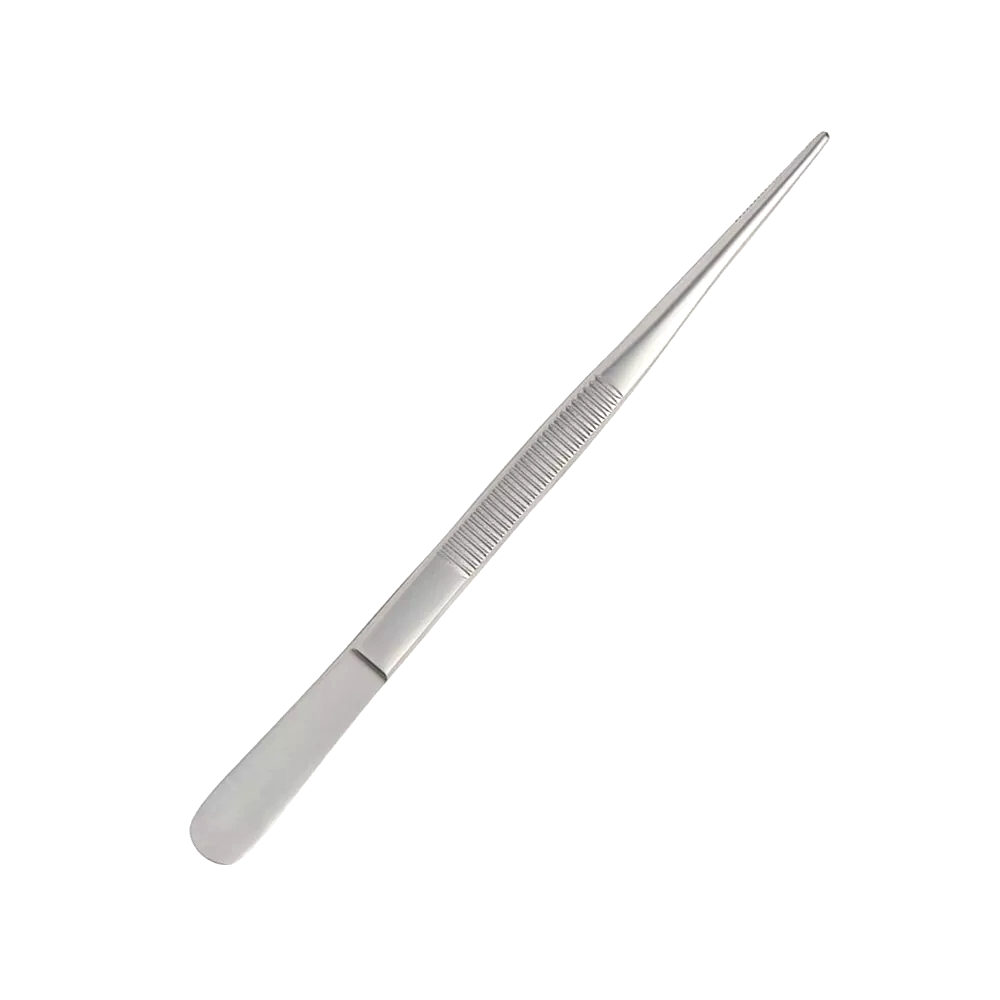
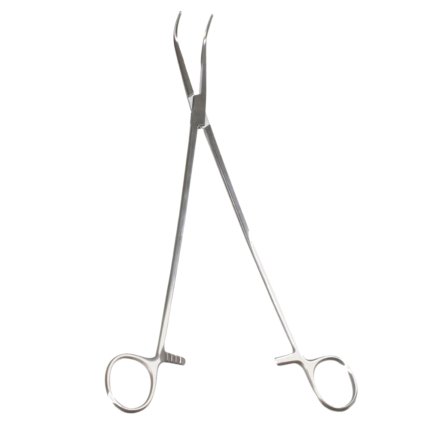
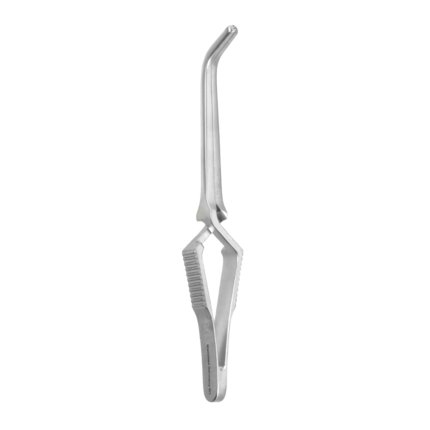
General Surgery Dissecting Forceps Fine Point, Serrated Jaw are precision surgical instruments designed for grasping, holding, and manipulating delicate tissues during general surgical procedures. The fine-point tip allows surgeons to perform detailed dissections and tissue handling with exceptional accuracy, making these forceps an essential instrument in a wide range of operative techniques.
The serrated jaws provide a secure, non-slip grip on tissues while minimizing unnecessary trauma. This design enables precise manipulation of soft tissues, fascia, membranes, and other delicate anatomical structures, allowing surgeons to maintain excellent control throughout the procedure.
Manufactured from premium surgical-grade stainless steel, these dissecting forceps offer exceptional durability, corrosion resistance, and long-lasting clinical performance. They are engineered to withstand repeated sterilization cycles while maintaining precise tip alignment, gripping efficiency, and structural integrity. The polished finish allows easy cleaning and supports strict infection control standards required in hospitals, operating rooms, and surgical centers.
The lightweight thumb forceps design provides excellent tactile feedback and precise manual control, allowing surgeons to perform intricate procedures with confidence while reducing hand fatigue during prolonged operations. Their balanced construction ensures consistent performance across a broad range of surgical applications.
General Surgery Dissecting Forceps Fine Point Serrated Jaw are widely used in general surgery, plastic surgery, vascular surgery, ENT surgery, orthopedic surgery, gynecology, dermatology, veterinary surgery, and other medical specialties requiring delicate tissue handling and precise dissection. Their reliability and precision make them an indispensable instrument in professional surgical instrument sets.
Key Features
Fine-point tips provide exceptional precision for delicate tissue handling
Serrated jaws ensure a secure, non-slip grip on tissues
Designed for accurate tissue grasping and surgical dissection
Manufactured from premium surgical-grade stainless steel
Lightweight thumb forceps design offers excellent tactile feedback
Strong, durable, and corrosion-resistant construction
Maintains precise tip alignment for reliable performance
Autoclavable for repeated sterilization cycles
Reusable for long-term professional surgical use
Suitable for hospitals, operating rooms, and surgical clinics
Product Specifications
| Specification | Details |
|---|---|
| Product Name | General Surgery Dissecting Forceps |
| Tip Design | Fine Point |
| Jaw Surface | Serrated |
| Material | Surgical Grade Stainless Steel |
| Instrument Type | Dissecting Tissue Forceps |
| Handle Type | Thumb Forceps |
| Usage | Tissue grasping, dissection, and manipulation |
| Sterilization | Autoclavable |
| Reusability | Reusable |
| Application | General Surgery, Plastic Surgery, Vascular Surgery, ENT Surgery, Orthopedic Surgery, Gynecology, Dermatology, Veterinary Surgery |
| Finish | Matte / Polished (varies) |
| Corrosion Resistance | High |
FAQs
What are General Surgery Dissecting Forceps used for?
They are used to grasp, hold, manipulate, and dissect delicate tissues during a wide variety of surgical procedures.
What is the advantage of the fine-point tip?
The fine-point tip allows highly precise tissue handling and detailed dissection in confined or delicate surgical areas.
Why are the jaws serrated?
The serrated jaws provide a secure, non-slip grip on tissues while helping minimize tissue trauma during manipulation.
What material are these forceps made from?
They are manufactured from premium surgical-grade stainless steel for superior durability, corrosion resistance, and long-lasting performance.
Can these dissecting forceps be sterilized?
Yes, they are fully autoclavable and designed to withstand repeated sterilization cycles.
Are these forceps reusable?
Yes, they are reusable and intended for long-term professional use in hospitals, operating rooms, and clinical environments.
Which surgical specialties commonly use these forceps?
They are commonly used in general surgery, plastic surgery, vascular surgery, ENT surgery, orthopedic surgery, gynecology, dermatology, veterinary surgery, and other specialties requiring precise tissue handling and delicate dissection.

Reviews
There are no reviews yet.