

The High Quality Stainless Steel Kerrison Rongeur – Precision Orthopedic & Neurosurgery Surgical Instrument is a specialized surgical instrument designed for controlled bone and tissue removal in procedures where precision and access are essential. Kerrison rongeurs are widely used in neurosurgery, spine surgery, and orthopedic surgery to remove small portions of bone, particularly when working within confined anatomical spaces.
The instrument features a mechanical biting mechanism that allows the surgeon to remove bone in controlled increments. This design can be useful during procedures requiring decompression, surgical exposure, or modification of bony structures. The appropriate Kerrison configuration should be selected according to the anatomical location, procedure, required bite size, and surgeon preference.
Kerrison rongeurs are available in different bite sizes, shaft lengths, jaw configurations, and angles. Straight, up-biting, down-biting, and angled designs can provide different approaches to the operative field. This product description refers to a general Kerrison rongeur; the exact angle, bite size, length, and jaw configuration should be confirmed against the individual product specification.
The instrument is manufactured from high-quality surgical stainless steel, providing mechanical strength, durability, and corrosion resistance. Stainless steel is commonly used for reusable surgical instruments because it can withstand appropriate cleaning and sterilization processes when the instrument is designed and labeled for repeated clinical use.
Precision manufacturing is particularly important for Kerrison rongeurs because the cutting jaws must maintain appropriate alignment and mechanical function. The working edges should engage and release smoothly, while the handle mechanism should provide controlled actuation. Regular inspection can help identify wear, damage, misalignment, corrosion, or other conditions that may affect instrument performance.
In neurosurgery and spine surgery, Kerrison rongeurs may be used during procedures such as laminectomy, laminotomy, spinal decompression, and other operations requiring controlled removal of bone. In orthopedic surgery, appropriately configured rongeurs can assist with bone preparation and removal during selected procedures. The exact indication depends on the instrument design and clinical application.
The instrument’s ergonomic handle is intended to provide controlled grip and leverage. Proper hand positioning and measured force are important when operating a rongeur because excessive force can damage the instrument or cause uncontrolled bone removal. The surgeon should always use the instrument within its intended application and mechanical limits.
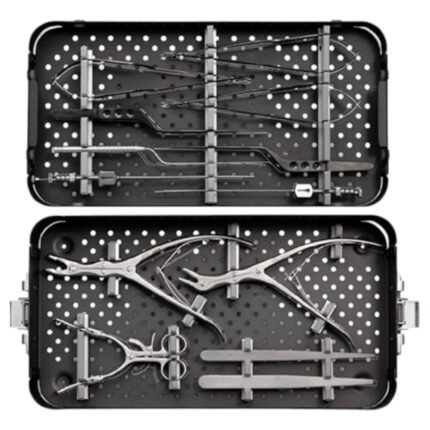
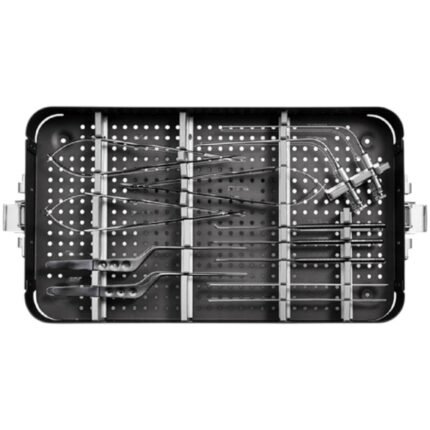
The Kerrison Rongeur can be suitable for hospitals, neurosurgical departments, orthopedic operating rooms, spine surgery centers, surgical clinics, and other professional healthcare facilities. Its compact design makes it useful as an individual instrument or as part of a specialized spine or neurosurgical instrument set.
Reusable Kerrison rongeurs require careful cleaning and maintenance. Following each procedure, the instrument should be cleaned promptly, thoroughly inspected, and checked for smooth mechanical action and proper jaw alignment. The cutting mechanism should be protected from impact with other instruments during handling, transportation, and storage.
When the instrument is designated as reusable and compatible with steam sterilization, it may be processed using a validated autoclave cycle according to the manufacturer’s instructions. Sterilization parameters should never be assumed solely from the material; the manufacturer’s validated instructions should always be followed.
The High Quality Stainless Steel Kerrison Rongeur is intended for qualified healthcare professionals trained in appropriate surgical procedures. Buyers should verify the exact bite size, angle, overall length, shaft dimensions, handle design, finish, and sterilization instructions before purchase.
Key Features
- High-quality stainless steel Kerrison Rongeur.
- Designed for controlled bone and tissue removal.
- Suitable for selected neurosurgical and spine procedures.
- Applicable to appropriate orthopedic surgical procedures.
- Precision-machined biting jaws for controlled removal.
- Durable surgical-grade stainless-steel construction.
- Corrosion-resistant finish supports long-term durability.
- Ergonomic handle provides controlled manual operation.
- Available in different bite sizes and configurations depending on specification.
- Reusable when specifically designated for repeated clinical use.
- Suitable for validated cleaning and sterilization processes.
- Designed for professional hospital and surgical environments.
Product Specifications
| Specification | Details |
|---|---|
| Product Type | Kerrison Rongeur |
| Application | Bone & Tissue Removal |
| Specialty | Neurosurgery / Spine Surgery / Orthopedic Surgery |
| Material | Surgical-Grade Stainless Steel |
| Finish | Standard Surgical Finish |
| Instrument Type | Bone Rongeur |
| Working Mechanism | Spring/Handle-Actuated Biting Jaws |
| Bite Size | As Specified |
| Jaw Configuration | As Specified |
| Shaft Angle | As Specified |
| Sterilization | Sterilizable according to manufacturer instructions |
| Reusability | Reusable, where applicable |
| Usage | Professional Surgical Use |
| Surgical Field | Spine / Cranial / Orthopedic |
Product Contents
The standard product includes:
- 1 × Stainless Steel Kerrison Rongeur
Note: Bite size, shaft length, jaw angle, overall dimensions, and other specifications vary by model. Confirm the exact configuration before ordering.
Applications
The Kerrison Rongeur may be used for:
- Neurosurgery
- Spine surgery
- Cervical spine procedures
- Lumbar spine procedures
- Laminectomy
- Laminotomy
- Spinal decompression
- Bone removal
- Surgical exposure
- Orthopedic bone procedures
- Cranial surgical procedures
- Selected reconstructive or decompressive procedures
Benefits
- Precision bone removal: Designed for controlled incremental removal of bone.
- Versatile surgical application: Suitable for selected neurosurgical, spinal, and orthopedic procedures.
- Durable construction: Surgical stainless steel provides strength and corrosion resistance.
- Controlled operation: Mechanical jaws allow measured removal with appropriate technique.
- Professional ergonomics: Handle design supports controlled grip and instrument manipulation.
- Reusable capability: Compatible reusable models can be processed according to validated protocols.
- Long-term usability: Proper maintenance and inspection can help preserve instrument performance.
FAQs
1. What is a Kerrison Rongeur used for?
A Kerrison rongeur is used for controlled removal of small sections of bone and tissue during selected neurosurgical, spinal, and orthopedic procedures.
2. What surgeries commonly use a Kerrison rongeur?
Kerrison rongeurs may be used during laminectomy, laminotomy, spinal decompression, cervical and lumbar spine procedures, cranial surgery, and selected orthopedic operations.
3. What is the difference between Kerrison rongeur bite sizes?
Different bite sizes provide different working capacities. Smaller bites can be useful for more controlled incremental bone removal, while larger bites can remove a greater amount of material per application.
4. Are Kerrison rongeurs made from stainless steel?
Professional reusable Kerrison rongeurs are commonly manufactured from surgical-grade stainless steel because of its strength, corrosion resistance, durability, and suitability for appropriate sterilization.
5. Is this Kerrison rongeur reusable?
Yes, if the specific model is manufactured and labeled for reusable clinical use. It should be cleaned, inspected, maintained, and sterilized according to the manufacturer’s instructions.
6. Can a stainless-steel Kerrison rongeur be autoclaved?
Compatible reusable stainless-steel models can generally undergo validated steam sterilization when approved by the manufacturer. Always follow the specific product’s instructions for use.
7. What does an up-biting Kerrison rongeur mean?
An up-biting Kerrison has a working jaw angled upward relative to the shaft. This configuration can provide access to particular anatomical areas during selected procedures.
8. Can Kerrison rongeurs be used in spine surgery?
Yes. Appropriately configured Kerrison rongeurs are commonly used for controlled bone removal during selected spinal decompression and related procedures.
9. How should a Kerrison rongeur be maintained?
The instrument should be cleaned promptly after use, inspected for jaw alignment and mechanical function, protected from impact, and sterilized according to validated manufacturer and facility protocols.
10. Who should use a Kerrison Rongeur?
Kerrison rongeurs are intended for qualified surgeons and trained healthcare professionals who are familiar with the appropriate surgical applications and handling requirements of the instrument.



Reviews
There are no reviews yet.