
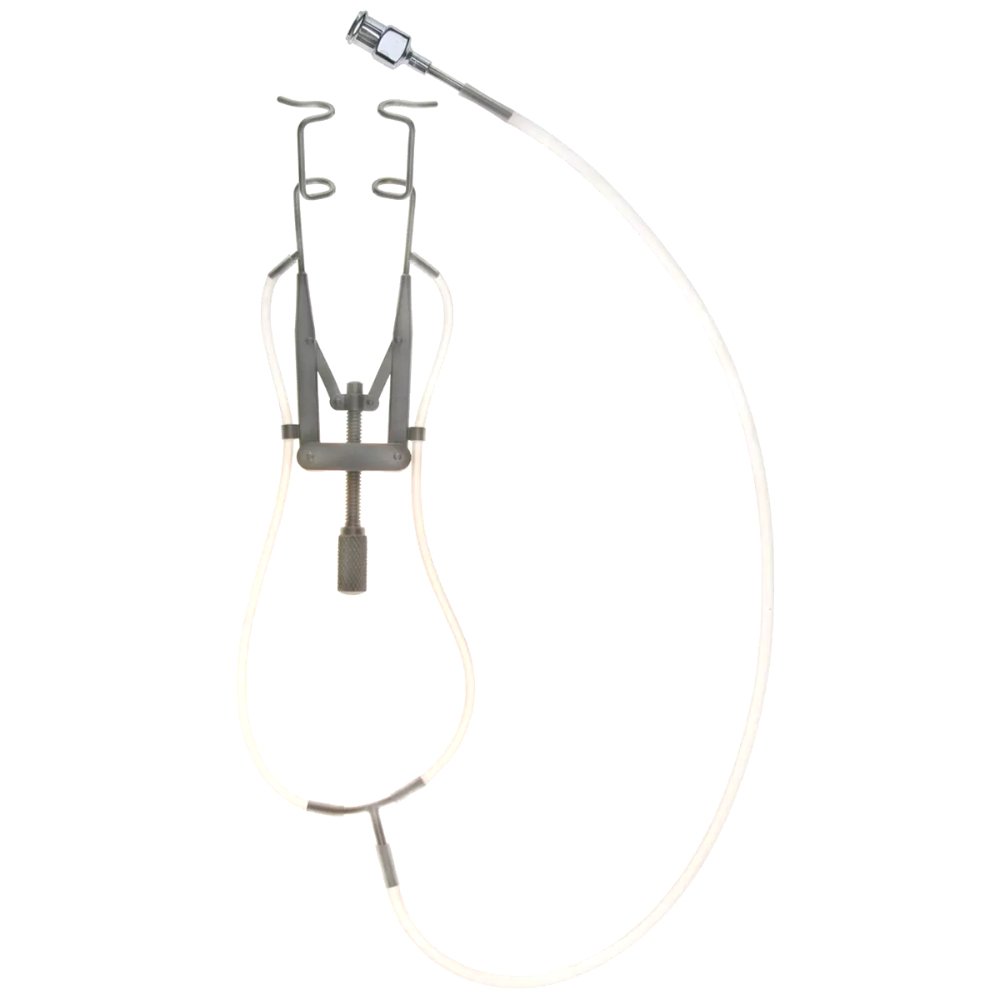
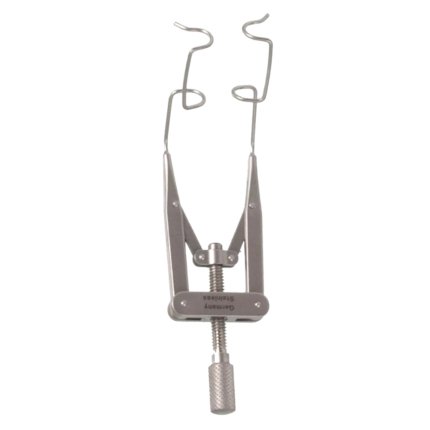
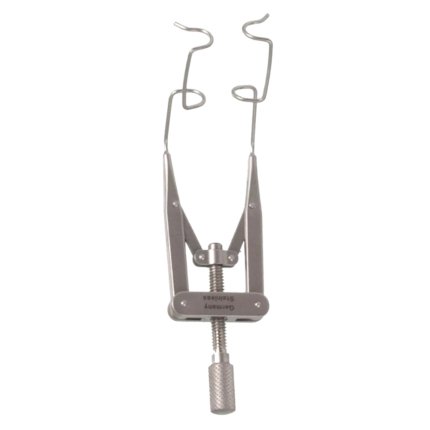
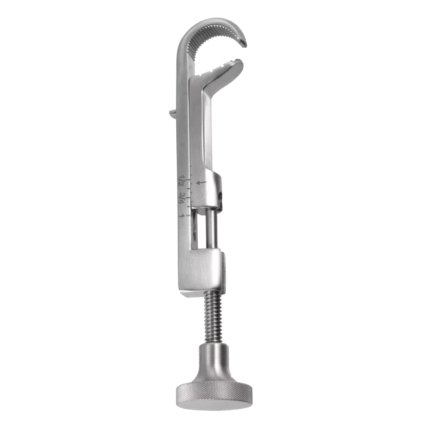
The Lieberman Aspirating Speculum V Blades is a specialized ophthalmic instrument designed for controlled eyelid retraction during delicate eye surgery. Combining the functions of an eye speculum with an aspiration feature, this instrument is intended to help maintain a clear and accessible operative field during procedures where management of fluids is important.
The V-blade configuration provides a practical working profile for engaging and retracting the eyelids. The shaped blades are designed to maintain controlled exposure while allowing the surgeon access to the ocular structures. Proper positioning should always be determined according to the patient’s anatomy, surgical technique, and procedure requirements.
A major feature of this Lieberman Aspirating Speculum is its aspiration capability. The integrated aspiration pathway can help remove fluid from the surgical area when connected to an appropriate suction or aspiration system. By assisting with fluid management, the instrument can support visualization and help maintain a cleaner operative field during appropriate ophthalmic procedures.
The aspirating design can be particularly useful in microsurgical environments where even small amounts of fluid may interfere with visualization. Controlled aspiration can help manage irrigation fluid, blood, or other fluids encountered during surgery. The aspiration function should be used only with compatible equipment and according to established clinical technique.
The Lieberman V Blade Eye Speculum is suitable for incorporation into professional ophthalmic surgical instrument sets. It may be used in selected anterior segment procedures, ocular surface surgery, microsurgical eye procedures, and other operations requiring eyelid retraction combined with operative-field fluid management. The exact clinical application should be determined by the operating ophthalmologist.
The instrument is designed for precise handling and controlled placement. The V-shaped blades provide the primary retraction surface, while the aspiration system provides an additional functional capability. This combination can reduce the need to use separate instruments for eyelid retraction and fluid management in procedures where the integrated design is appropriate.
Professional versions of this type of ophthalmic instrument are commonly manufactured from surgical-grade stainless steel or other appropriate medical-grade materials. Stainless steel provides strength, durability, and corrosion resistance when properly cleaned, sterilized, and maintained. Precision ophthalmic instruments should be handled carefully to protect their working surfaces and aspiration pathways.
Cleaning is particularly important for an aspirating eye speculum because the aspiration channel can potentially retain biological material or surgical debris if it is not processed correctly. Immediately after use, the instrument should be flushed and cleaned according to the manufacturer’s validated instructions. The aspiration pathway should be checked to ensure it is free of obstruction before sterilization.
Following cleaning, the instrument should be inspected for damage, corrosion, deformation, blocked aspiration channels, or abnormalities affecting the V blades. The aspiration connection should also be examined for proper condition. Any instrument that does not function correctly should be evaluated before being returned to clinical service.
If supplied as a reusable instrument, sterilization should be performed using a validated method specified by the manufacturer. Healthcare facilities should follow their established ophthalmic instrument-processing and infection-control procedures. Appropriate drying and storage are also important for preventing contamination and maintaining the functionality of the aspiration pathway.
The Lieberman Aspirating Speculum V Blades combines controlled eyelid retraction with integrated aspiration capability in a specialized ophthalmic instrument. Its V-blade design, fluid-management function, and professional surgical construction make it a useful component of ophthalmic surgical sets where clear visualization and controlled operative exposure are essential.
Key Features
- Lieberman aspirating ophthalmic speculum
- V-blade configuration for controlled eyelid retraction
- Integrated aspiration function for operative-field fluid management
- Designed for improved access and visualization during eye surgery
- Suitable for delicate ophthalmic and microsurgical procedures
- Useful for procedures where fluid management is required
- Precision design for controlled instrument positioning
- Surgical-grade construction for professional clinical environments
- Aspiration pathway requires appropriate cleaning and inspection
- Suitable for compatible aspiration or suction systems
- Reusable when supplied as a reusable surgical instrument
- Supports validated cleaning and sterilization procedures
Product Specifications
| Specification | Details |
|---|---|
| Product Name | Lieberman Aspirating Speculum V Blades |
| Instrument Type | Aspirating Ophthalmic Eye Speculum |
| Design | Lieberman Style |
| Blade Configuration | V Blades |
| Primary Function | Eyelid Retraction and Fluid Aspiration |
| Specialty | Ophthalmology |
| Application | Ophthalmic and Microsurgical Procedures |
| Aspiration | Integrated Aspiration Pathway |
| Connection | Compatible Aspiration System |
| Construction | Surgical-Grade / Medical-Grade Material |
| Use | Professional Ophthalmic Surgery |
| Reusability | Depends on product configuration |
| Cleaning | Follow manufacturer-approved instructions |
| Sterilization | According to validated manufacturer protocol |
FAQs
1. What is the Lieberman Aspirating Speculum used for?
The Lieberman Aspirating Speculum V Blades is designed to provide controlled eyelid retraction while assisting with fluid management in the ophthalmic surgical field.
2. What is the purpose of the V blades?
The V blades provide the working surfaces used to engage and retract the eyelids, helping maintain stable exposure of the ocular surgical field.
3. What does the aspiration function do?
The integrated aspiration pathway can help remove fluid from the operative area when connected to a compatible aspiration or suction system, supporting clearer visualization during appropriate procedures.
4. What procedures can use an aspirating eye speculum?
An aspirating eye speculum may be used in selected ophthalmic and microsurgical procedures where controlled eyelid retraction and fluid management are both required. The specific application should be determined by the operating ophthalmologist.
5. How should the aspiration channel be cleaned?
The aspiration pathway should be flushed and cleaned according to the manufacturer’s validated instructions immediately after use. It should be inspected to ensure that no debris or obstruction remains before sterilization.
6. Is the Lieberman Aspirating Speculum reusable?
If supplied as a reusable surgical instrument, it can be cleaned, inspected, sterilized, and reused according to the manufacturer’s validated processing instructions and applicable healthcare infection-control requirements.
7. What material is an aspirating ophthalmic speculum made from?
Professional reusable versions are commonly manufactured from surgical-grade stainless steel or other appropriate medical-grade materials selected for durability and compatibility with surgical instrument processing.

Reviews
There are no reviews yet.