

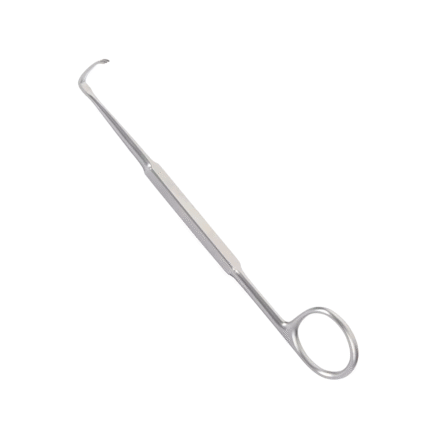
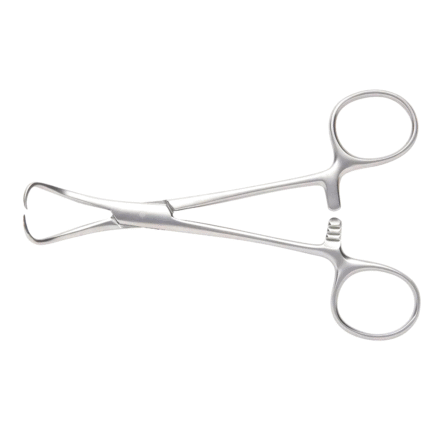
The McIndoe Dissecting Forceps Serrated Jaw Surgical Forceps is a specialized surgical instrument designed for precise handling and manipulation of delicate tissues during surgical procedures. Its serrated jaw configuration provides controlled tissue engagement, making it particularly useful when the surgeon requires a secure grip without relying on excessive manual pressure.
McIndoe dissecting forceps are associated with delicate tissue handling and are particularly relevant to procedures where precision and atraumatic manipulation are important. The instrument provides the surgeon with a fine working profile for grasping, positioning, and manipulating tissue during dissection and surgical exposure.
The serrated jaws are an important feature of this forceps. The fine serrations provide additional surface contact and help the instrument maintain its grip on tissue during controlled manipulation. Proper technique is essential because tissue should be handled with appropriate force for the specific clinical application. The forceps should not be used to apply excessive traction to fragile structures.
The instrument can be useful in plastic and reconstructive surgery, where careful handling of skin, subcutaneous tissue, and other delicate structures may be required. It may also be incorporated into general surgery, dermatological surgery, wound-related procedures, and other specialties where fine tissue manipulation is necessary.
The slender working profile allows the surgeon to work in relatively confined operative areas while maintaining visibility around the surgical field. The balanced construction is intended to support controlled hand movements and precise tissue positioning. This makes the instrument suitable for procedures where delicate handling is more important than heavy tissue grasping.
The McIndoe Serrated Dissecting Forceps may also be useful for surgical dissection and tissue preparation. The serrated jaws can assist with controlled stabilization while another instrument is used to perform cutting or dissection. The exact use should be determined by the operating surgeon according to the procedure and tissue characteristics.
Professional reusable versions are commonly manufactured from surgical-grade stainless steel or another appropriate medical-grade material. Stainless steel provides strength, durability, corrosion resistance, and compatibility with established surgical instrument-processing procedures when properly maintained.
The forceps should be handled carefully to preserve the alignment and condition of the serrated jaws. The working tips should not be used as a lever or subjected to excessive lateral force. Damage or misalignment of the jaws can affect tissue handling and should be identified during routine inspection.
Following use, the McIndoe Dissecting Forceps should be cleaned promptly according to the manufacturer’s validated instructions. Biological material should be removed from the serrations and working surfaces before sterilization. Particular attention should be given to the serrated jaw area because tissue debris can become lodged between the fine gripping surfaces.
After cleaning, the instrument should be inspected for corrosion, damaged serrations, jaw misalignment, surface defects, or other abnormalities. Proper maintenance helps preserve the precision and reliability of the instrument during repeated clinical use.
If supplied as a reusable surgical instrument, sterilization should be performed using a validated method specified by the manufacturer. Healthcare facilities should follow their established infection-control and sterile-processing procedures.
The McIndoe Dissecting Forceps Serrated Jaw combines precision construction with a serrated gripping surface for controlled handling of light and delicate tissues. Its specialized design makes it a practical addition to professional surgical instrument sets used in plastic surgery, reconstructive surgery, general surgery, and other delicate tissue procedures.
Key Features
- McIndoe-style dissecting forceps
- Serrated jaws for controlled tissue engagement
- Designed for handling light and delicate tissues
- Suitable for precision surgical manipulation
- Useful for dissection and tissue positioning
- Appropriate for delicate plastic and reconstructive procedures
- Fine working profile supports precise instrument control
- Surgical-grade construction for professional clinical use
- Serrations provide a secure gripping surface
- Designed for repeated handling when supplied as reusable
- Requires careful cleaning around serrated jaws
- Supports validated sterilization and instrument-processing procedures
Product Specifications
| Specification | Details |
|---|---|
| Product Name | McIndoe Dissecting Forceps Serrated Jaw |
| Instrument Type | Dissecting / Tissue Forceps |
| Jaw Type | Serrated |
| Primary Function | Tissue Handling and Dissection |
| Tissue Application | Light & Delicate Tissues |
| Specialty | Plastic, Reconstructive & General Surgery |
| Design | McIndoe Style |
| Construction | Surgical-Grade / Medical-Grade Material |
| Working Profile | Precision / Fine Tissue Handling |
| Use | Professional Surgical Procedures |
| Reusability | Depends on product configuration |
| Cleaning | Follow manufacturer-approved instructions |
| Sterilization | According to validated manufacturer protocol |
FAQs
1. What are McIndoe Dissecting Forceps used for?
McIndoe Dissecting Forceps are designed for controlled grasping, manipulation, and dissection of light and delicate tissues during surgical procedures.
2. What is the purpose of the serrated jaw?
The serrated jaw provides additional gripping surfaces that help maintain controlled contact with tissue during manipulation and positioning.
3. Are McIndoe forceps suitable for delicate tissues?
Yes. Their precision design is intended for controlled handling of delicate tissue, although the amount of applied pressure should always be appropriate for the tissue and surgical technique.
4. What surgical specialties use these forceps?
They can be incorporated into plastic and reconstructive surgery sets and may also be useful in general surgery, dermatological procedures, and other operations requiring delicate tissue handling.
5. Are these dissecting forceps reusable?
If supplied as a reusable surgical instrument, they can be cleaned, inspected, sterilized, and reused according to the manufacturer’s validated processing instructions.
6. How should serrated surgical forceps be cleaned?
The serrated jaws should be thoroughly cleaned to remove tissue and biological debris from between the gripping surfaces. Cleaning should follow the manufacturer’s validated instructions before sterilization.
7. What material are McIndoe dissecting forceps made from?
Professional reusable versions are commonly manufactured from surgical-grade stainless steel or another suitable medical-grade material selected for strength, durability, and corrosion resistance



Reviews
There are no reviews yet.