
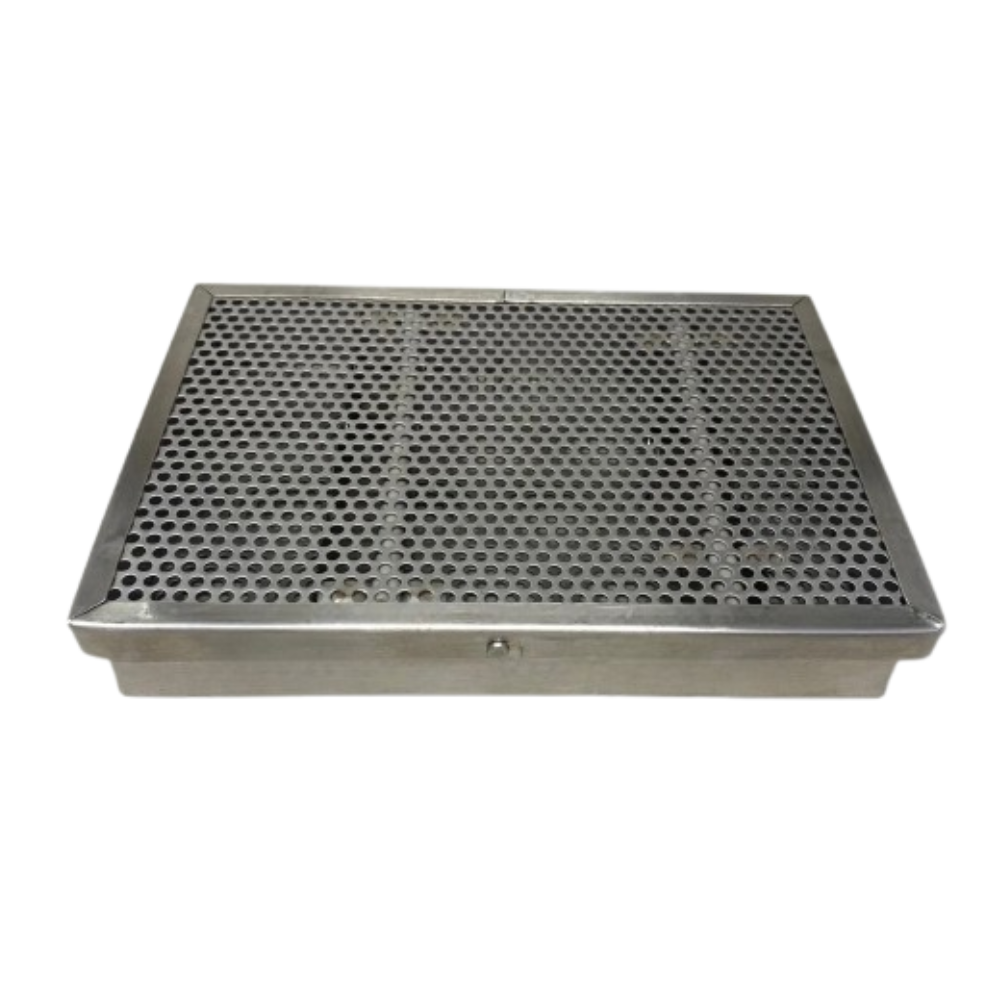

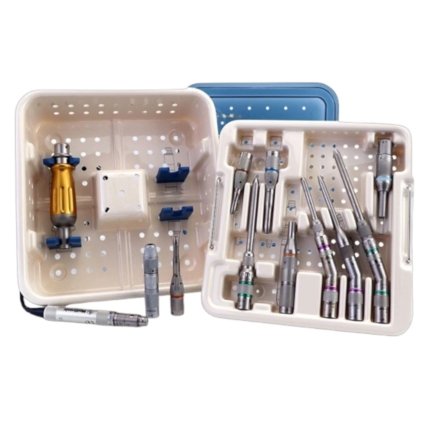
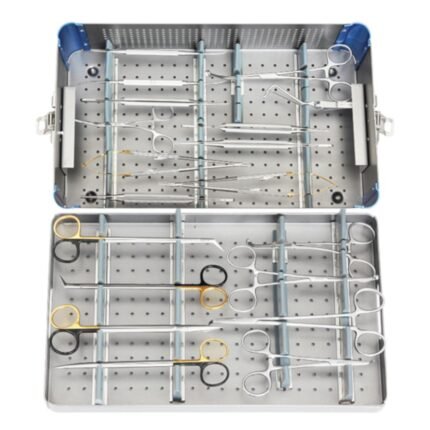
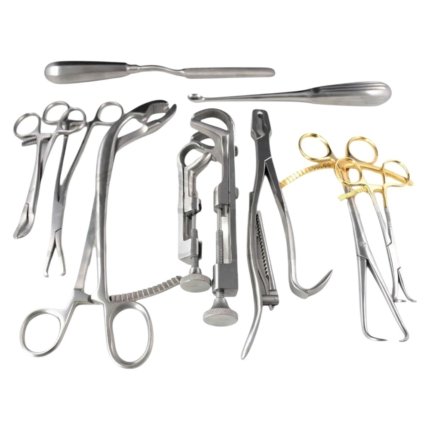
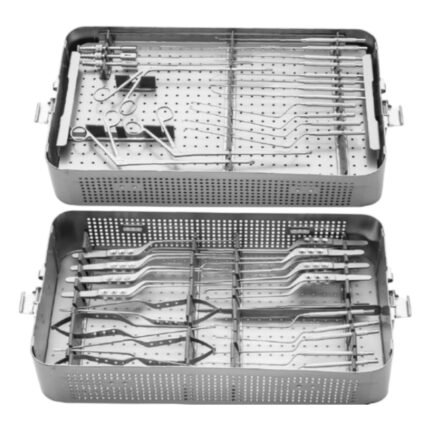
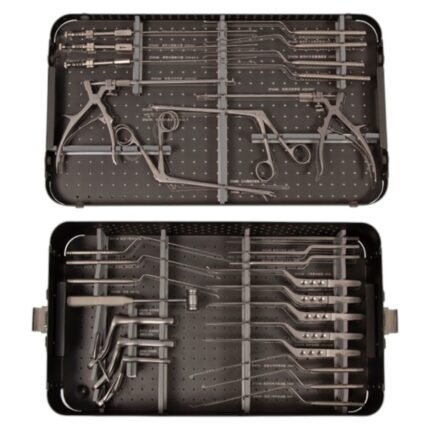
The Neuro Forcep Sterilization Case, 7.5″L x 5″W x 1″H is a compact surgical instrument case designed for the organized handling and protection of delicate neurosurgical forceps. Proper instrument organization is particularly important in neurosurgery, where fine forceps and microsurgical instruments can have narrow working ends that require protection from accidental impact, bending, and contact with heavier instruments.
With an overall size of 7.5 inches long by 5 inches wide by 1 inch high, this case is suited to smaller instrument configurations and dedicated neuro forceps storage. Its compact footprint can help maintain an organized surgical tray while making individual instruments easier to identify, transport, and process within the sterile processing workflow.
A dedicated sterilization case can help reduce unnecessary movement of delicate instruments during preparation and handling. Keeping forceps secured within an appropriately designed container may also assist with maintaining instrument separation and protecting fine tips during transport between the operating room, decontamination area, and sterile storage.
The case is intended for use with neurosurgical forceps and other compatible fine surgical instruments. Depending on its internal configuration, it may accommodate selected bayonet forceps, micro forceps, tissue forceps, bipolar forceps, or other instruments of suitable dimensions. Exact internal compartments or retention features should be verified before use because case configurations can differ.
For delicate neurosurgical instrumentation, protecting the working ends is especially important. Fine forceps tips can be affected by impact, excessive pressure, or improper stacking. An appropriately sized case provides a more controlled method of organizing instruments compared with loose storage in general-purpose containers.
The compact design also supports efficient inventory management. Surgical staff can use a dedicated case to keep a selected group of neuro forceps together, making it easier to confirm instrument availability before a procedure. It can also help sterile processing personnel identify and inspect a specific instrument group during cleaning, sterilization, and set preparation.
The 7.5″L x 5″W x 1″H dimensions provide a useful reference when planning storage or selecting instruments for the case. Instrument length, overall profile, handle dimensions, and internal clearance should be checked to ensure that individual forceps fit safely without excessive pressure or contact between working ends.
Reprocessing requirements depend on the construction of the specific case. If the case is supplied as a sterilizable medical-device container, it should be cleaned and processed strictly according to the manufacturer’s validated instructions. Not every storage container is suitable for every sterilization method, so compatibility with the intended sterilization cycle should be confirmed before clinical use.
The case should also be inspected regularly for cracks, deformation, damaged closures, corrosion where applicable, or other conditions that could affect instrument protection. Internal surfaces and retention components should remain clean and functional, and the case should not be overloaded beyond its intended capacity.
The Neuro Forcep Sterilization Case provides a practical solution for facilities that require organized storage and protection of delicate neurosurgical forceps. Its compact dimensions make it appropriate for dedicated instrument groups while supporting safer handling, storage, and applicable sterilization workflows.
Key Features
- Designed for neurosurgical forceps and fine surgical instruments
- Compact 7.5″L x 5″W x 1″H dimensions
- Helps organize delicate neuro instruments
- Supports protected handling and storage
- Suitable for selected forceps and microsurgical instruments
- Helps reduce contact between delicate instrument tips
- Useful for operating-room and sterile processing workflows
- Compact format supports efficient instrument organization
- Useful for dedicated neurosurgical instrument groups
- Exact internal configuration may vary by case design
- Sterilization compatibility should be verified before use
- Follow applicable manufacturer reprocessing instructions
Product Specifications
| Specification | Details |
|---|---|
| Product Name | Neuro Forcep Sterilization Case |
| Case Length | 7.5 Inches |
| Case Width | 5 Inches |
| Case Height | 1 Inch |
| Overall Dimensions | 7.5″L x 5″W x 1″H |
| Product Type | Surgical Instrument Sterilization / Storage Case |
| Intended Instruments | Neuro Forceps and Fine Surgical Instruments |
| Primary Specialty | Neurosurgery |
| Main Function | Instrument Organization and Protection |
| Capacity | Configuration Dependent |
| Internal Layout | Model Dependent |
| Material | Construction Dependent |
| Sterilization Compatibility | Verify Specific Case and Cycle |
| Reusable | Depending on Case Construction |
| Intended Setting | Operating Room / Sterile Processing Department |
FAQs
What is a neuro forcep sterilization case used for?
A neuro forcep sterilization case is used to organize, protect, transport, and store delicate neurosurgical forceps and compatible fine surgical instruments during applicable sterile processing workflows.
What are the dimensions of this sterilization case?
The case measures 7.5 inches in length, 5 inches in width, and 1 inch in height.
What instruments can be stored in this case?
It may accommodate compatible neurosurgical forceps and other fine surgical instruments. The exact instruments that fit depend on their length, handle size, working-end configuration, and the case’s internal layout.
Can this case protect delicate forceps tips?
A properly configured instrument case can help reduce accidental contact and impact between delicate instruments. Forceps should still be positioned according to the case design and handling instructions.
Is the case suitable for neurosurgical instruments?
Yes. Its compact dimensions and intended use make it suitable for organizing selected neuro forceps and other compatible microsurgical instruments.
Can this case be sterilized?
Sterilization suitability depends on the case material and design. The applicable sterilization method should always be confirmed using the manufacturer’s validated instructions.
Can the case hold bipolar forceps?
Compatible bipolar forceps may fit depending on their overall dimensions and the internal configuration of the case. Fit should be confirmed before use.
Why use a dedicated forceps case instead of loose storage?
A dedicated case helps keep instruments organized, reduces unnecessary contact between delicate instruments, and simplifies handling, transport, inventory control, and sterile processing.
How should the case be cleaned?
The case should be cleaned according to the manufacturer’s instructions for its specific materials and construction. Internal surfaces and retention areas should be checked for residual contamination.
What should be checked before using the sterilization case?
Inspect the case for cracks, deformation, damaged closures, corrosion where applicable, contamination, and other conditions that could compromise instrument protection or reprocessing.




Reviews
There are no reviews yet.