


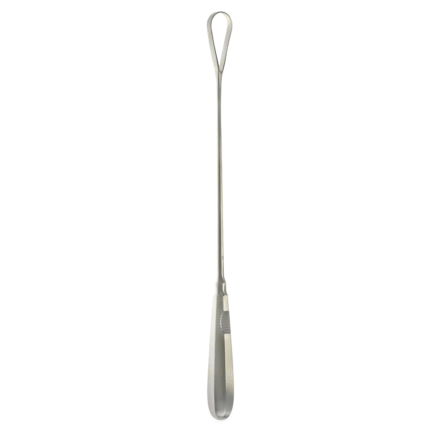
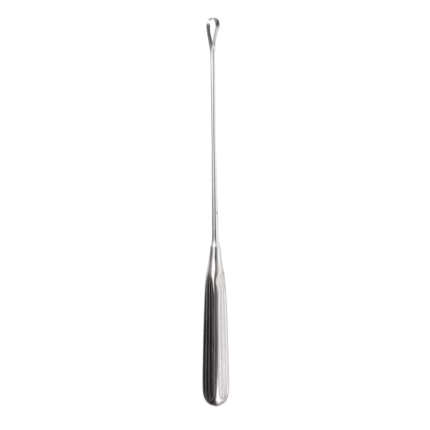
The Neurosurgery Surgical 13″ Lane Bone Holding Forceps, Standard, Without Ratchet is a precision-engineered orthopedic instrument developed to provide surgeons with reliable manual control while holding and manipulating bone fragments during surgical procedures. Designed for fracture reduction, bone stabilization, and orthopedic reconstruction, this instrument enables surgeons to securely grasp cortical bone without compromising visibility or surgical access. The absence of a ratchet mechanism allows continuous manual pressure adjustment, giving the surgeon complete tactile feedback throughout the procedure.
Widely used in orthopedic surgery, neurosurgery, trauma surgery, spinal procedures, and reconstructive operations, the Lane Bone Holding Forceps plays an essential role in maintaining accurate bone alignment during fixation with plates, screws, intramedullary devices, or external fixation systems. Its 13-inch overall length provides excellent reach into deep operative fields while maintaining precise control and ergonomic handling.
The standard jaw configuration is carefully designed to grip bone firmly while minimizing slippage during reduction and stabilization. The strong opposing jaws generate dependable holding power, allowing surgeons to reposition bone fragments accurately before definitive fixation. Since this version is manufactured without a ratchet, the surgeon can instantly adjust grip pressure, reposition the instrument quickly, and release bone smoothly whenever necessary. This design is particularly beneficial during procedures requiring frequent repositioning or delicate adjustments.
Manufactured from premium medical-grade stainless steel, the instrument delivers outstanding resistance to corrosion, staining, surgical chemicals, and repeated sterilization cycles. The polished satin finish reduces glare from operating room lighting while providing a professional appearance and facilitating easy cleaning after surgery. Precision machining ensures smooth jaw movement and consistent performance throughout extended surgical procedures.
The ergonomically designed finger rings provide a comfortable and secure grip, helping reduce hand fatigue during lengthy operations. The balanced construction enhances maneuverability, allowing surgeons to maintain optimal control while working in both superficial and deeper surgical sites. The instrument’s robust construction withstands the mechanical demands of orthopedic and trauma surgery while maintaining precise jaw alignment over years of repeated clinical use.
The Neurosurgery Surgical 13″ Lane Bone Holding Forceps, Standard, Without Ratchet is suitable for hospitals, orthopedic operating rooms, trauma centers, ambulatory surgical facilities, and teaching institutions. It is commonly included in orthopedic fracture management sets, trauma instrument trays, spinal surgery systems, and reconstructive surgical kits. Its versatility makes it valuable for procedures involving long bones, pelvic reconstruction, upper and lower extremity surgeries, and complex skeletal fixation.
Designed for repeated use, the forceps can be sterilized using standard hospital autoclave protocols and is compatible with common surgical cleaning and disinfection procedures. The premium stainless steel construction maintains structural integrity and operational performance through repeated sterilization cycles, ensuring dependable long-term service.
For orthopedic surgeons seeking exceptional control, durability, and precision without the limitations of a locking mechanism, the Neurosurgery Surgical 13″ Lane Bone Holding Forceps, Standard, Without Ratchet offers dependable performance that supports accurate bone reduction and successful surgical outcomes in a wide variety of orthopedic and neurosurgical procedures.
Key Features
- 13-inch overall length for deep surgical access
- Standard Lane jaw design for secure bone holding
- Without ratchet for continuous manual pressure control
- Precision-engineered for fracture reduction procedures
- Manufactured from premium surgical-grade stainless steel
- Strong gripping jaws minimize bone slippage
- Ergonomic finger ring handles improve comfort and control
- Satin finish reduces operating room glare
- Corrosion and stain resistant construction
- Fully reusable and autoclavable
- Suitable for orthopedic, trauma, spinal, and neurosurgical procedures
- Designed for long-term professional surgical use
Product Specifications
| Specification | Details |
|---|---|
| Product Name | Neurosurgery Surgical 13″ Lane Bone Holding Forceps, Standard, Without Ratchet |
| Instrument Type | Bone Holding Forceps |
| Overall Length | 13 Inches |
| Jaw Style | Standard Lane Pattern |
| Ratchet | Without Ratchet |
| Material | Premium Surgical Grade Stainless Steel |
| Finish | Satin / Matte Finish |
| Reusable | Yes |
| Sterilization | Autoclavable |
| Corrosion Resistant | Yes |
| Specialty | Orthopedic Surgery, Neurosurgery, Trauma Surgery |
| Usage | Bone Reduction, Bone Holding, Fracture Fixation |
FAQs
1. What is the 13″ Lane Bone Holding Forceps used for?
It is used to securely grasp and stabilize bone fragments during fracture reduction, orthopedic fixation, trauma surgery, spinal procedures, and reconstructive operations.
2. Why choose a Lane Bone Holding Forceps without a ratchet?
A non-ratchet design allows the surgeon to manually control gripping pressure at all times, providing greater tactile feedback and enabling quick repositioning during surgery.
3. Is this instrument suitable for orthopedic trauma surgery?
Yes. It is widely used in orthopedic trauma procedures for holding bone securely during fracture alignment and internal or external fixation.
4. What material is the instrument made from?
The forceps are manufactured from premium surgical-grade stainless steel, offering excellent strength, corrosion resistance, and long service life.
5. Can the forceps be sterilized and reused?
Yes. The instrument is fully reusable and designed for repeated autoclave sterilization while maintaining its precision and structural integrity.
6. Which surgical specialties commonly use this instrument?
It is commonly used in orthopedic surgery, neurosurgery, trauma surgery, spinal surgery, reconstructive surgery, and teaching hospitals where reliable bone stabilization instruments are required.


Reviews
There are no reviews yet.