
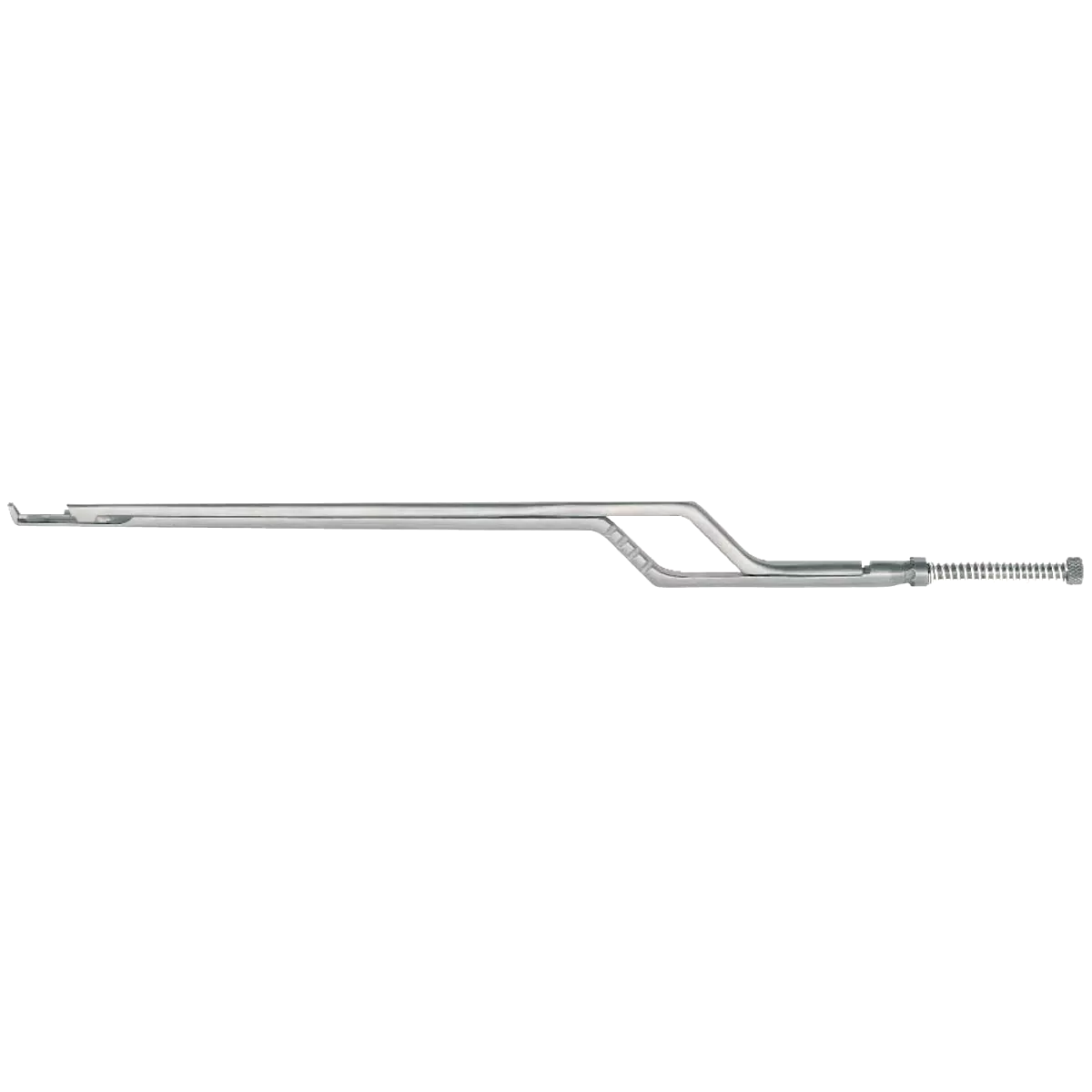
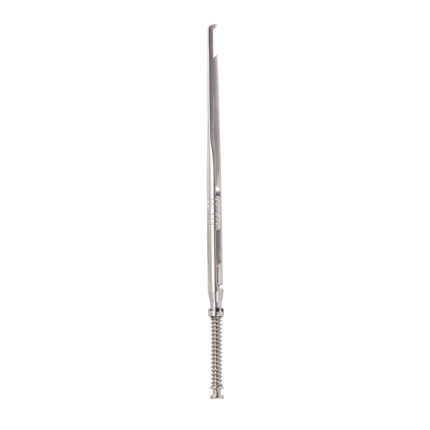
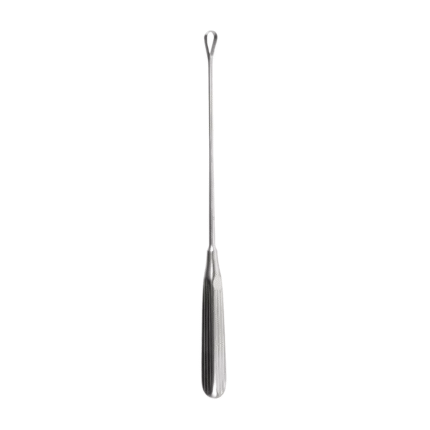
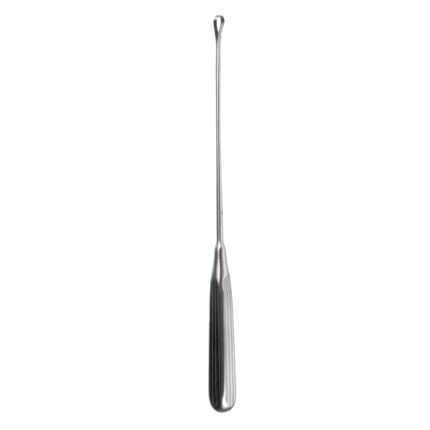
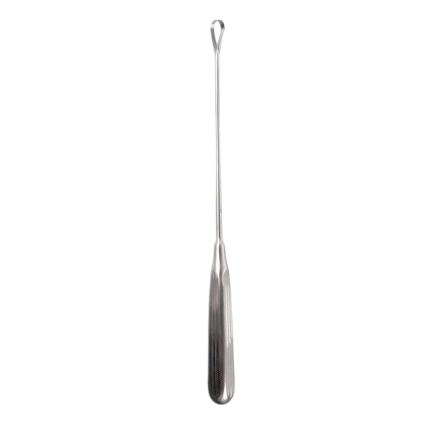
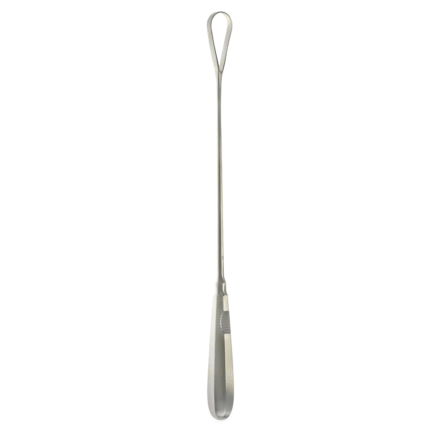
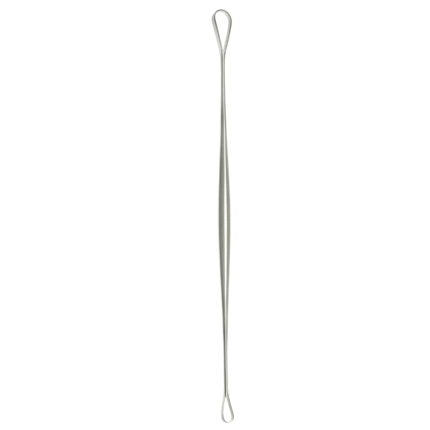
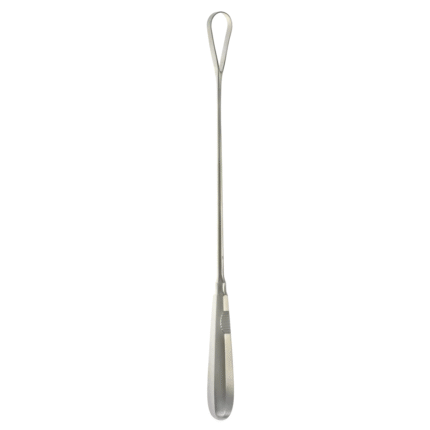
The Neurosurgery Surgical 7″ Rotating Kerrison Shaft – 6mm is a high-quality neurosurgical instrument component engineered to improve accessibility, positioning, and control during complex spinal and cranial procedures. Designed for compatibility with Kerrison Rongeur systems, this rotating shaft allows surgeons to adjust working angles efficiently while maintaining precision and stability.
Manufactured from premium surgical-grade stainless steel, the Rotating Kerrison Shaft provides exceptional strength, corrosion resistance, and durability for repeated professional use. Its precision-machined design ensures smooth rotation, reliable performance, and consistent operation in demanding surgical environments.
The 6mm rotating shaft configuration offers enhanced stability and strength while allowing controlled movement and improved access to challenging anatomical areas. The rotating mechanism enables surgeons to change the working orientation without repositioning the entire instrument, helping improve efficiency and reduce unnecessary hand movement during procedures.
Designed for use in delicate neurosurgical and spinal applications, this Kerrison Shaft supports precise bone removal procedures where accuracy, flexibility, and instrument control are essential. The smooth rotating action helps provide better positioning in confined operative spaces while maintaining excellent tactile feedback.
The 7-inch length delivers an ideal balance between reach and maneuverability, allowing access to deeper surgical fields while preserving precise handling. Its ergonomic design supports comfortable operation during extended procedures.
The Neurosurgery Surgical 7″ Rotating Kerrison Shaft – 6mm is reusable, fully autoclavable, and manufactured to meet the demanding requirements of neurosurgeons, spine surgeons, and microsurgical specialists.
Key Features
- Premium surgical-grade stainless steel construction
- 7-inch overall length
- 6mm rotating shaft design
- Compatible with Kerrison Rongeur systems
- Smooth rotation mechanism
- Enhanced surgical access and positioning
- Precision-machined components
- Excellent durability and corrosion resistance
- Improved maneuverability in confined areas
- Ergonomic handling design
- Fully reusable
- Autoclavable for repeated sterilization
Product Specifications
| Specification | Details |
|---|---|
| Product Name | Neurosurgery Surgical 7″ Rotating Kerrison Shaft – 6mm |
| Instrument Type | Rotating Kerrison Shaft |
| Overall Length | 7″ (17.8 cm Approx.) |
| Shaft Size | 6mm |
| Material | Premium Surgical Grade Stainless Steel |
| Design | Rotating Shaft |
| Finish | Satin Stainless Steel Finish |
| Reusable | Yes |
| Sterilization | Autoclavable |
| Corrosion Resistance | Yes |
| Application | Neurosurgery & Spine Surgery |
| Quality Standard | CE Standard Manufacturing |
Applications
The 7″ Rotating Kerrison Shaft 6mm is commonly used for:
- Spinal decompression procedures
- Laminectomy surgery
- Laminotomy procedures
- Cervical spine surgery
- Lumbar spine procedures
- Cranial neurosurgery
- Bone removal applications
- Microsurgical spinal operations
- Kerrison instrument systems
- Advanced neurosurgical procedures
Frequently Asked Questions (FAQs)
Q1: What is a Rotating Kerrison Shaft used for?
A Rotating Kerrison Shaft is used with Kerrison systems to improve surgical access, positioning, and control during neurosurgical procedures.
Q2: What is the advantage of the rotating design?
The rotating design allows surgeons to adjust the working angle without moving the complete instrument, improving efficiency and precision.
Q3: What material is this Kerrison Shaft made from?
It is manufactured from premium surgical-grade stainless steel for durability, strength, and corrosion resistance.
Q4: Is this instrument reusable?
Yes. It is designed for repeated professional surgical use after proper cleaning and sterilization.
Q5: Can it be sterilized in an autoclave?
Yes. It is fully autoclavable and compatible with standard hospital sterilization procedures.
Q6: Which specialties use this instrument?
It is commonly used in neurosurgery, spine surgery, and microsurgical procedures requiring precise instrument positioning and bone removal access.

Reviews
There are no reviews yet.