
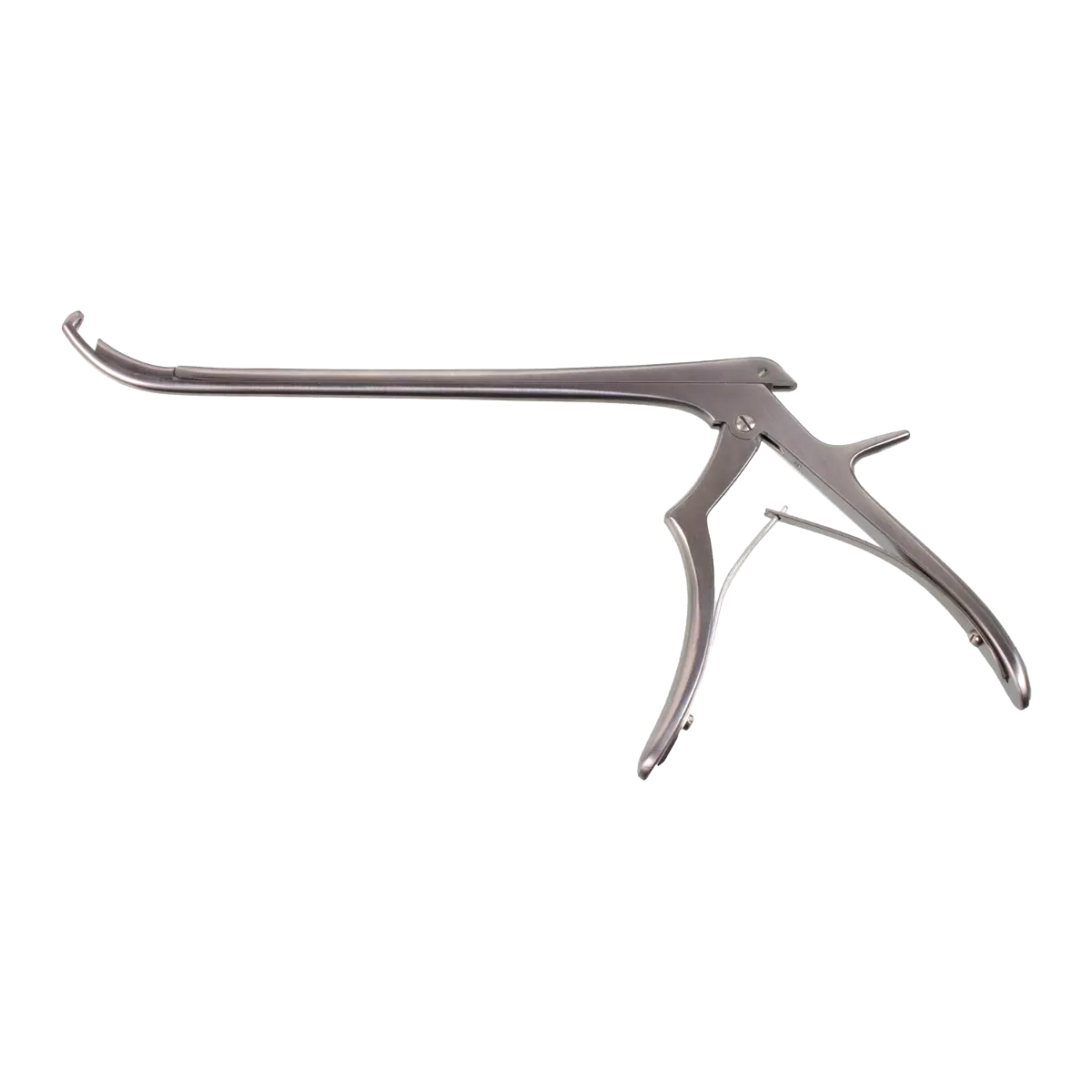
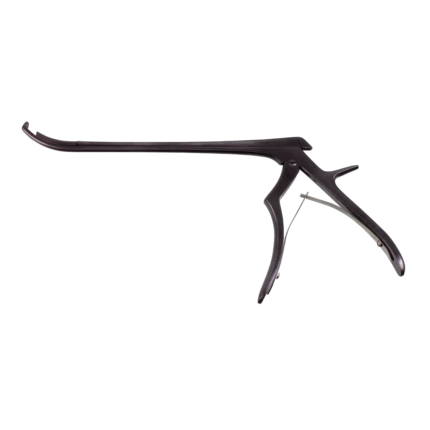
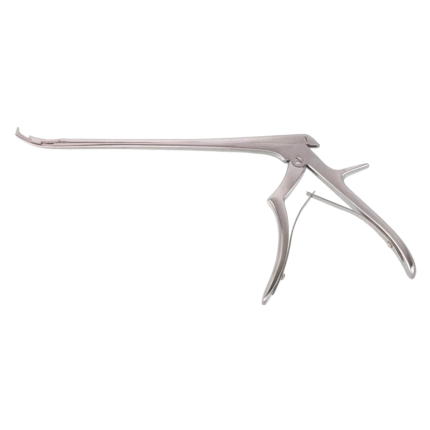
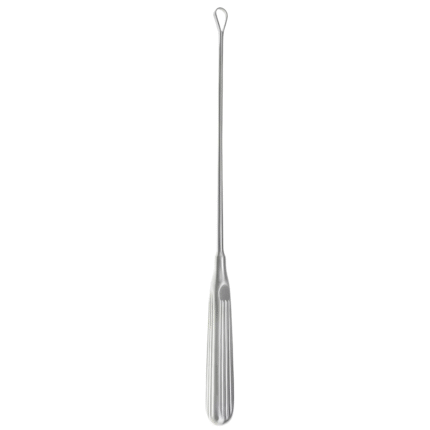
The Foraminotomy Rongeur 8″ 6mm 40° Up Neurosurgery is a specialised neurosurgical instrument designed for efficient and controlled bone removal during spinal decompression and foraminotomy procedures. Developed for professional neurosurgeons and spine specialists, this surgical rongeur combines precision engineering, ergonomic handling, and durable construction to support accurate performance in demanding operating room environments.
Featuring a 6mm working jaw with a curved upward 40° angle, this foraminotomy rongeur provides improved access to challenging surgical locations while allowing controlled removal of bone fragments, osteophytes, and obstructive tissues. The upward-curved jaw design enables surgeons to approach the operative area from an optimal angle, improving visibility and instrument positioning during procedures involving the spinal canal, neural foramina, and nerve roots.
The 8-inch (200mm) length offers a balanced combination of reach, stability, and manoeuvrability. This practical size allows surgeons to maintain excellent control while working within confined surgical fields. The instrument provides smooth handling and precise positioning, making it suitable for procedures where accurate movements and dependable performance are essential.
The 6mm jaw size offers effective cutting capacity for controlled bone removal while maintaining surgical precision. It is suitable for removing larger bone sections, laminar fragments, and other tissues during procedures such as foraminotomy, spinal decompression, laminectomy, laminoplasty, and nerve root decompression. The jaw profile allows efficient tissue management while supporting careful surgical techniques near sensitive anatomical structures.
The hinged micro handle improves ergonomic functionality by providing smooth jaw activation and enhanced control. The handle design allows surgeons to perform precise bites with consistent pressure and reduced hand strain during complex procedures. The micro handle configuration supports fine instrument manipulation, making it suitable for delicate neurosurgical applications requiring accuracy and stability.
Manufactured from premium surgical-grade stainless steel, this neurosurgical foraminotomy rongeur provides excellent durability, corrosion resistance, and long-term reliability. The high-quality stainless steel construction allows the instrument to withstand repeated cleaning and sterilisation cycles while maintaining its mechanical performance. The smooth polished surface supports effective cleaning, inspection, and maintenance according to professional surgical instrument standards.
This spinal surgery bone rongeur is designed for use in advanced neurosurgical procedures where precision and reliability are critical. The curved up 40° jaw provides enhanced access to angled surgical sites, while the extended working profile supports controlled bone removal during decompression procedures. It is an essential addition to professional neurosurgical instrument sets, spine surgery trays, and specialised surgical collections.
The balanced design of this instrument supports surgeon comfort and efficient workflow during extended procedures. Its durable materials and precision mechanism provide consistent performance throughout repeated clinical use, making it suitable for hospitals, surgical centres, and specialist neurosurgery departments.
The Neurosurgery Surgical Foraminotomy Rongeur 8″ 6mm Curved Up 40° Up Hinged Micro Handle Stainless Steel combines advanced design, reliable materials, and specialised surgical functionality. It provides surgeons with a dependable solution for controlled bone removal, improved surgical access, and accurate performance during complex spinal and neurosurgical procedures.
Key Features
- Professional 8″ (200mm) Neurosurgery Surgical Foraminotomy Rongeur
- 6mm jaw size for efficient bone and tissue removal
- Curved up 40° jaw improves access to difficult surgical areas
- Hinged micro handle provides smooth and precise operation
- Designed for foraminotomy and spinal decompression procedures
- Suitable for laminectomy, laminoplasty, and nerve root decompression
- Manufactured from premium surgical-grade stainless steel
- Provides controlled cutting performance near neural structures
- Ergonomic micro handle improves surgeon comfort and control
- Durable construction supports repeated sterilisation cycles
- Corrosion-resistant finish ensures long-term reliability
- Ideal for professional neurosurgical and spine instrument sets
Product Specifications Table
| Specification | Details |
|---|---|
| Product Name | Neurosurgery Surgical Foraminotomy Rongeur |
| Instrument Type | Surgical Bone Rongeur |
| Specialty | Neurosurgery / Spine Surgery |
| Overall Length | 8″ (200mm) |
| Jaw Size | 6mm |
| Jaw Design | Curved Up |
| Jaw Angle | 40° Up |
| Handle Type | Hinged Micro Handle |
| Material | Surgical Grade Stainless Steel |
| Application | Foraminotomy, Bone Removal, Spinal Decompression |
| Instrument Use | Reusable Surgical Instrument |
| Sterilisation Compatibility | Standard Surgical Sterilisation Methods |
FAQs
1. What is a Neurosurgery Surgical Foraminotomy Rongeur used for?
A Neurosurgery Surgical Foraminotomy Rongeur is used for controlled removal of bone and tissue during spinal decompression, foraminotomy, and nerve root decompression procedures.
2. What is the advantage of the 6mm jaw size?
The 6mm jaw provides efficient bone removal capability while maintaining control and accuracy during neurosurgical procedures.
3. Why is the 40° curved up jaw design beneficial?
The 40° curved up jaw allows improved access to angled and confined surgical areas while supporting precise bone removal.
4. What is the purpose of the hinged micro handle?
The hinged micro handle provides smooth jaw movement, improved ergonomics, and better control during delicate surgical procedures.
5. Is this stainless steel foraminotomy rongeur reusable?
Yes, it is manufactured from surgical-grade stainless steel and designed for repeated cleaning and sterilisation cycles.
6. Which procedures commonly use this neurosurgical rongeur?
It is commonly used in foraminotomy, spinal decompression, laminectomy, laminoplasty, and procedures requiring controlled bone removal near neural structures.


Reviews
There are no reviews yet.