

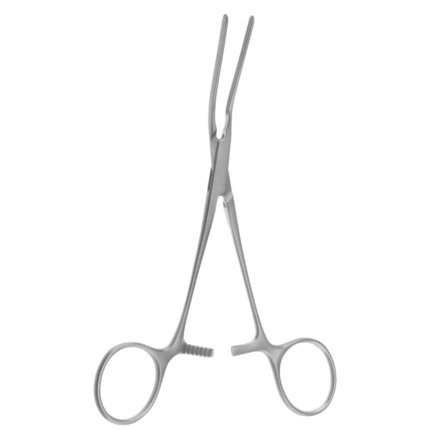

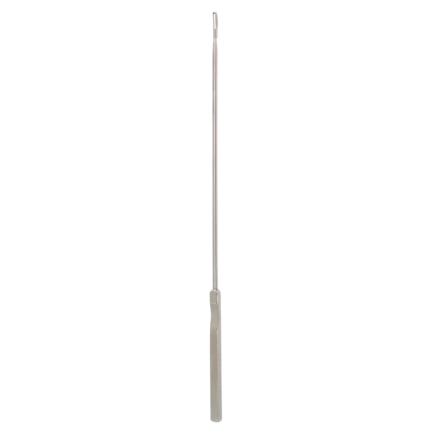
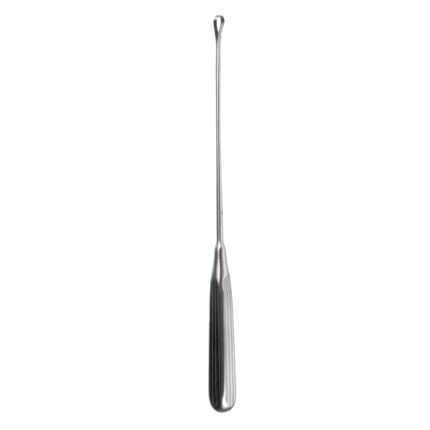
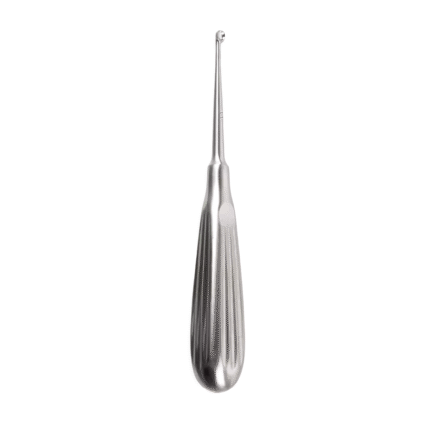
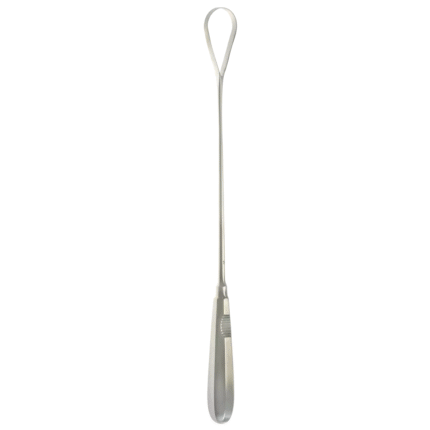
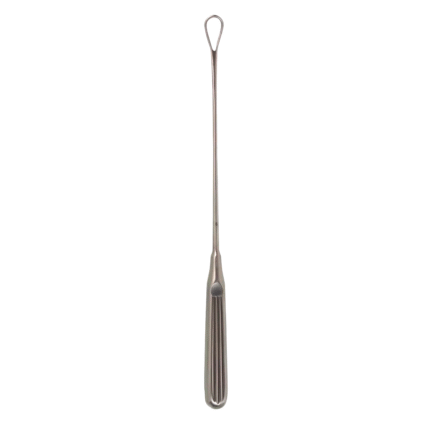
The Neurosurgery Surgical Heath Chal Curette – #1, 1 mm is a premium-quality neurosurgical instrument engineered for meticulous tissue curettage and microsurgical dissection. Designed with a #1 curette tip featuring a 1 mm working end, it enables surgeons to perform controlled tissue removal in confined operative fields while minimizing trauma to surrounding neural and vascular structures.
Manufactured from high-quality surgical-grade stainless steel, the Heath Chal Curette provides excellent durability, corrosion resistance, and long-lasting clinical performance. The finely crafted 1 mm curette cup is ideal for the precise removal of granulation tissue, fibrous tissue, soft tissue remnants, and small pathological deposits encountered during cranial and spinal neurosurgical procedures.
Its ergonomically balanced handle ensures a secure grip and exceptional tactile sensitivity, allowing surgeons to maintain precise control throughout delicate microsurgical interventions. The lightweight design minimizes hand fatigue during prolonged operations and provides outstanding maneuverability under an operating microscope or during minimally invasive procedures.
The 1 mm working tip is especially suited for highly delicate surgical tasks requiring maximum precision. It is commonly used in cranial neurosurgery, spinal surgery, skull base procedures, tumor resection, spinal decompression, microdiscectomy, and microsurgical tissue debridement, where controlled curettage is essential for optimal surgical outcomes.
Designed for repeated professional use, the instrument is fully reusable and compatible with standard autoclave sterilization protocols. Its premium construction ensures dependable performance through repeated sterilization cycles, making it an essential addition to modern neurosurgical instrument sets.
The Neurosurgery Surgical Heath Chal Curette – #1, 1 mm combines precision engineering, ergonomic comfort, and superior durability, making it a trusted instrument for advanced neurosurgical and microsurgical tissue management.
Key Features
- Precision #1 curette with 1 mm working tip
- Designed for delicate neurosurgical tissue curettage
- Premium surgical-grade stainless steel construction
- Excellent tactile feedback for enhanced microsurgical precision
- Ergonomic, lightweight handle for comfortable handling
- Ideal for cranial, spinal, and skull base procedures
- Suitable for microscope-assisted and minimally invasive surgery
- Corrosion-resistant satin / matte finish
- Fully reusable and autoclavable
- Engineered for long-lasting professional surgical performance
Product Specifications
| Specification | Details |
|---|---|
| Product Name | Neurosurgery Surgical Heath Chal Curette |
| Pattern | Heath Chal |
| Tip Size | #1 |
| Working End Size | 1 mm |
| Material | Surgical Stainless Steel |
| Finish | Satin / Matte Finish |
| Sterilization | Autoclavable |
| Reusable | Yes |
| Specialty | Neurosurgery |
| Application | Microsurgical Tissue Curettage |
Applications
This instrument is commonly used for:
- Cranial neurosurgery
- Spinal surgery
- Skull base surgery
- Tumor resection
- Microdiscectomy
- Spinal decompression
- Soft tissue curettage
- Granulation tissue removal
- Microsurgical tissue debridement
- Precision dissection in confined operative fields
Frequently Asked Questions (FAQs)
What is the Heath Chal Curette used for?
The Heath Chal Curette is designed for precise tissue curettage, microsurgical dissection, and controlled removal of soft or pathological tissue during neurosurgical procedures.
What does the #1, 1 mm tip size indicate?
The #1 curette with a 1 mm working tip is intended for extremely delicate microsurgical procedures requiring maximum precision and controlled tissue removal.
Is this instrument reusable?
Yes. It is manufactured from premium surgical-grade stainless steel and is designed for repeated use following proper cleaning and sterilization.
Can it be sterilized in an autoclave?
Yes. The instrument is fully autoclavable and compatible with standard hospital sterilization protocols.
Which surgical specialties commonly use this curette?
It is widely used by neurosurgeons and spine surgeons for cranial surgery, spinal procedures, skull base surgery, tumor excision, decompression procedures, and other advanced microsurgical interventions.

Reviews
There are no reviews yet.