

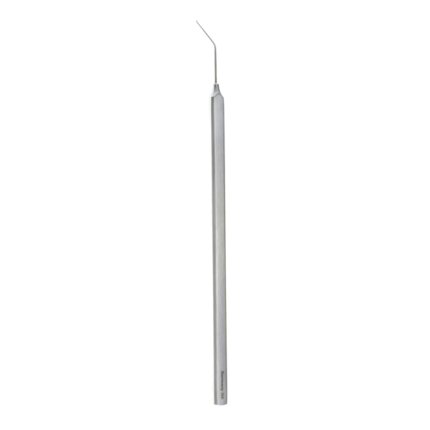
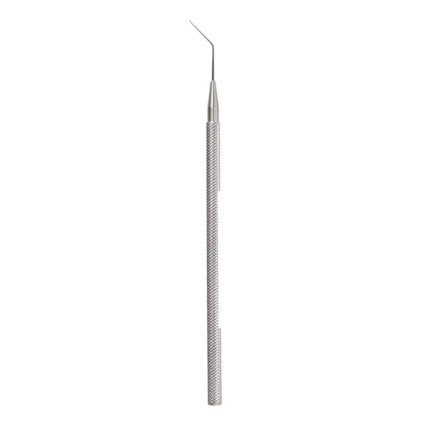
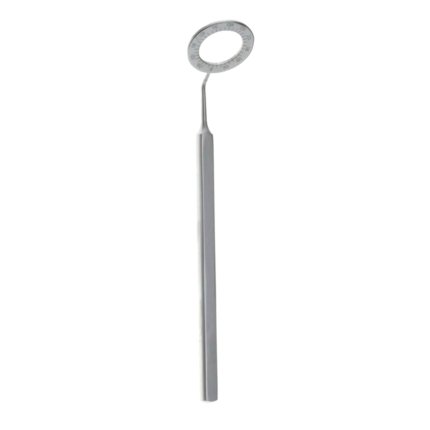
The Ophthalmology Sinskey Lens Manipulation Hook – Straight Blunt is a specialized microsurgical instrument developed for precise manipulation of intraocular lenses (IOLs) during cataract and anterior segment ophthalmic procedures. Recognized as one of the most essential tools in ophthalmic surgery, the Sinskey hook enables surgeons to accurately position, rotate, and center intraocular lenses with minimal trauma to delicate ocular tissues.
Manufactured from premium medical-grade stainless steel, this ophthalmic instrument provides exceptional strength, corrosion resistance, and long-term durability. Its high-quality construction allows the instrument to withstand repeated sterilization cycles while maintaining precise alignment and excellent surgical performance, making it suitable for hospitals, ophthalmology clinics, ambulatory surgical centers, and eye care facilities.
The instrument features a straight shaft with a blunt hook tip, specifically engineered to provide controlled manipulation of intraocular lenses without causing unnecessary damage to surrounding ocular structures. The blunt tip minimizes the risk of tissue injury while allowing surgeons to reposition and stabilize IOLs with outstanding precision.
Its ergonomic handle offers a lightweight, balanced feel that enhances tactile feedback and provides superior control during delicate microsurgical procedures. The carefully engineered design helps reduce hand fatigue while supporting smooth, accurate movements under the operating microscope.
The Straight Blunt Sinskey Lens Manipulation Hook is widely used during cataract surgery for dialing, rotating, centering, and positioning posterior chamber intraocular lenses within the capsular bag or ciliary sulcus. It is also valuable during anterior segment procedures requiring gentle manipulation of ocular tissues and implant positioning.
The smooth satin surgical finish enhances cleaning efficiency and supports strict infection control standards. The instrument is fully compatible with standard sterilization protocols, including steam autoclaving, ensuring safe reuse in busy surgical environments. Its corrosion-resistant stainless steel construction guarantees dependable performance over years of clinical use.
Healthcare professionals trust the Ophthalmology Sinskey Lens Manipulation Hook – Straight Blunt because it combines precision engineering, ergonomic comfort, and surgical reliability. Its atraumatic blunt hook design allows controlled instrument movement while preserving the integrity of delicate intraocular tissues.
Whether used in cataract extraction, intraocular lens implantation, lens repositioning, or other anterior segment surgeries, this ophthalmic instrument provides the accuracy and performance required for successful surgical outcomes.
Designed to meet the demanding standards of modern ophthalmic surgery, the Sinskey Lens Manipulation Hook – Straight Blunt is an indispensable addition to professional ophthalmic instrument sets, delivering precision, durability, and consistent clinical performance.
Key Features
- Manufactured from premium medical-grade stainless steel
- Straight shaft with atraumatic blunt hook tip
- Designed for precise intraocular lens (IOL) manipulation
- Ideal for cataract and anterior segment surgery
- Excellent tactile feedback for delicate procedures
- Ergonomic lightweight handle for enhanced control
- Corrosion-resistant surgical-grade construction
- Smooth satin finish for easy cleaning
- Fully autoclavable for repeated sterilization
- Reusable professional ophthalmic instrument
- Precision engineered for microsurgical applications
- Suitable for hospitals, eye clinics, and surgical centers
Product Specifications
| Specification | Details |
|---|---|
| Product Type | Ophthalmic Surgical Instrument |
| Application | Intraocular Lens (IOL) Manipulation |
| Material | Medical Grade Stainless Steel |
| Finish | Satin / Polished Surgical Finish |
| Sterilization | Autoclavable |
| Reusability | Reusable |
| Specialty | Ophthalmology |
| Instrument Type | Sinskey Lens Manipulation Hook |
| Tip Style | Straight Blunt Hook |
| Usage | IOL Positioning, Rotation & Centering |
Product Contents
- 1 × Ophthalmology Sinskey Lens Manipulation Hook – Straight Blunt
- Reusable medical-grade stainless steel ophthalmic instrument
- Professionally inspected for surgical quality assurance
Applications
The Ophthalmology Sinskey Lens Manipulation Hook – Straight Blunt is commonly used for:
- Cataract surgery
- Intraocular lens (IOL) implantation
- IOL positioning and centering
- IOL rotation and dialing
- Anterior segment microsurgery
- Lens repositioning procedures
- Ophthalmic surgical procedures
- Eye hospitals and ophthalmology clinics
- Ambulatory surgical centers
- Microsurgical ophthalmic instrument sets
Frequently Asked Questions (FAQs)
1. What is the Ophthalmology Sinskey Lens Manipulation Hook used for?
It is primarily used to manipulate, rotate, center, and position intraocular lenses (IOLs) during cataract and anterior segment eye surgery.
2. Why does this instrument have a blunt hook tip?
The blunt hook tip provides controlled lens manipulation while minimizing the risk of trauma to delicate ocular tissues.
3. What material is the Sinskey Lens Manipulation Hook made from?
It is manufactured from premium medical-grade stainless steel for superior durability, corrosion resistance, and precision.
4. Is this ophthalmic instrument reusable?
Yes. It is a reusable surgical instrument designed for repeated professional use after proper sterilization.
5. Can the Sinskey Hook be autoclaved?
Yes. The instrument is fully compatible with standard steam autoclave sterilization procedures.
6. Which surgical specialties commonly use this instrument?
It is primarily used by ophthalmologists during cataract surgery, intraocular lens implantation, and other anterior segment microsurgical procedures.
7. What are the advantages of a straight blunt Sinskey hook?
The straight blunt design offers precise control, excellent tactile feedback, atraumatic lens manipulation, and accurate positioning of intraocular lenses during delicate ophthalmic procedures.




Reviews
There are no reviews yet.