
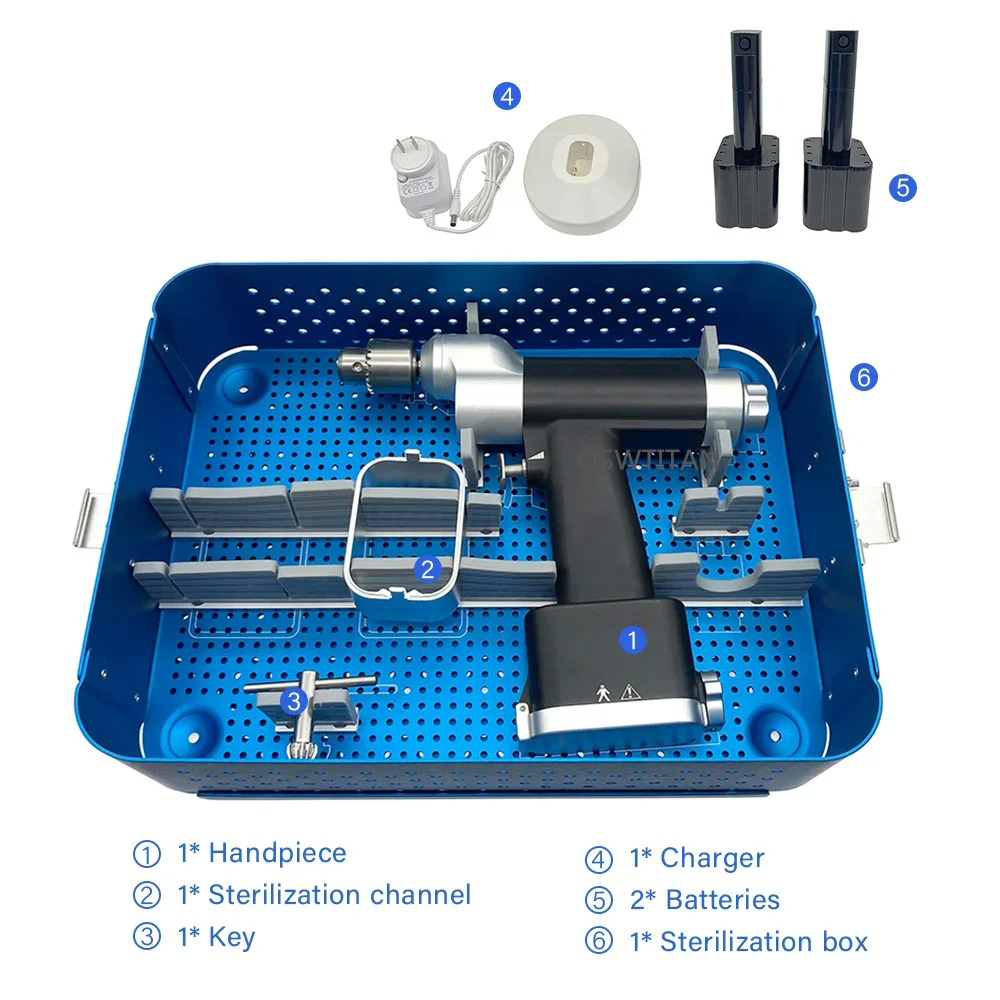

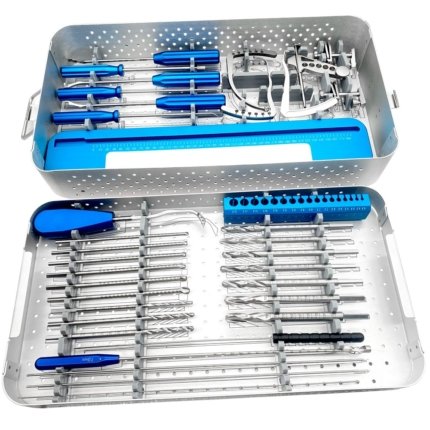
The Orthopedic Cannulated Drill – Trauma Surgery Bone Drill Instrument is a specialized orthopedic instrument designed for controlled bone preparation during trauma surgery and fracture fixation procedures. Its cannulated design incorporates a central passage through the instrument, allowing it to be used over a compatible guidewire or guide pin when required by the surgical technique.
Cannulated drilling is widely used in orthopedic procedures where maintaining an established drilling trajectory is important. A guidewire can first be positioned according to the surgical plan, after which a compatible cannulated drill can be advanced over the wire. This technique can help maintain the intended pathway while preparing bone for compatible screws, implants, or other fixation components.
In orthopedic trauma surgery, cannulated drills may be used during fracture fixation procedures involving plates, screws, intramedullary fixation systems, and other compatible orthopedic implants. The exact drill diameter and working length should correspond to the implant system and surgical technique being used. Drill selection should never be based solely on the outside diameter because the required drilling dimensions depend on the fixation system and manufacturer’s specifications.
The cannulated design provides an important advantage when a guidewire has already established the desired trajectory. Instead of creating a new pathway without guidance, the drill can follow the existing guidewire path. This can be particularly useful in procedures where precise positioning is important and the surgeon needs controlled preparation of the bone.
The instrument’s working end is designed to engage bone efficiently while the shaft provides controlled advancement. Depending on the specific configuration, the drill may be used with an appropriate surgical drill or compatible handpiece. The connection between the drill and the driving system should always be verified before use to ensure proper compatibility.
A cannulated drill is commonly associated with fracture fixation and orthopedic implant surgery, but its precise applications depend on its diameter, length, cutting geometry, and compatible system. It may be used for preparing pathways for orthopedic screws or other fixation components when the manufacturer’s technique calls for cannulated drilling.
Proper handling is important because cutting instruments can become damaged through excessive force, incorrect alignment, improper use, or contact with unsuitable materials. The drill should be inspected before use for damaged cutting edges, deformation, blockage of the cannulation, or other visible defects. A blocked or damaged cannulation can interfere with guidewire passage and should be addressed before clinical use.
For reusable instruments, appropriate cleaning is particularly important because biological material can accumulate within the central cannulation. After use, the instrument should be thoroughly cleaned, rinsed, dried, and inspected according to the manufacturer’s instructions. The cannulated channel should be verified as clear before sterilization and storage.
The Orthopedic Cannulated Drill – Trauma Surgery Bone Drill Instrument provides a practical solution for guidewire-assisted bone drilling in compatible orthopedic trauma and fixation procedures. Its cannulated construction supports controlled drilling along an established guidewire pathway, helping surgical teams perform precise bone preparation when required by the selected fixation technique.
Key Features
- Specialized cannulated orthopedic bone drill
- Central cannulation for compatible guidewire or guide pin use
- Designed for controlled bone preparation
- Suitable for orthopedic trauma surgery
- Useful for compatible fracture fixation procedures
- Supports guidewire-assisted drilling techniques
- Suitable for preparation of bone for compatible fixation implants
- Designed for controlled drilling trajectory
- Useful with compatible orthopedic drilling systems
- Suitable for professional orthopedic operating rooms
- Cannulation allows guidewire passage through the instrument
- Requires inspection and validated reprocessing when reusable
Product Specifications
| Specification | Details |
|---|---|
| Product Name | Orthopedic Cannulated Drill |
| Instrument Type | Cannulated Bone Drill |
| Primary Application | Orthopedic Trauma Surgery |
| Main Function | Bone Drilling & Preparation |
| Design | Cannulated / Hollow Shaft |
| Guidewire Compatibility | Compatible Guidewire or Guide Pin |
| Common Applications | Fracture Fixation & Implant Preparation |
| Surgical Specialty | Orthopedic & Trauma Surgery |
| Drive Compatibility | Verify With Specific Surgical System |
| Material | Surgical Instrument Material; verify supplied specification |
| Reusable | Where supplied as reusable |
| Sterilization | Follow manufacturer and facility protocols |
| Dimensions | Vary according to selected model |
FAQs
What is an orthopedic cannulated drill?
An orthopedic cannulated drill is a bone-drilling instrument with a central passage that allows the drill to be advanced over a compatible guidewire or guide pin during selected orthopedic procedures.
What is a cannulated drill used for?
It is used for controlled bone drilling and preparation during procedures such as fracture fixation and other orthopedic implant techniques where guidewire-assisted drilling is required.
What is the advantage of a cannulated orthopedic drill?
The central cannulation allows the drill to follow a previously positioned guidewire, helping maintain the established drilling trajectory during compatible surgical techniques.
Can this drill be used for fracture fixation?
Yes, cannulated drills are commonly used in compatible fracture fixation procedures to prepare bone for screws and other fixation components. The drill size must match the specific implant system and surgical technique.
What type of guidewire is used with a cannulated drill?
The guidewire or guide pin must have the appropriate diameter, length, and specifications for the particular drill and fixation system. Compatibility should always be verified before use.
Can a cannulated drill be used with any surgical drill machine?
Not necessarily. The drill’s connection or drive interface must be compatible with the selected surgical power system or handpiece. The manufacturer’s specifications should be checked before use.
How should a cannulated drill be cleaned?
The drill should be thoroughly cleaned according to the manufacturer’s instructions, with particular attention to the internal cannulated channel. The passage should be checked for retained material and verified clear before sterilization.
Is an orthopedic cannulated drill reusable?
If supplied as a reusable surgical instrument, it may be cleaned and sterilized for subsequent use according to validated manufacturer and healthcare-facility procedures. Damaged or excessively worn drills should be removed from service.




Reviews
There are no reviews yet.