


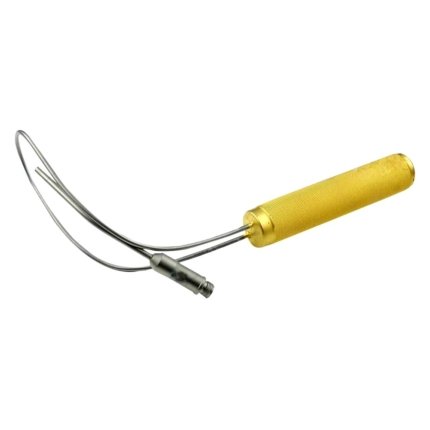
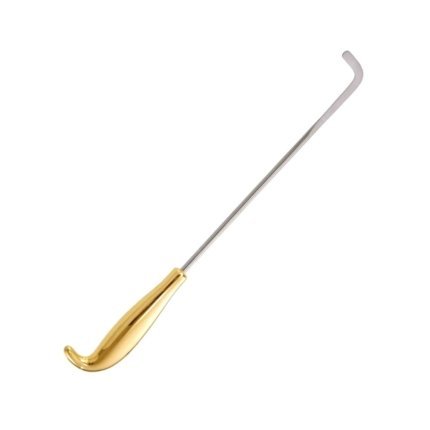
The Plastic Surgery Inner-Facelift Fronto-Temporal Dissector is a specialized surgical instrument developed for meticulous soft tissue dissection and periosteal elevation within the frontal and temporal regions of the face. It is an essential instrument for plastic surgeons performing advanced facial rejuvenation, deep-plane facelift, brow lift, and craniofacial reconstructive procedures where precision and atraumatic tissue handling are critical.
Designed to facilitate controlled dissection, this instrument allows surgeons to safely develop tissue planes while preserving surrounding nerves, blood vessels, and other delicate anatomical structures. Its refined working end is specifically engineered to navigate the complex anatomy of the forehead and temporal region, providing excellent tactile feedback and precise tissue control throughout the procedure.
The Inner-Facelift Fronto-Temporal Dissector is commonly used during deep-plane facelift surgery, endoscopic brow lift procedures, temporal lifting, facial rejuvenation surgery, craniofacial reconstruction, and maxillofacial surgery. It enables surgeons to gently elevate soft tissue and periosteum from the underlying bone, creating optimal surgical access while minimizing tissue trauma and supporting improved postoperative healing.
Manufactured from premium surgical-grade stainless steel, this dissector offers outstanding durability, corrosion resistance, and long-term clinical reliability. The high-quality stainless steel construction ensures the instrument maintains its structural integrity and precision even after repeated cleaning and sterilization cycles. It is suitable for routine use in hospitals, outpatient surgical centers, and specialized plastic surgery clinics.
The ergonomically balanced handle provides a secure and comfortable grip, allowing surgeons to perform delicate dissections with confidence and precision. The lightweight construction minimizes hand fatigue during prolonged procedures, while the satin finish reduces glare under operating room lighting, enhancing visibility and surgical accuracy.
Its precision-crafted working tip allows smooth tissue elevation and controlled periosteal release without excessive force. This atraumatic design helps preserve tissue integrity and supports meticulous surgical technique during cosmetic and reconstructive facial procedures. The instrument is frequently included in facelift instrument trays, brow lift surgical sets, craniofacial kits, and facial plastic surgery collections.
The reusable design makes the Plastic Surgery Inner-Facelift Fronto-Temporal Dissector a practical and cost-effective solution for healthcare facilities requiring dependable surgical instruments. It is fully compatible with standard steam autoclave sterilization protocols and is manufactured to meet the rigorous demands of modern surgical practice.
Combining precision engineering, ergonomic comfort, and premium stainless steel construction, this dissector delivers the reliability and performance expected by surgeons performing advanced facial plastic surgery. Whether used for tissue plane development, periosteal elevation, or facial skeletal exposure, it provides exceptional control and surgical accuracy for consistently successful outcomes.
Key Features
- Precision Inner-Facelift Fronto-Temporal Dissector
- Designed for controlled soft tissue dissection and periosteal elevation
- Ideal for facelift, brow lift, and facial reconstructive procedures
- Precision working end for frontal and temporal anatomical regions
- Supports atraumatic tissue plane development
- Manufactured from premium surgical-grade stainless steel
- Corrosion-resistant construction for long-term durability
- Satin finish reduces glare under surgical lighting
- Ergonomic handle provides excellent grip and tactile feedback
- Lightweight, balanced design minimizes hand fatigue
- Fully reusable and autoclave compatible
- Suitable for hospitals, plastic surgery clinics, and surgical centers
Product Specifications
| Specification | Details |
|---|---|
| Product Type | Surgical Dissector |
| Application | Fronto-Temporal Soft Tissue Dissection and Periosteal Elevation |
| Material | Premium Surgical-Grade Stainless Steel |
| Finish | Satin / Matte Surgical Finish |
| Sterilization | Autoclave Compatible |
| Reusability | Reusable |
| Specialty | Plastic Surgery, Craniofacial Surgery, Maxillofacial Surgery |
| Instrument Type | Inner-Facelift Fronto-Temporal Dissector |
| Handle Design | Ergonomic Solid Handle |
| Usage | Facial Tissue Plane Development and Periosteal Elevation |
Product Contents
- 1 × Plastic Surgery Inner-Facelift Fronto-Temporal Dissector
- Individually inspected reusable surgical instrument
- Ready for cleaning and sterilization before clinical use
Applications
The Plastic Surgery Inner-Facelift Fronto-Temporal Dissector is commonly used in:
- Deep-plane facelift procedures
- Endoscopic brow lift surgery
- Temporal lift procedures
- Facial rejuvenation surgery
- Craniofacial reconstruction
- Maxillofacial surgery
- Plastic and reconstructive surgery
- Periosteal elevation
- Frontal and temporal tissue dissection
- Facial skeletal exposure
FAQs
1. What is the Plastic Surgery Inner-Facelift Fronto-Temporal Dissector used for?
It is used for controlled soft tissue dissection and periosteal elevation in the frontal and temporal regions during facelift, brow lift, and facial reconstructive procedures.
2. Why is this dissector useful in facelift surgery?
It helps surgeons safely develop tissue planes, improve surgical visibility, preserve delicate anatomical structures, and minimize tissue trauma.
3. What material is the instrument made from?
The dissector is manufactured from premium surgical-grade stainless steel for excellent durability, corrosion resistance, and long-term performance.
4. Is this instrument reusable?
Yes. It is designed for repeated professional use and can be sterilized according to standard hospital reprocessing protocols.
5. Can the Fronto-Temporal Dissector be autoclaved?
Yes. The instrument is fully compatible with steam autoclave sterilization and other approved medical sterilization methods.
6. Which surgical specialties commonly use this instrument?
It is commonly used in plastic surgery, cosmetic surgery, craniofacial surgery, maxillofacial surgery, facial reconstruction, and aesthetic surgical procedures.
7. What are the advantages of the ergonomic handle?
The ergonomic handle provides a secure grip, excellent tactile feedback, improved precision, and reduced hand fatigue during prolonged surgical procedures.



Reviews
There are no reviews yet.