
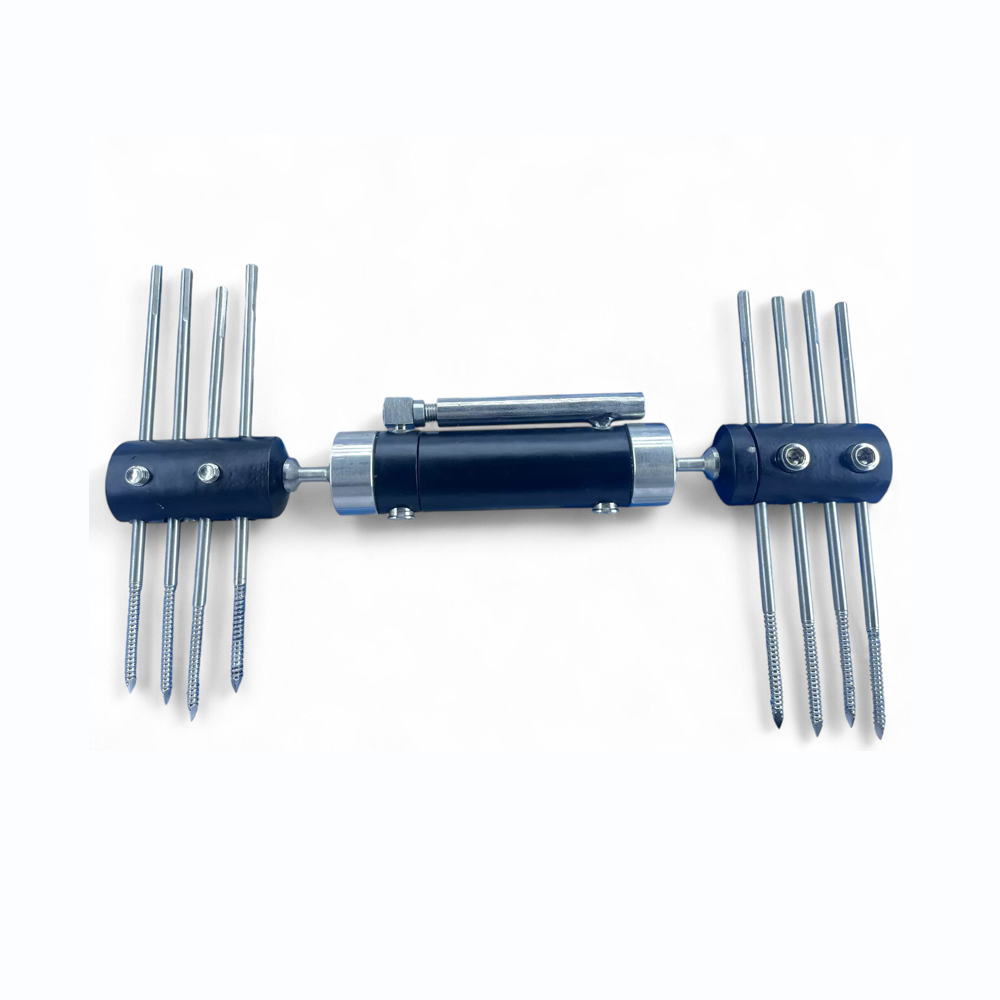

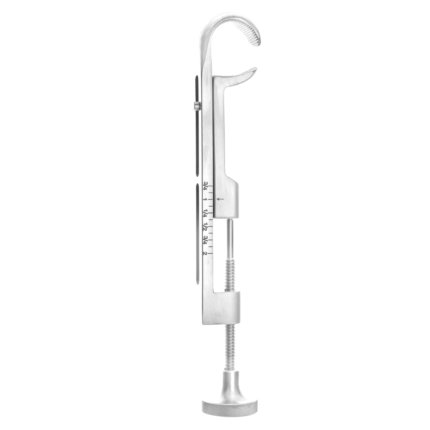
The Procallus External Fixator Orthofix Type Femur Fixator is a specialized orthopedic external fixation system intended to support stabilization of selected femoral fractures. External fixation provides skeletal stabilization through fixation elements anchored to bone and connected to an external frame. This approach can be useful in orthopedic trauma situations where controlled stabilization is required while allowing access to the surrounding soft tissues.
The Procallus Fixator is described as an Orthofix-type external fixator, referring to its intended system style and configuration. This terminology should not be interpreted as evidence that the product is manufactured, licensed, endorsed, or authorized by Orthofix unless such a relationship is specifically documented by the supplier or manufacturer.
Femoral fractures can present complex fixation requirements because the femur is a large weight-bearing bone subjected to substantial mechanical forces. External fixation may be considered in selected trauma cases depending on fracture morphology, soft-tissue condition, patient status, contamination, associated injuries, and the surgeon’s overall treatment strategy. It may also have a role in staged orthopedic management when definitive fixation is planned at a later stage.
A modular external fixation system allows the surgeon to establish a frame using compatible clamps, rods, pins, and other fixation components. The specific arrangement depends on the anatomical location and fracture configuration. Proper frame geometry, fixation-pin placement, and mechanical stability are essential considerations during external fixation. These factors should be determined according to the applicable surgical technique and manufacturer instructions.
For femoral fracture applications, fixation components are positioned in appropriate bone segments while avoiding important anatomical structures. The surgeon determines safe pin corridors, pin diameter, number of fixation points, frame configuration, and the required mechanical properties of the construct. The external frame should be assembled and tightened using compatible instruments and components.
The Procallus Fixator can provide a useful option for orthopedic trauma facilities requiring an external fixation solution for selected femoral fracture cases. External fixation can facilitate stabilization while maintaining access to soft tissues, which may be relevant in complex injuries. However, the choice between external fixation, internal fixation, staged fixation, or another treatment method is a clinical decision made by the treating orthopedic surgeon.
The exact components supplied with an external fixator may vary according to the selected configuration. Because the product title does not specify the number or dimensions of rods, clamps, Schanz screws, pins, or other components, those specifications should be confirmed from the supplier’s current product documentation rather than assumed.
Compatibility is an important consideration when assembling an external fixation frame. Pins, clamps, rods, connectors, and instrumentation should be selected from compatible systems or according to documented manufacturer compatibility. Mixing components from different systems without verified compatibility may result in an unsuitable construct.
External fixation components and instruments should be inspected before use for deformation, corrosion, damaged threads, worn interfaces, or other mechanical abnormalities. Components intended for implantation should be handled according to their specific manufacturer instructions and sterility requirements. Reusable instruments should undergo appropriate cleaning, inspection, and sterilization.
The term femur fracture recovery in the product title describes the intended clinical application category rather than a guaranteed recovery outcome. Healing depends on numerous patient- and injury-specific factors, including fracture characteristics, bone quality, soft-tissue status, biological healing, fixation stability, and postoperative management.
The Procallus Fixator – Orthofix Type External Fixator provides orthopedic trauma professionals with a modular external fixation option for selected femoral fracture stabilization procedures. Its external frame concept is intended to support controlled skeletal stabilization when an external fixation strategy is clinically appropriate.
Key Features
- Specialized Procallus external fixation system
- Orthofix-type external fixator configuration
- Intended for selected femur fracture stabilization
- Modular external frame concept
- Supports controlled skeletal stabilization
- Suitable for orthopedic trauma applications
- Allows compatible fixation components to be arranged according to surgical requirements
- Useful in selected staged or definitive external fixation strategies
- Designed for professional orthopedic use
- Component compatibility should be verified before assembly
- Exact frame configuration may vary by supplied system
- Requires appropriate inspection and maintenance of reusable components
Product Specifications
| Specification | Details |
|---|---|
| Product Name | Procallus Fixator – Orthofix Type External Fixator |
| Fixator Type | External Fixator |
| System Style | Procallus / Orthofix-Type |
| Primary Application | Femur Fracture Stabilization |
| Surgical Specialty | Orthopedic Trauma |
| Fixation Method | External Skeletal Fixation |
| Frame Type | Modular External Frame |
| Compatible Components | System-Compatible Pins, Clamps, Rods and Connectors |
| Application | Selected Femoral Fractures |
| Configuration | Verify supplied system configuration |
| Material | Verify individual component specifications |
| Sterility | Verify product-specific configuration |
| Reusable Components | According to manufacturer instructions |
| Intended Users | Orthopedic and Trauma Surgeons |
| Clinical Environment | Hospitals, Trauma Centers, Surgical Facilities |
FAQs
1. What is a Procallus Fixator used for?
A Procallus Fixator is an external fixation system intended to stabilize selected fractures using bone fixation elements connected to an external frame. The product is positioned for femoral fracture applications according to the supplied configuration.
2. Can a Procallus Fixator be used for femur fractures?
Yes, the product is specifically described for femur fracture stabilization. The suitability of external fixation for an individual femoral fracture must be determined by the treating orthopedic surgeon.
3. What does “Orthofix type” mean?
“Orthofix type” describes the general system style or configuration referenced by the product. It should not be interpreted as confirmation that the product is manufactured or endorsed by Orthofix unless officially documented.
4. What components are included with the fixator?
The exact contents depend on the supplied configuration. External fixation systems may incorporate rods, clamps, connectors, pins, and related components, but the specific components and quantities should be confirmed before purchase.
5. Is external fixation suitable for every femur fracture?
No. Treatment selection depends on fracture pattern, location, soft-tissue condition, associated injuries, patient factors, and the surgeon’s treatment strategy.
6. Can external fixation be used as temporary stabilization?
External fixation can be used as temporary stabilization in selected orthopedic trauma situations, including staged treatment where definitive fixation may be performed later.
7. Are external fixator components reusable?
Some external fixation instruments and frame components may be reusable when specifically designed and validated for reuse. Implantable fixation components may have different reuse requirements. Manufacturer instructions should always be followed.
8. How should compatibility be checked?
The fixation pins, rods, clamps, connectors, and instruments should be checked against the manufacturer’s specifications to ensure that the components are mechanically and dimensionally compatible before assembly.
Reviews
There are no reviews yet.