
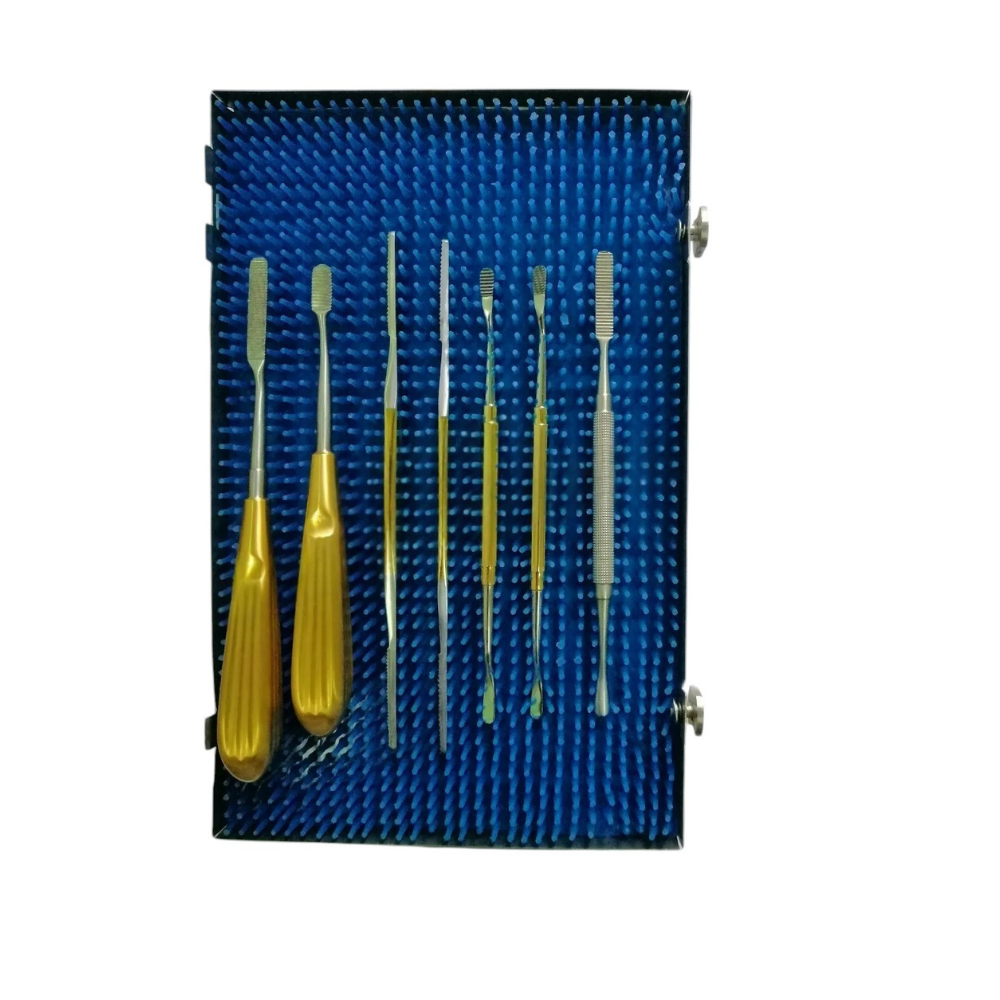
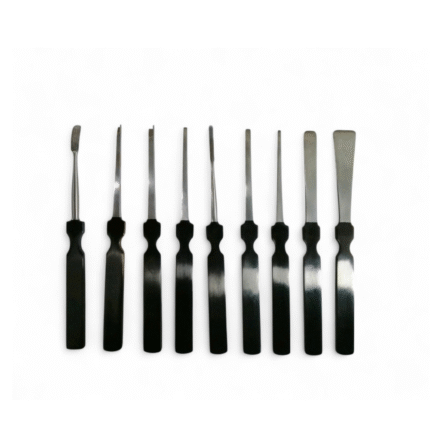
The Rhinoplasty Rasp Set – Packed in Box, German Stainless Steel is a specialized surgical instrument collection designed for surgeons performing rhinoplasty and other nasal reconstructive procedures. Rhinoplasty rasps are precision instruments used to carefully contour, smooth, and refine nasal bone and selected hard-tissue surfaces during surgery.
A dedicated rhinoplasty rasp set provides multiple instrument profiles and working surfaces, allowing the surgeon to select an appropriate rasp according to the anatomical area and desired surgical technique. Different rasp configurations may provide varying degrees of aggressiveness and control for tasks such as dorsal contouring, smoothing irregularities, refining bony edges, and shaping the nasal framework.
The instruments are manufactured from German stainless steel, as specified in the product title. High-quality surgical stainless steel is widely used for reusable surgical instruments because of its strength, corrosion resistance, durability, and ability to withstand validated cleaning and sterilization processes. The exact stainless-steel grade should be confirmed against the manufacturer’s technical documentation.
Precision is particularly important in rhinoplasty instrumentation. Rasp teeth and working surfaces need to maintain consistent performance to allow controlled removal or smoothing of bone. The surgeon should select the appropriate instrument based on the anatomical structure, amount of contouring required, and surgical technique.
The set is supplied packed in a box, providing organized storage and protection of the instruments. A dedicated storage box can help keep the rasps together, reduce the risk of damage to their working surfaces, and facilitate inventory management and transportation between storage and the operating room.
Rhinoplasty rasps can be used during both cosmetic and reconstructive nasal surgery when bone contouring is clinically indicated. Depending on the specific instrument design, applications may include dorsal hump reduction, refinement of bony contours, smoothing of osteotomy edges, and correction of selected surface irregularities.
Proper instrument handling is essential because the rasp’s working surface can be affected by improper cleaning, impact, or contact with other sharp instruments. Instruments should be inspected before each procedure for damaged teeth, deformation, corrosion, loose components, or other defects.
If the instruments are reusable, they should be thoroughly cleaned and sterilized according to validated manufacturer instructions and institutional protocols. The storage box should only be used as a sterilization container if it has been specifically validated for that purpose.
The Rhinoplasty Rasp Set is intended for use by qualified plastic surgeons, facial plastic surgeons, ENT surgeons, and appropriately trained healthcare professionals. The exact instrument selection and surgical technique should always be determined according to the patient’s anatomy and clinical requirements.
Key Features
- Professional Rhinoplasty Rasp Set
- Designed for nasal bone contouring and smoothing
- Made from German stainless steel
- Multiple rasp profiles for surgical versatility
- Precision working surfaces
- Suitable for rhinoplasty procedures
- Useful for cosmetic and reconstructive nasal surgery
- Durable construction for professional surgical use
- Packed in a protective instrument box
- Reusable where applicable
- Easy organization and storage
- Suitable for plastic surgery and ENT environments
Product Specifications
| Specification | Details |
|---|---|
| Product Type | Rhinoplasty Rasp Instrument Set |
| Instrument Type | Nasal Bone Contouring Instruments |
| Application | Rhinoplasty / Nasal Surgery |
| Material | German Stainless Steel |
| Finish | Surgical / Medical-Grade Finish |
| Packaging | Protective Instrument Box |
| Sterilization | Autoclave or validated method according to manufacturer instructions |
| Reusability | Reusable where applicable |
| Specialty | Plastic Surgery / Facial Surgery / ENT |
| Usage | Bone Contouring, Smoothing & Refinement |
| Quality | Professional Surgical Instrumentation |
Product Contents
- Rhinoplasty rasps in assorted profiles and working surfaces
- Multiple rasp configurations according to the supplied set
- 1 × Protective Storage Box
Exact number, dimensions, tooth pattern, and individual rasp types should be confirmed against the manufacturer’s packing list.
Applications
The Rhinoplasty Rasp Set may be used for:
- Rhinoplasty surgery
- Nasal bone contouring
- Dorsal hump reduction
- Smoothing of nasal bone irregularities
- Refinement of bony nasal contours
- Nasal reconstructive surgery
- Facial plastic surgery
- Selected ENT procedures
- Smoothing of osteotomy edges where clinically appropriate
FAQs
1. What is a rhinoplasty rasp used for?
A rhinoplasty rasp is used to carefully contour and smooth nasal bone during appropriate rhinoplasty and nasal reconstructive procedures.
2. What material are these rasps made from?
The set is specified as German stainless steel, selected for durability, corrosion resistance, and professional surgical use.
3. Is a box included?
Yes. The product is supplied packed in a protective storage box.
4. Are the rasps reusable?
Where designated reusable, they can be cleaned, inspected, and sterilized according to validated manufacturer and institutional procedures.
5. Can the rasps be used for cosmetic rhinoplasty?
Yes. Rhinoplasty rasps may be used during cosmetic procedures when controlled nasal bone contouring is clinically required.
6. Can ENT surgeons use this set?
Yes. The instruments may be appropriate for selected ENT and facial reconstructive procedures involving nasal bone contouring.
7. How should the rasps be maintained?
Working surfaces should be protected from impact and damage. Instruments should be cleaned promptly, inspected for worn or damaged teeth, sterilized using validated procedures, and stored appropriately.
8. Is the set supplied sterile?
Sterility depends on the manufacturer’s supplied configuration and packaging. Always verify the sterility status and processing instructions before clinical use.

Reviews
There are no reviews yet.