
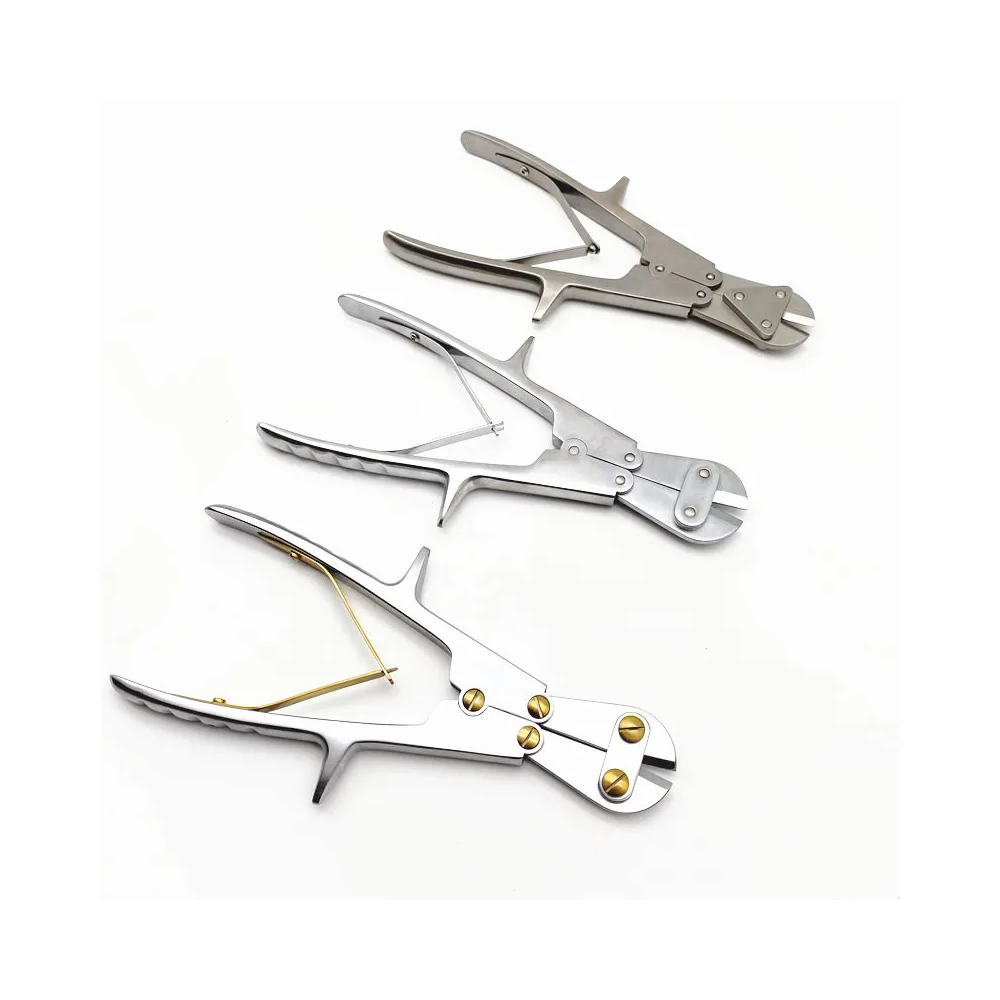

The Stainless Steel Kirschner Wire Cutter – Orthopedic Pin Cutter & Wire Scissors for Human and Veterinary Use is a specialized orthopedic instrument designed for cutting and trimming Kirschner wires, commonly known as K-wires, as well as compatible orthopedic pins and surgical wires. It can support both human and veterinary orthopedic procedures where controlled wire management is required during fracture fixation, stabilization, or reconstructive surgery.
Kirschner wires are frequently used as temporary or definitive fixation devices in selected orthopedic procedures. After appropriate placement, a portion of the wire may need to be shortened to achieve the desired surgical configuration. A dedicated wire cutter provides the mechanical leverage necessary to cut compatible wire diameters more efficiently than general-purpose surgical scissors or forceps.
The cutter features opposing cutting jaws designed to concentrate force at the cutting point. This allows the surgeon or surgical assistant to trim an exposed section of wire while maintaining controlled instrument handling. The actual cutting capacity depends on the specific wire material, diameter, instrument design, and manufacturer specifications. Users should not exceed the recommended cutting capacity.
In human orthopedic surgery, Kirschner wire cutters may be used during selected fracture fixation, hand and wrist procedures, foot and ankle procedures, pediatric orthopedic applications, and other interventions involving compatible pins or wires. In veterinary surgery, similar instruments may support fracture stabilization and other orthopedic procedures across appropriately selected animal species and anatomical sites.
The stainless-steel construction provides a durable platform for repeated surgical handling when the instrument is manufactured and designated for reusable use. The cutting edges should be kept free from unnecessary impact with harder materials that exceed the instrument’s intended capacity. Proper use helps maintain cutting performance and reduces premature wear of the jaws.
Ergonomic handle geometry provides leverage for controlled cutting. Depending on the design, the instrument may be operated manually to cut exposed wire ends after fixation. The surgical team should position the cutter carefully and manage the cut wire segment to reduce the risk of uncontrolled movement or sharp fragments.
The instrument can be useful in operating rooms, orthopedic surgical facilities, veterinary hospitals, and instrument sets where K-wire fixation is routinely performed. Its compact and dedicated design makes it a practical addition to orthopedic pin and wire management instrumentation.
For reusable instruments, appropriate reprocessing is essential. After use, the cutter should be cleaned thoroughly to remove biological material and wire debris, followed by rinsing, drying, inspection, and sterilization according to validated manufacturer instructions and facility protocols. The cutting jaws, hinge, and working surfaces should be inspected regularly for damage, alignment, corrosion, or loss of cutting performance.
The Stainless Steel Kirschner Wire Cutter provides a practical solution for trimming compatible orthopedic wires and pins during selected human and veterinary surgical procedures. Proper instrument selection should always be based on wire diameter, material, cutting capacity, and the specific surgical application.
Key Features
- Designed for cutting compatible Kirschner wires and orthopedic pins
- Stainless-steel surgical instrument construction
- Suitable for selected human orthopedic procedures
- Suitable for selected veterinary orthopedic applications
- Precision cutting jaws for controlled wire trimming
- Provides mechanical leverage for efficient cutting
- Useful during fracture fixation and orthopedic stabilization
- Suitable for managing exposed K-wire ends
- Ergonomic design supports controlled manual operation
- Reusable when specifically designated for reusable surgical use
- Hinged mechanism allows controlled opening and closing
- Cutting capacity depends on wire diameter and instrument specifications
Product Specifications
| Specification | Details |
|---|---|
| Product Name | Stainless Steel Kirschner Wire Cutter |
| Common Names | K-Wire Cutter, Orthopedic Pin Cutter, Wire Cutter |
| Instrument Type | Orthopedic Cutting Instrument |
| Material | Stainless Steel |
| Primary Function | Cutting and Trimming Orthopedic Wires |
| Compatible Applications | Kirschner Wires, Selected Orthopedic Pins and Wires |
| Human Use | Selected Orthopedic Procedures |
| Veterinary Use | Selected Veterinary Orthopedic Procedures |
| Operation | Manual |
| Cutting Capacity | Dependent on instrument and wire specifications |
| Reusable | Yes, when designated as reusable |
| Sterilization | Follow validated manufacturer and facility protocols |
FAQs
1. What is a Kirschner wire cutter used for?
A Kirschner wire cutter is used to trim compatible K-wires and orthopedic pins after or during selected fixation procedures. It provides controlled cutting through dedicated cutting jaws.
2. Can this instrument cut orthopedic pins?
It can cut compatible orthopedic pins and wires within the instrument’s specified cutting capacity. The wire diameter and material should always be checked before cutting.
3. Can the Kirschner wire cutter be used in veterinary surgery?
Yes. The instrument can support selected veterinary orthopedic procedures involving compatible K-wires and orthopedic pins, provided its dimensions and cutting capacity are appropriate.
4. Is this wire cutter suitable for human orthopedic surgery?
It can be used for selected human orthopedic procedures involving compatible Kirschner wires and surgical pins. Suitability depends on the wire specifications and the instrument’s intended use.
5. Is the Kirschner wire cutter made from stainless steel?
Yes. This product is described as a stainless-steel orthopedic wire cutter. Specific alloy details should be confirmed from the manufacturer’s documentation when required.
6. Can this cutter cut any size of K-wire?
No. Cutting capacity varies according to the instrument design and the diameter and material of the wire. Users should follow the manufacturer’s specified cutting limits.
7. How should a reusable K-wire cutter be maintained?
The cutter should be cleaned thoroughly after use, dried, inspected, and sterilized according to validated instructions. The cutting edges and hinge should be checked regularly for wear or damage.
8. What is the difference between a wire cutter and surgical scissors?
A dedicated orthopedic wire cutter uses reinforced cutting jaws and mechanical leverage to cut compatible metal wires or pins. Standard surgical scissors are primarily designed for cutting softer materials and should not be used as substitutes for an appropriate orthopedic wire cutter.






Reviews
There are no reviews yet.