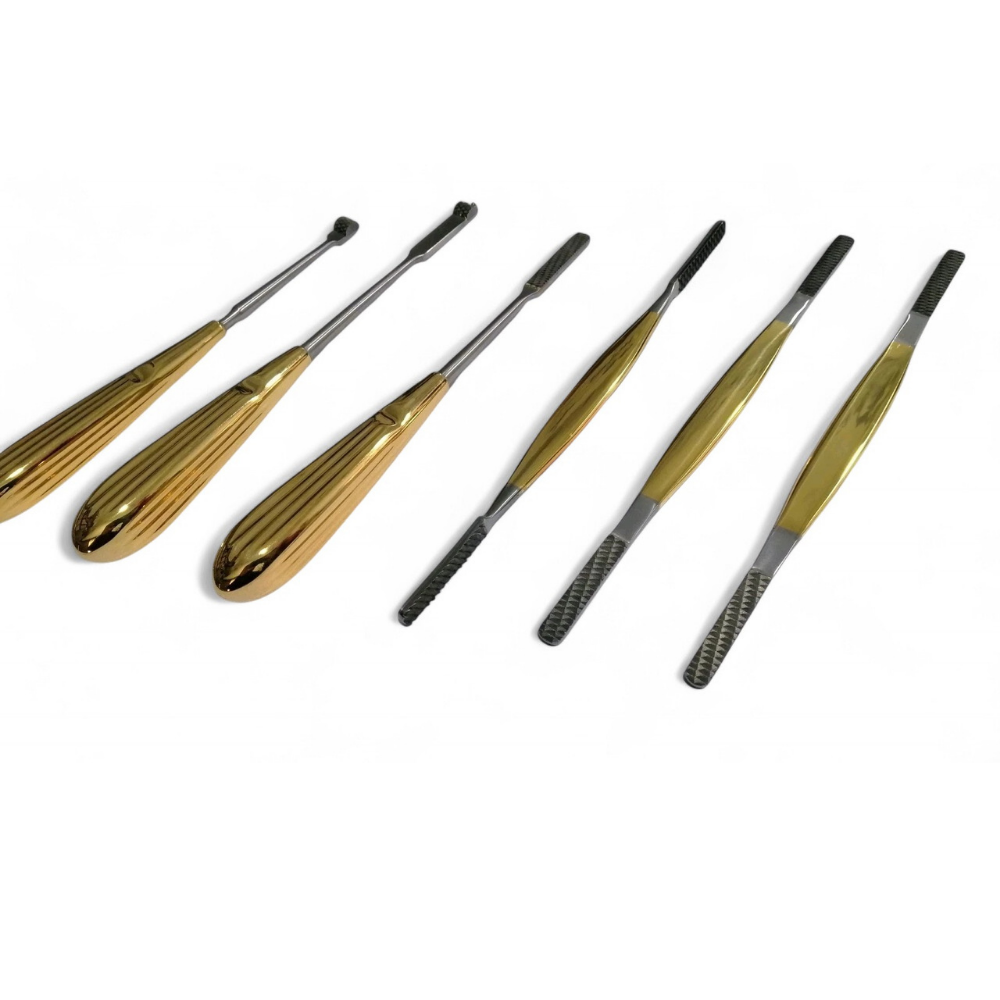
The TC Rasp for Nose Surgery – German Stainless, Reusable is a specialized surgical instrument designed to support qualified surgeons during rhinoplasty and selected nasal surgery procedures. A nasal rasp is commonly used for controlled refinement and contouring of bone or other hard tissue during appropriate nasal procedures, helping the surgeon achieve the desired surgical profile according to the operative plan.
This TC nose rasp features a working surface designed to allow controlled removal and smoothing of tissue through repeated rasping movements. The instrument can be useful when precise contouring is required during rhinoplasty, nasal reconstruction, and selected facial plastic surgery procedures. The exact clinical application depends on the rasp’s working profile, dimensions, and manufacturer’s intended use.
The instrument is specified as being manufactured from German stainless steel, a material commonly selected for professional surgical instruments because of its strength, corrosion resistance, durability, and suitability for validated cleaning and sterilization. The exact stainless-steel grade should be confirmed from the manufacturer’s technical specifications before making a specific grade claim.
The rasp’s working surface is an important component of its design. Teeth or abrasive cutting surfaces are intended to provide controlled tissue or bone refinement. Different rasp profiles and working surfaces may be selected by the surgeon according to the anatomical area and desired degree of contouring.
A properly designed rhinoplasty rasp should provide a secure and comfortable grip to allow controlled instrument movement. The handle and shaft configuration can influence surgical control, especially during delicate nasal procedures where precision is important.
The reusable construction makes this TC nose rasp suitable for professional healthcare facilities with validated instrument-processing systems. Reusable surgical instruments should be cleaned promptly following use and thoroughly inspected before sterilization. Particular attention should be given to the rasp’s working teeth or surface to ensure that debris is completely removed.
Before each procedure, the instrument should be inspected for corrosion, deformation, damaged teeth, loose components, or other defects. A damaged or excessively worn rasp should not be used because its working performance may be affected.
After use, the instrument should be cleaned and sterilized according to validated manufacturer instructions and institutional protocols. Appropriate cleaning, inspection, sterilization, and storage procedures can help preserve the instrument’s working surface and extend its service life.
The TC Rasp for Nose Surgery may be suitable for plastic surgery departments, ENT clinics, rhinoplasty centers, hospitals, and facial reconstructive surgery facilities. It can be used as an individual instrument or as part of a comprehensive rhinoplasty instrument set.
This instrument is intended for qualified ENT surgeons, plastic surgeons, facial plastic surgeons, and trained healthcare professionals familiar with appropriate nasal surgical techniques.
Key Features
- Professional TC nose rasp
- Designed for rhinoplasty and nose surgery
- German stainless steel construction
- Reusable surgical instrument
- Suitable for controlled nasal contouring
- Precision working surface for tissue refinement
- Designed for professional surgical handling
- Durable and corrosion-resistant construction
- Suitable for validated sterilization
- Useful as a standalone or set instrument
- Suitable for ENT and plastic surgery
- Professional surgical-grade design
Product Specifications
| Specification | Details |
|---|---|
| Product Type | TC Nose Rasp |
| Instrument Type | Rhinoplasty / Nasal Surgery Instrument |
| Application | Nose Surgery & Rhinoplasty |
| Specialty | ENT / Plastic Surgery |
| Material | German Stainless Steel* |
| Finish | Surgical / Medical-Grade Finish |
| Working Surface | TC Rasp Cutting / Contouring Surface |
| Sterilization | Validated method according to manufacturer instructions |
| Reusability | Reusable |
| Usage | Nasal Bone Contouring & Refinement |
| Packaging | Individual Instrument / Set Configuration |
*Confirm the exact stainless-steel grade and TC specification with the manufacturer.
Product Contents
- 1 × TC Nose Rasp
- Protective packaging according to supplied configuration
Exact size, working-end dimensions, rasp profile, and handle configuration should be confirmed from the manufacturer’s specifications.
Applications
The TC Nose Rasp may be used for:
- Rhinoplasty
- Nasal bone contouring
- Nasal bone refinement
- Reconstructive nose surgery
- Facial plastic surgery
- Selected ENT procedures
- Nasal framework modification
- Surgical bone smoothing
- Revision rhinoplasty
Specific clinical applications depend on the instrument design and manufacturer’s intended use.
FAQs
1. What is a TC nose rasp used for?
A TC nose rasp is designed for controlled contouring and refinement of nasal bone or other hard tissue during appropriate rhinoplasty procedures.
2. Is this rasp reusable?
Yes. It is specified as a reusable surgical instrument and should be appropriately cleaned, inspected, sterilized, and maintained after each use.
3. What material is the rasp made from?
The product is specified as German stainless steel. The exact stainless-steel grade should be confirmed with the manufacturer.
4. Can this rasp be used for rhinoplasty?
Yes. It is designed specifically for nose surgery and rhinoplasty applications, subject to the manufacturer’s intended use.
5. What does TC mean?
In surgical instrumentation, TC commonly refers to tungsten carbide, but the exact meaning and construction should be confirmed from the manufacturer’s product specification.
6. How should the rasp be sterilized?
The reusable instrument should be cleaned and sterilized using a validated method specified by the manufacturer and healthcare facility protocol.
7. How should the rasp’s working surface be maintained?
The working surface should be carefully cleaned after use and inspected for retained debris, damaged teeth, or excessive wear before sterilization and reuse.
8. Who should use this nose rasp?
It is intended for qualified ENT and plastic surgeons and trained healthcare professionals experienced in appropriate nasal surgical procedures.


Reviews
There are no reviews yet.