
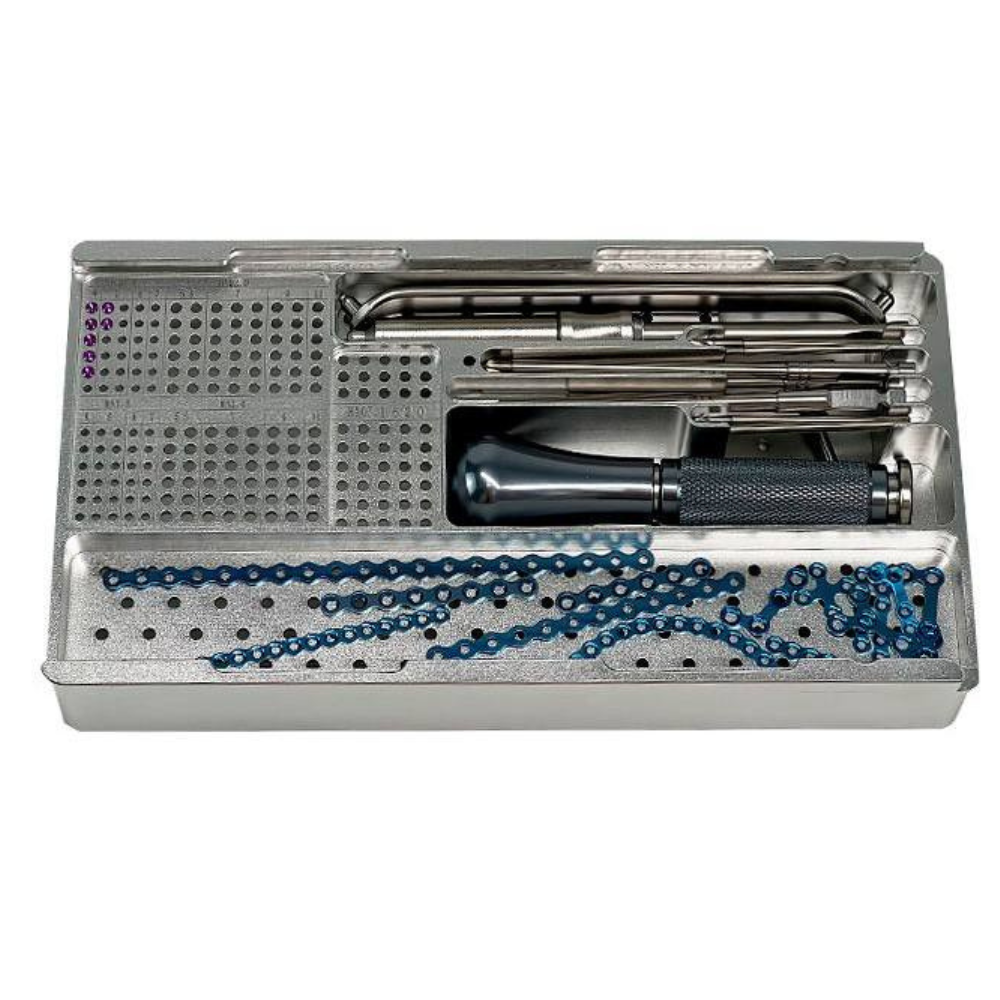

The Titanium Skull Plate Implants & Instruments – Neurosurgery Cranial Implant System is a specialized cranial fixation solution designed for neurosurgical procedures requiring reconstruction or stabilization of the skull. Cranial plate systems are commonly used to secure bone flaps following craniotomy and to support reconstruction of selected cranial defects.
The system combines titanium skull plates and compatible fixation instruments within an organized cranial implant workflow. Depending on the specific configuration, the plates may be available in different shapes, profiles, or hole patterns to accommodate various cranial regions and reconstruction requirements. The exact implant dimensions and instrument contents should be confirmed from the applicable product specification.
Titanium is widely used in cranial implant systems because of its favorable strength-to-weight characteristics and corrosion resistance. The exact titanium grade, alloy composition, surface treatment, and mechanical specifications are product-specific and should be verified from the manufacturer’s technical documentation rather than assumed from the product name.
Cranial plates are commonly used to secure a replaced bone flap after craniotomy. They may also be relevant to selected cranial reconstruction procedures involving defects caused by trauma, previous surgery, or other conditions requiring stabilization of cranial bone. The specific indication and implant selection are determined by the treating surgeon based on patient anatomy and the reconstruction plan.
A cranial fixation system generally uses screws or other compatible fixation components to secure the plate to the surrounding skull. Plate design and screw interface should be matched carefully. Screw diameter, length, head design, and thread characteristics can vary between systems, so components should not be assumed to be interchangeable without verified compatibility.
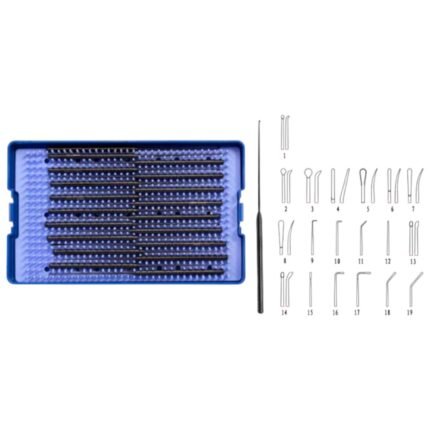
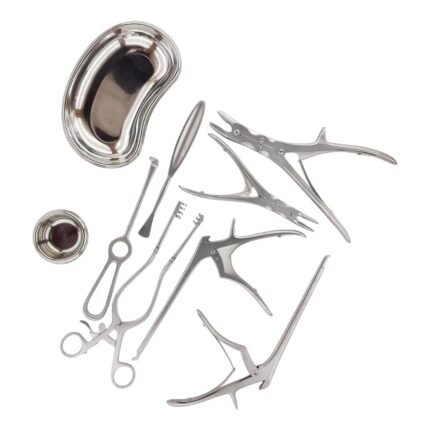
The included instruments may support procedures such as plate positioning, drilling, screw preparation, fixation, and implant handling, depending on the exact set configuration. Specialized drivers, drill guides, forceps, plate holders, or other tools may be included in a complete system. Exact contents should always be checked before purchase or clinical use.
Low-profile cranial fixation is important because implants are positioned beneath or close to the scalp and should be selected according to the anatomical site and reconstruction requirements. The surgeon determines the appropriate plate size, placement, and fixation points based on the defect, bone flap geometry, available bone, and surgical technique.
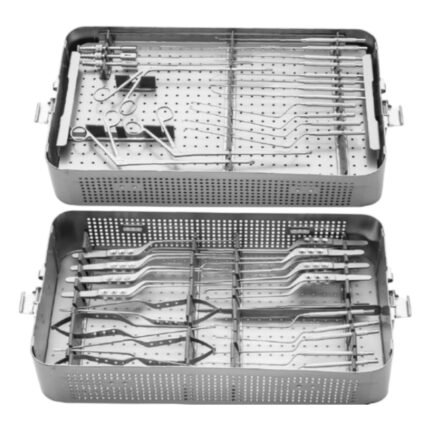
An organized implant and instrument system can improve operating-room workflow by keeping compatible components together. This can simplify preparation, implant identification, instrument availability checks, and post-procedure inventory management. A dedicated tray or case may also help protect precision instruments and keep fixation components organized.
Before clinical use, implants and instruments should be carefully inspected. Plates should be checked for deformation, scratches, contamination, or other visible defects, while screws and instruments should be examined for damaged threads, worn interfaces, or mechanical problems. Any compromised component should be removed from use.
Cranial implants may have specific requirements regarding sterility, single-use status, packaging, storage, and implantation. These requirements are product-specific. Implantable components should not be reused, resterilized, or altered unless expressly permitted by the manufacturer’s labeling and applicable regulations.
For reusable surgical instruments, cleaning and sterilization must follow validated instructions applicable to the exact instrument materials and design. Precision drivers, drill guides, plate holders, and other instruments may have specific reprocessing requirements that differ from conventional surgical tools.
The Titanium Skull Plate Implants & Instruments Cranial Implant System is suitable for neurosurgical departments, cranial reconstruction centers, hospitals, trauma facilities, and specialty operating rooms requiring a dedicated solution for cranial bone-flap fixation and reconstruction. Its combination of titanium fixation components and compatible instruments supports organized cranial implant procedures.
Key Features
- Titanium cranial skull plate implant system
- Designed for neurosurgical cranial reconstruction
- Supports bone-flap fixation following craniotomy
- Suitable for selected cranial defect reconstruction
- Titanium construction as specified by the product listing
- Multiple plate shapes or configurations may be available
- Compatible screws provide cranial fixation
- Instrument set supports plate and screw handling
- May include drivers, drill guides, holders, or fixation tools
- Designed for controlled implant positioning
- Implant sterility and reuse requirements are product specific
- Reusable instruments require validated cleaning and sterilization
Product Specifications
| Specification | Details |
|---|---|
| Product Name | Titanium Skull Plate Implants & Instruments |
| Product Type | Cranial Implant and Fixation System |
| Primary Specialty | Neurosurgery |
| Primary Application | Cranial Reconstruction and Bone-Flap Fixation |
| Implant Type | Titanium Skull / Cranial Plates |
| Fixation Method | Compatible Bone Screws |
| Plate Configuration | Multiple / Model Dependent |
| Plate Shape | Anatomical / Configuration Dependent |
| Material | Titanium, Exact Alloy to Be Verified |
| Instrument Types | Drivers, Holders, Drill Guides, Forceps, Configuration Dependent |
| Surgical Use | Craniotomy Reconstruction / Cranial Defect Repair |
| Sterility | Verify Manufacturer Labeling |
| Reuse | Implant-Specific; Instruments May Be Reusable |
| Sterilization | Follow Validated Instructions for Each Component |
| Compatibility | Use Only Compatible Plates, Screws, and Instruments |
| Contents | Verify Exact System Configuration Before Use |
FAQs
What are titanium skull plates used for?
Titanium skull plates are used to stabilize and reconstruct cranial bone, commonly including fixation of a replaced bone flap following craniotomy and selected cranial defect reconstruction procedures.
Why is titanium used for cranial implants?
Titanium is commonly used in implantable medical devices because of properties such as strength, low density, and corrosion resistance. The exact alloy and specifications depend on the implant system.
Can these plates be used after a craniotomy?
Appropriately designed cranial fixation plates can be used to secure a bone flap following craniotomy, subject to the surgeon’s selected technique and the implant system’s intended use.
What instruments are used with a skull plate system?
Depending on the configuration, instruments may include plate holders, screwdrivers, drill guides, forceps, or other tools intended for positioning and securing cranial fixation components.
Are the screws included with titanium skull plates?
The included fixation screws depend on the specific product configuration. Plate and screw compatibility should always be confirmed before use.
Can any cranial screw be used with these plates?
No. Cranial plates and screws should be used as a compatible system unless the manufacturer specifically indicates otherwise. Screw dimensions and interfaces can differ between systems.
Are titanium skull plates permanent implants?
Cranial fixation plates used for bone-flap stabilization are generally intended to remain in place unless removal is clinically indicated. Exact implant characteristics and labeling depend on the specific product.
Are titanium skull plates reusable?
Implantable cranial plates and screws should not be assumed to be reusable. Sterility and single-use requirements must be determined from the manufacturer’s labeling.
Are the instruments reusable?
Some instruments in a cranial fixation system may be reusable when specifically designed and labeled for repeated use. They require appropriate cleaning, inspection, sterilization, and maintenance.
How should cranial fixation instruments be sterilized?
Reusable instruments should be processed according to the validated manufacturer’s instructions for the exact components. Implantable plates and screws should follow their specific sterility and packaging requirements.
What should be checked before implanting a skull plate?
Verify the implant size and configuration, package integrity, sterility status, compatibility with the selected screws and instruments, and absence of visible deformation or damage.
Can titanium cranial plates be used for trauma reconstruction?
Appropriately designed cranial fixation systems may be used in selected cranial trauma reconstruction procedures when indicated by the treating surgical team.



Reviews
There are no reviews yet.