
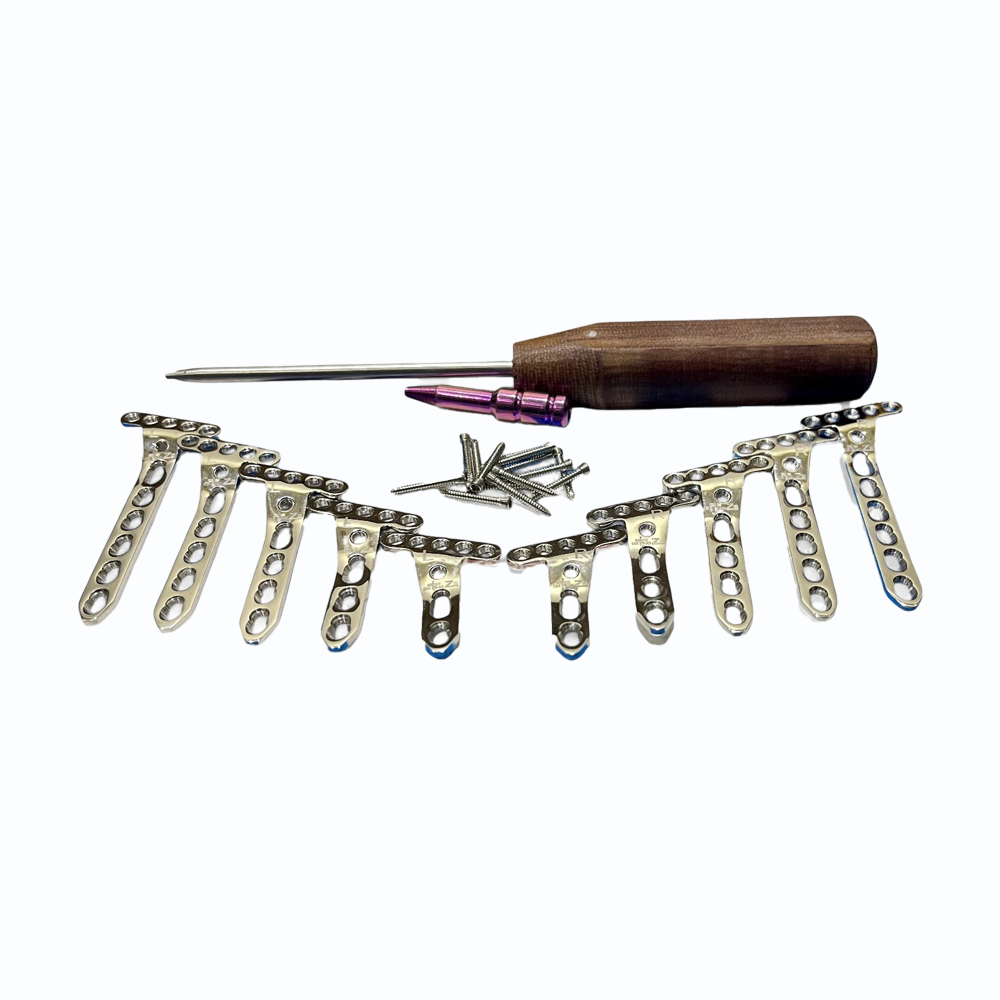
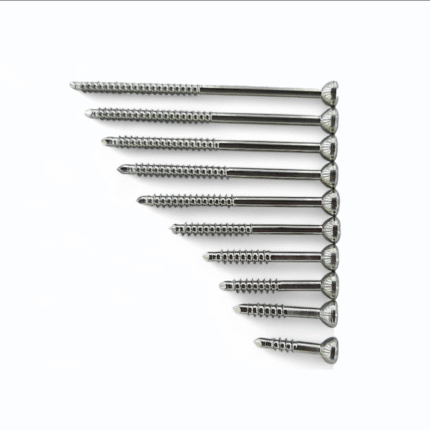
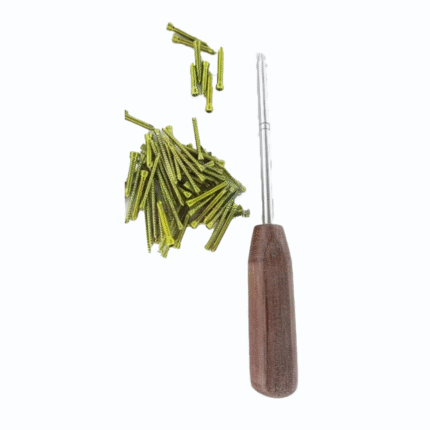
The Variable Angle Locking Extra-Articular Oblique Plate SS 316L is an orthopedic fixation component designed for fracture stabilization using compatible variable-angle locking screw technology. Its extra-articular oblique configuration provides a specialized plating option for fracture patterns where controlled plate positioning and flexible screw trajectories are important considerations.
Variable-angle locking technology allows compatible locking screws to be inserted at different permitted trajectories rather than requiring every screw to follow a single fixed axis. This design can give the orthopedic surgeon greater flexibility when positioning screws around fracture fragments, while maintaining locking engagement between the screw head and plate. The actual range of permitted angulation and compatible screw specifications must always be confirmed from the applicable manufacturer’s technical documentation.
The extra-articular oblique plate configuration is intended for fixation applications outside the joint surface. The oblique geometry can provide an alternative option where anatomical contours or fracture morphology make a conventional straight plate less suitable. Proper plate selection and positioning should be determined according to the patient’s anatomy, fracture pattern, bone quality, and the surgical fixation strategy.
Manufactured from SS 316L stainless steel, the plate provides material characteristics appropriate for medical and orthopedic applications, including corrosion resistance and mechanical durability. SS 316L is a low-carbon stainless steel commonly used in medical devices where resistance to corrosion and material reliability are important considerations. The specific mechanical properties, dimensions, surface finish, and implant-grade specifications should be verified against the manufacturer’s product documentation.
The 88-piece selection provides a broad inventory of plates and associated configurations for orthopedic surgical facilities and implant suppliers. Maintaining a range of compatible plate options can help surgical teams select an appropriate construct according to fracture location, anatomical requirements, and the desired fixation strategy.
Variable-angle locking plates can be particularly useful when screw trajectories need to be adapted to avoid critical anatomical structures or optimize purchase in available bone. The ability to adjust screw direction within the permitted locking range can provide greater flexibility during fixation compared with systems that require a single predetermined screw trajectory. However, variable-angle locking does not eliminate the need for accurate preoperative planning and careful intraoperative technique.
The plate should be used only with compatible screws and instruments specified for the corresponding fixation system. The surgeon should verify plate-to-screw compatibility, permitted screw angulation, screw length, drilling technique, and insertion instrumentation before use. Incorrectly selected components may compromise the intended locking mechanism or fixation construct.
Proper handling is essential throughout the surgical process. Plates should be protected against contamination, bending, scratching, or other physical damage. Reusable instruments used for drilling, plate positioning, and screw insertion should be cleaned and inspected before each procedure. Sterilization and reprocessing should follow validated healthcare-facility procedures and the manufacturer’s instructions.
The Variable Angled Locking Extra-Articular Oblique Plate provides orthopedic professionals with a specialized fixation option combining variable-angle locking technology, extra-articular oblique geometry, and SS 316L stainless-steel construction for appropriately selected fracture fixation procedures.
Key Features
- Variable-angle locking design for flexible screw trajectory selection.
- Extra-articular oblique plate configuration for specialized fracture fixation.
- Manufactured from SS 316L stainless steel.
- Designed for use with compatible variable-angle locking screws.
- Provides controlled angular-stable fixation when used with compatible components.
- Oblique geometry can accommodate selected anatomical and fracture configurations.
- Variable screw positioning can assist fixation planning around fracture fragments.
- Supplied as an 88-piece selection.
- Suitable for professional orthopedic trauma and fracture fixation applications.
- Designed for use with compatible orthopedic drilling and insertion instrumentation.
- Corrosion-resistant stainless-steel construction supports durability.
- Screw trajectory and compatibility must follow the applicable manufacturer’s specifications.
Product Specifications
| Specification | Details |
|---|---|
| Product Name | Variable Angled Locking Extra-Articular Oblique Plate |
| Plate Type | Variable-Angle Locking Plate |
| Configuration | Extra-Articular Oblique |
| Material | SS 316L Stainless Steel |
| Quantity | 88 Pieces |
| Fixation Technology | Variable-Angle Locking |
| Application | Orthopedic Fracture Fixation |
| Surgical Specialty | Orthopedic Trauma |
| Screw Type | Compatible Variable-Angle Locking Screws |
| Plate Geometry | Oblique |
| Anatomical Application | Extra-Articular Fixation |
| Intended Use | Professional orthopedic surgical applications |
| Instrument Compatibility | Use system-compatible instruments |
| Sterilization | Follow product-specific manufacturer instructions and validated protocols |
FAQs
1. What is a Variable Angled Locking Extra-Articular Oblique Plate?
It is an orthopedic fixation plate designed to provide locking screw fixation with variable screw trajectories. The extra-articular oblique configuration is intended for selected fracture fixation applications outside the joint surface.
2. What is the advantage of variable-angle locking technology?
Variable-angle locking technology allows compatible screws to be positioned at different permitted trajectories while maintaining locking engagement with the plate. This can provide additional flexibility when planning fixation around fracture fragments or anatomical structures.
3. What material is this orthopedic plate made from?
The plate is manufactured from SS 316L stainless steel, a corrosion-resistant material commonly used in medical and orthopedic applications.
4. What does extra-articular mean?
Extra-articular refers to a location outside the joint surface or joint cavity. An extra-articular fixation plate is intended for fracture patterns where fixation is applied outside the articular surface.
5. What does oblique plate design mean?
An oblique plate has a geometry or orientation that differs from a straight longitudinal plate. This configuration can provide an alternative fixation option for selected anatomical contours and fracture patterns.
6. How many pieces are included?
The product is supplied as an 88-piece selection. The exact composition and individual configurations should be verified against the manufacturer’s product specification.
7. Can any locking screw be used with this plate?
No. The plate should be used only with compatible variable-angle locking screws specified for the corresponding fixation system. Screw diameter, head design, locking interface, and permitted angulation must be confirmed before use.
8. Are variable-angle locking plates suitable for fracture fixation?
They are designed for selected orthopedic fracture fixation applications where variable-angle locking technology is appropriate. Final implant selection depends on the fracture pattern, anatomy, bone quality, and surgeon’s treatment plan.
9. What is SS 316L stainless steel?
SS 316L is a low-carbon stainless steel known for corrosion resistance and durability. It is used in various medical applications where suitable material properties and corrosion resistance are required.
10. How should the plate and associated instruments be processed?
Processing requirements depend on the specific device. Reusable instruments should be cleaned, inspected, packaged, and sterilized according to validated healthcare-facility procedures and manufacturer instructions. Implant-specific requirements must be followed according to product labeling.
Reviews
There are no reviews yet.