
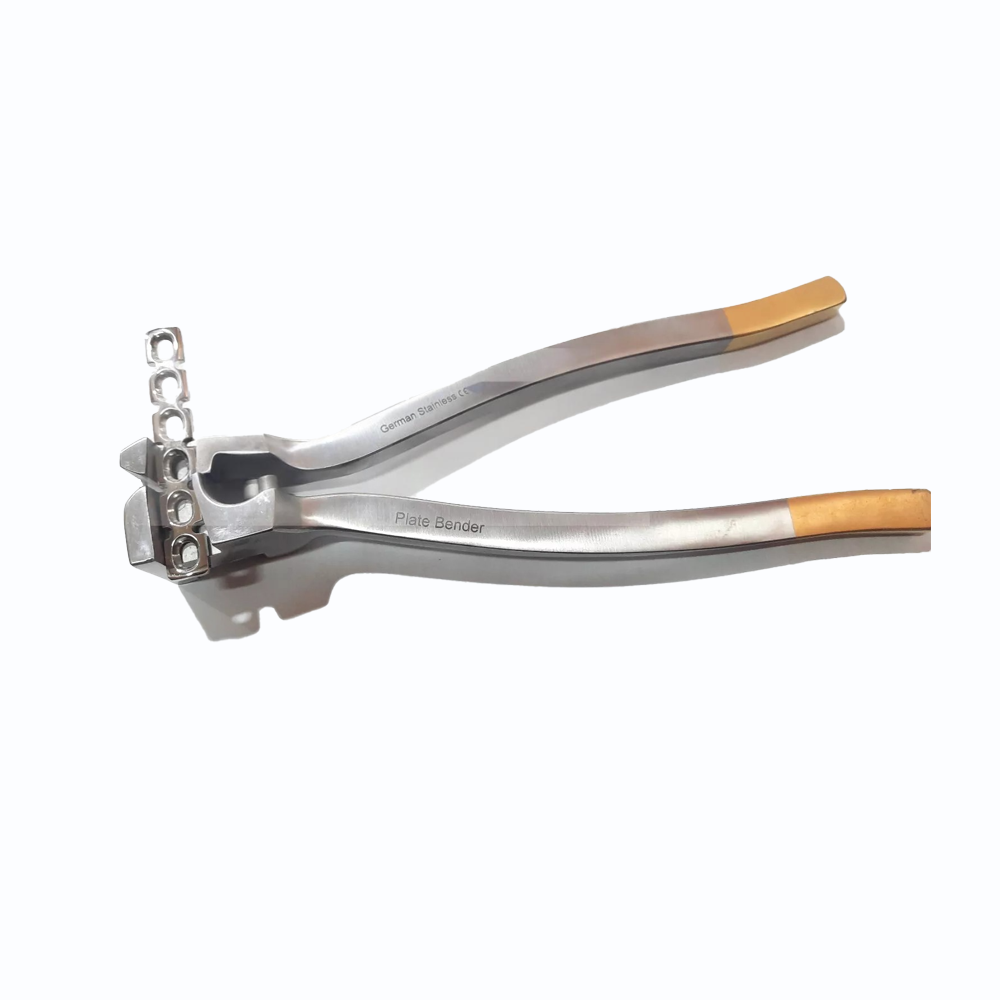


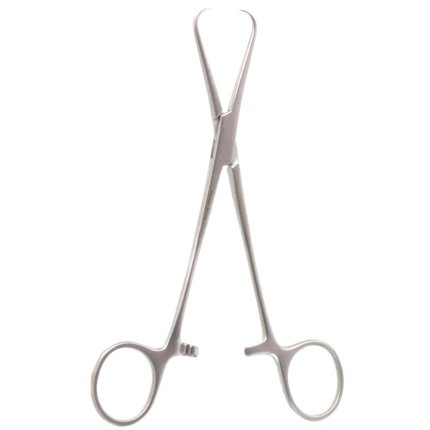
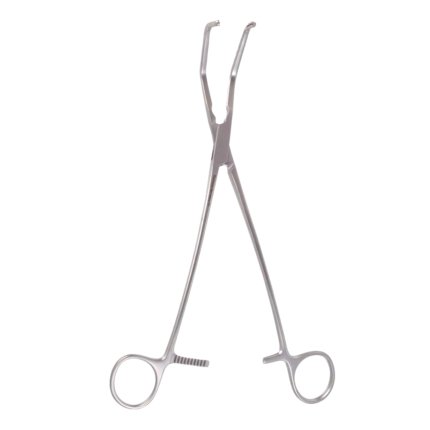
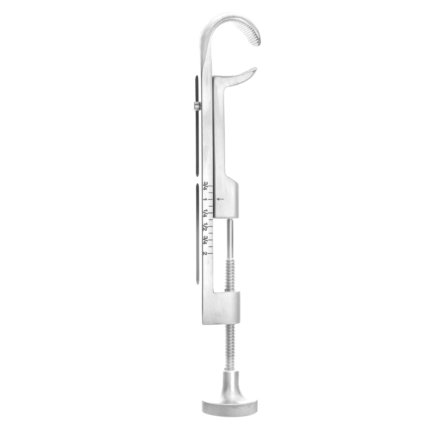
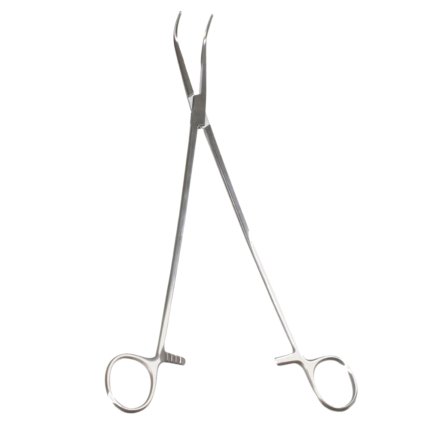
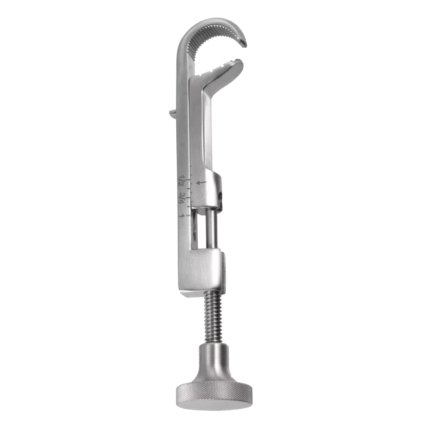
The Small Veterinary Pelvic Reconstruction Plate Bender is a specialized veterinary orthopedic instrument designed to assist surgeons with controlled contouring of compatible reconstruction plates during fracture fixation procedures. Plate contouring is an important part of orthopedic implant preparation when a plate must conform to the anatomical shape of the bone while maintaining appropriate positioning for screw fixation.
In veterinary orthopedic surgery, pelvic fractures can present complex fixation challenges because of the irregular anatomy of the pelvis and the need to accommodate surrounding structures. A dedicated pelvic reconstruction plate bender allows the surgical team to modify compatible plates according to the patient’s anatomy and the planned fixation construct. The exact bending technique, location, and amount of contouring should be determined by the veterinary surgeon in accordance with the implant manufacturer’s instructions.
The small-size configuration makes this instrument particularly relevant to veterinary orthopedic systems designed for smaller animals or smaller implant plates. However, the term “small” should not be interpreted as a specific animal-size indication without manufacturer documentation. Plate thickness, width, material, and design all influence which bending instrument should be used.
A plate bender provides controlled mechanical leverage over an orthopedic plate. Properly designed bending surfaces help the surgeon apply force to the plate while maintaining control over the desired contour. Correct plate contouring can assist with achieving appropriate plate-to-bone contact and positioning, depending on the fixation system and surgical technique.
This Veterinary Pelvic Recon Plate Bender is intended for use with compatible reconstruction plates rather than as a universal bending tool for every orthopedic implant. The plate material, thickness, geometry, and manufacturer specifications should be checked before bending. Using an incompatible bender or excessive force may damage the implant, alter its mechanical properties, or create an unsuitable fixation construct.
Veterinary pelvic reconstruction systems may be used in selected fracture fixation procedures involving the pelvis and associated bone structures. Depending on the implant system, reconstruction plates can be contoured to accommodate complex anatomical surfaces. The exact application of the plate itself is determined by the veterinarian based on fracture configuration, patient anatomy, bone quality, soft-tissue considerations, and the selected fixation method.
The instrument is supplied as 1 piece, providing a dedicated tool for veterinary orthopedic implant preparation. Its focused design can be useful for veterinary hospitals, specialty orthopedic practices, animal surgical centers, and veterinary instrument distributors that maintain dedicated fracture-fixation systems.
Construction should provide sufficient mechanical strength for controlled plate manipulation while maintaining a durable working surface. Reusable veterinary orthopedic hand instruments are commonly manufactured from surgical-grade stainless steel or other suitable instrument metals. The exact material grade of this product should be confirmed from the manufacturer’s technical documentation rather than assumed from the product title.
Before use, the bender should be inspected for deformation, cracks, corrosion, damaged bending surfaces, or other signs of wear. The working surfaces should remain properly aligned and free from defects that could interfere with controlled plate contouring. Any damaged instrument should be removed from clinical service.
After use, the reusable plate bender should be cleaned using a validated process appropriate for surgical instruments. Particular attention should be given to the bending surfaces and any joints or recessed areas where biological material may accumulate. Following cleaning, the instrument should be thoroughly inspected and sterilized according to the manufacturer’s validated instructions and the veterinary facility’s infection-control procedures.
The Veterinary Pelvic Recon Plate Bender – Small – Surgical Instrument (1 Pc) provides veterinary orthopedic professionals with a dedicated solution for controlled shaping of compatible reconstruction plates. Its small configuration and specialized function make it a practical addition to veterinary fracture fixation instrumentation where plate contouring is required.
Key Features
- Specialized veterinary pelvic reconstruction plate bender
- Small-size configuration
- Supplied as 1 surgical instrument
- Designed for controlled orthopedic plate contouring
- Suitable for compatible reconstruction plates
- Supports veterinary fracture fixation procedures
- Useful for pelvic orthopedic implant preparation
- Provides controlled mechanical leverage during plate shaping
- Designed for professional veterinary orthopedic use
- Durable surgical instrument construction
- Reusable where supplied as a reusable instrument
- Requires appropriate cleaning, inspection, and sterilization
Product Specifications
| Specification | Details |
|---|---|
| Product Name | Veterinary Pelvic Recon Plate Bender – Small |
| Set Quantity | 1 Piece |
| Instrument Type | Orthopedic Plate Bender |
| Application | Veterinary Orthopedic Surgery |
| Primary Use | Reconstruction Plate Contouring |
| Intended System | Compatible Pelvic Recon Plates |
| Size | Small |
| Surgical Specialty | Veterinary Orthopedics |
| Potential Application | Pelvic Fracture Fixation |
| Material | Surgical Instrument-Grade Metal; verify manufacturer specification |
| Reusable | Where supplied as a reusable instrument |
| Sterilization | According to validated manufacturer and facility protocols |
| Intended Users | Veterinary Orthopedic Surgeons |
| Clinical Environment | Veterinary Hospitals and Surgical Centers |
FAQs
1. What is a veterinary pelvic recon plate bender used for?
A veterinary pelvic reconstruction plate bender is used to contour compatible orthopedic plates so they can better conform to the intended anatomical surface during fracture fixation.
2. What does the “small” size mean?
The small designation identifies the instrument configuration and is generally intended for compatible smaller plate systems. Exact plate and animal-size compatibility should be confirmed with the manufacturer.
3. How many instruments are included?
This product is supplied as 1 piece.
4. Can this bender be used with any reconstruction plate?
No. The bender should be used only with plates for which its size, bending profile, and mechanical capacity are appropriate. Compatibility should be verified before use.
5. Can pelvic reconstruction plates be bent during veterinary surgery?
Some reconstruction plates are designed to permit controlled contouring, while others have specific limitations. The implant manufacturer’s instructions should always be followed regarding permissible bending.
6. Can excessive plate bending damage an orthopedic implant?
Yes. Excessive, repeated, or inappropriate bending can alter an implant’s mechanical characteristics or cause damage. Plate contouring should be performed using the appropriate instrument and validated technique.
7. Is this veterinary plate bender reusable?
Where supplied as a reusable surgical instrument, it should be cleaned, inspected, and sterilized according to validated manufacturer instructions and veterinary-facility protocols.
8. Where can this instrument be used?
The instrument is intended for professional veterinary orthopedic environments, including veterinary hospitals, specialty orthopedic practices, and animal surgical centers.
Reviews
There are no reviews yet.